


The Commonwealth Games 2030 will be hosted in Ahmedabad (Amdavad), India. I shared it proudly with a friend in London. His response was, “What is the history of Ahmedabad?” As I began explaining, he asked a question that cut through my enthusiasm: “Why are you promoting a city named after an invader who destroyed temples across Indian faiths?”
I had no immediate answer. That silence forced me to look closer.
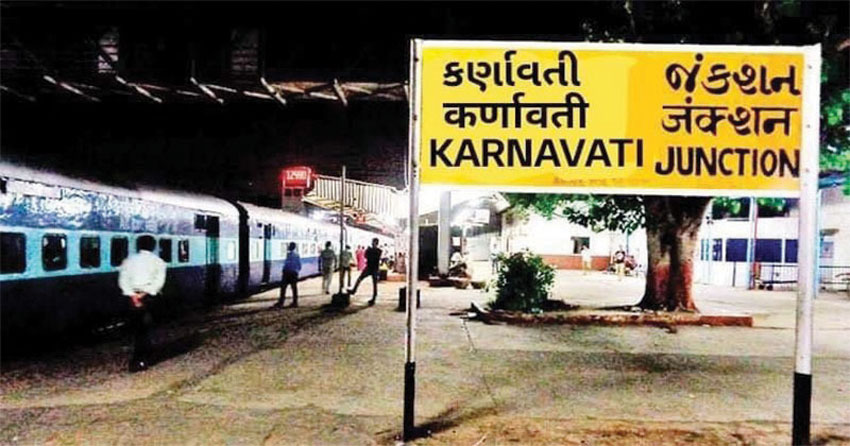
Long before it was called Ahmedabad, the region flourished as Ashaval, later becoming Karnavati under the Solanki rulers. It was only in 1411 that Ahmed Shah I, after conquering the region, renamed the city Ahmedabad and made it the capital of the Gujarat Sultanate. Historical accounts record the destruction of Hindu, Jain, and Buddhist temples, and the material was reused to construct mosques and other buildings. The city later passed to the Mughals, then to the British, each layer adding to—but also overwriting—its past.
Today, Ahmedabad’s walled city, with its iconic pols and wooden houses, enjoys UNESCO World Heritage status. Yet the irony remains: when India steps onto a global stage like the CWG, it does so under a name rooted in conquest rather than continuity. The question is no longer about erasing history—but about which history we choose to honour, and why.
The details of the Commonwealth Games 2030.
Commonwealth Games 2030, an event that will place India—and its host city—under unprecedented global attention. In November 2025, Ahmedabad was officially confirmed as the host city for the centenary edition of the Commonwealth Games, marking 100 years of the event. The Games will unfold across upgraded and newly developed sports facilities in and around the city, transforming it into a global showcase not just of sport, but of India’s urban and cultural identity.

Key Details
● Host City: Ahmedabad (Amdavad), Gujarat, India
● Significance: The 2030 Centenary Games celebrate a hundred years of the Commonwealth Games, making this edition symbolically more important than any ordinary sporting event.
● Venues: Events will be hosted across major new and upgraded locations, including the Sardar Vallabhbhai Patel Sports Enclave (SVPSE) for swimming and gymnastics, the Naranpura Sports Complex for badminton, and GIFT City for the marathon and beach volleyball—effectively creating a new urban sporting footprint.
Key Cost Breakdown & Legacy Implications
● Operational Costs: The core budget for running the Games—venues, staffing, logistics, security, and marketing—is estimated at ₹3,000–5,000 crore (approximately USD 360–600 million).
● Infrastructure Development: The real legacy lies here. Around ₹20,000 crore is projected for sports infrastructure, with an additional ₹40,000–50,000 crore allocated to supporting civic infrastructure such as hotels, transport, metro expansion, and road networks. This scale of investment is not merely for a fortnight of sport—it is effectively city-building.
● Leveraging Existing Assets: While existing venues will be utilised, in line with India’s stated approach for the 2036 Olympic bid, the magnitude of the Games necessitates extensive upgrades and new construction. The hospitality sector alone is expected to add nearly 50,000 hotel rooms, alongside major transport and urban connectivity projects.
At this level of investment and global visibility, the CWG 2030 is no longer just a sporting event—it is a civilizational statement. When tens of thousands of athletes, officials, and global media arrive, they will ask not only about stadiums and medals, but about history, identity, and legacy. If the Games are meant to leave a lasting legacy, the question naturally arises: Should that legacy be limited to infrastructure, or should it also reclaim and reflect India’s historical and civilizational identity?

From Karnavati to the Future: Rebuilding Ahmedabad’s Identity
It is time to reimagine Ahmedabad as a new-age city that reflects a rising India, a developed Gujarat, and the vibrancy of Indian civilization. ₹50,000 crore doesn’t host games—it builds cities. It offers a once-in-a-generation opportunity to reshape Ahmedabad with a new identity, a renewed aspiration, and a name that matches its civilizational depth.
The original fortified settlement established by Sultan Ahmed Shah in 1411 covered barely 43 acres (around 0.17 sq km), centered largely around the Bhadra Fort. Even the later expansion in 1486, under Mahmud Begada, enclosed only about two square miles—roughly 1,280 acres or 3.2 sq km. That medieval core, though historically significant, represents only a tiny fraction of the modern city.
The core city of Ahmedabad today spans approximately 466–505 sq km, while the Ahmedabad District extends across a massive 8,087 sq km. This vast, modern, and diverse urban region deserves a name that reflects its national importance, cultural continuity, and future ambition. Renaming the district, rather than the city itself, achieves exactly that. It would not require changing railway station names, colonies, institutions, or existing urban markers, thereby adding symbolic value without administrative disruption or social friction.
Such a step would uphold the spirit of unity in diversity. It preserves the historical record of Ahmed Shah and the medieval city, while simultaneously reviving the civilizational memory of Karnavati and aligning the district’s identity with India’s nationalist and cultural ethos. In doing so, Ahmedabad can honour history without being confined by it—and step confidently into the future with an identity worthy of its scale, legacy, and aspirations.
What should be the new name ?
The district can be named Karnavati, Sabarmati but to inculcate the spirit of unity the best name possible is Vallabh bhai Patel Nagar. This becomes important as Ahmedabad already has a neighbour with the name Gandhi nagar. The large hearted spirit of the name Sardar Patel will do justice to all the smaller townships included in the district. The Sardar Patel sports complex, the Sardar Patel museum will integrate seamlessly. The city has been his karmbhumi of Sardar Patel, some major associations are:
● Legal Career: After studying in England, Patel established a successful legal practice in Ahmedabad.
● Civic Leadership: Elected to the Ahmedabad Municipal Corporation, serving as its President from 1924-1928, and improved the city's infrastructure.
● Political Entry: His political journey began in 1917 in Ahmedabad, where he met Mahatma Gandhi and joined the independence movement, organizing the Kheda Satyagraha.
● Memorial: The Sardar Vallabhbhai Patel National Memorial in Shahibaug, Ahmedabad, preserves his legacy with personal artifacts and political cartoons.
The bigger issue.
Restoring heritage after Independence is not just about repairing monuments or polishing the past—it is about reclaiming who we are. Centuries of foreign rule and colonial domination weakened India’s connection to its indigenous history, culture, and pride, often teaching us to admire what was foreign while neglecting what was our own. Heritage restoration reverses that mindset. When temples, forts, traditions, languages, and crafts are revived, they don’t merely stand as relics; they reignite memory, identity, and confidence. They remind each generation that progress does not require cultural amnesia. A nation rooted in its heritage grows stronger, more united, and more self-assured—because development without identity is hollow, but development anchored in history is enduring.
Price of ignoring the revival.
The consequences of neglecting heritage are profound. Terrorism and divisive politics often trace their roots to the continued presence of symbols associated with slavery, conquest, and oppression. Our national capital itself carries the names of tyrants like Babur and Taimur, even though India endured the pain of partition. The country has failed to revive the spirit of Vasudhaiva Kutumbakam by allowing memorials of invaders such as Bakhtiar Khilji to persist, leading to social unrest and demands from divisive forces to ban arti in temples, restrict Shobha yatras, and limit the lighting of lamps. Even the judiciary has, at times, lost its way by permitting practices like marriages below the minimum legal age, undermining societal safeguards.
At the same time, there are historical cities established by invaders that merit protection and preservation, such as Auroville in Puducherry, which represents a unique experiment in urban planning and culture.
Given the sensitivity and complexity of these issues, it is high time to form a national commission tasked with investigating India’s heritage and place names without bias or political influence.
Establishing a Historical Toponymy Commission for the Study of Place Names in India.
India’s place names reflect multiple historical layers. Many renamings occurred for symbolic or governance-related reasons across eras. In recent years, growing public interest in the cultural and linguistic significance of older names has led to demands for restoring traditional toponyms with deep civilizational roots. Given the sensitivity of identity and history involved, there is a clear need for an objective, academically grounded, and structured mechanism to study how place names evolved over time, rather than relying on ad hoc or politically driven decisions.
A proposed independent commission would serve this purpose by conducting rigorous, non-political research into place-name changes across all historical periods—ancient, medieval, regional, colonial, and post-Independence. Guided by academic rigor, inclusivity, cultural sensitivity, and local preference, the commission would use archaeological, linguistic, epigraphic, and archival evidence, combined with community consultation, to develop clear criteria for evaluating renaming proposals. Its goal would be to strengthen cultural heritage, preserve historical clarity, respect contemporary social harmony, and create a transparent national framework—culminating in a comprehensive database and well-reasoned recommendations rooted in history, not ideology.
Today, however, there is a growing public movement to reclaim older names that embody civilizational depth and linguistic heritage. These demands highlight not just nostalgia, but a desire to reconnect with cultural identity. Yet, given the sensitivity of history and identity, such decisions cannot be left to ad hoc or politically charged debates.
What India needs is a structured, impartial, and academically grounded mechanism to study how place names have evolved across centuries.
A proposed independent commission could serve this role. Its mandate:
● Conduct rigorous, non-political research spanning ancient, medieval, regional, colonial, and post-Independence periods.
● Apply archaeological, linguistic, epigraphic, and archival evidence alongside community consultation.
● Develop transparent criteria for evaluating renaming proposals, balancing heritage, clarity, inclusivity, and local preference.
The ultimate goal would be to:
● Strengthen cultural heritage
● Preserve historical accuracy
● Respect social harmony
● Create a national framework for renaming rooted in scholarship, not ideology
Such a commission would culminate in a comprehensive database and well-reasoned recommendations, ensuring that India’s toponyms reflect both the richness of its past and the unity of its present.
Case Study: Historical Overview of Ghaziabad Background
● Ghaziabad was founded/renamed in 1740 CE by Ghaziuddin Khan, a late Mughal noble.
● Its name reflects administrative and commemorative purposes, not deep cultural transformation.
● Unlike nearby settlements such as Dasna, Meerut, and Loni, Ghaziabad lacks ancient or medieval continuity.
● No major Mughal-era monuments or urban heritage remain to anchor the name.
● It fits the broader Mughal-era pattern of nobles naming towns after themselves (Bayly 1998; Habib 1999).
Relevance to a Toponymy Commission
1. Lack of Heritage Anchoring – No significant Islamic-era monuments tied to the name.
2. Administrative Renaming – Reflects personal commemoration rather than civilizational depth (Sircar 1960; Eaton 2000).
3. Weak Local Attachment – Oral traditions emphasize older identities (Dasna, Hindon valley) over “Ghaziabad.”
Evaluation Criteria
● Antiquity: Name is relatively recent (18th century).
● Historical Continuity: Limited evidence of older Sanskritic/Prakritic names; link is administrative.
● Cultural Significance: Minimal heritage connected to the name.
● Community Usage: Residents often identify more with surrounding localities.
● Social Harmony: Past administrative changes (e.g., Gautam Buddh Nagar) occurred peacefully.
Possible Outcomes
● The current name lacks strong historical or cultural justification.
● Option 1: Restore an older indigenous name if epigraphic/archaeological evidence emerges.
● Option 2: Adopt a culturally neutral modern name if no older name is firmly established.
● Key Principle: Decisions must combine scholarly rigor with community consent.
Why Ghaziabad is an Ideal Pilot Case
● Few ancient/medieval monuments tied to its name.
● Identity shaped more by post-1970s industrialization than history.
● Low risk of erasing genuine heritage.
● High public interest in exploring older roots.
● Fits the Commission’s mandate to evaluate names with limited historical depth and strengthen continuity.
Conclusion.
It is high time to integrate the global aspiration of the people of Ahmedabad its a name befitting the growth envisaged through GIFT city, bullet train and common wealth games. When the nation is spending huge amounts of money and resources let it be a city which not only reflects on the rule of tyrant invaders but also that of never say die spirit and that of iron man of India.

By Rakesh kumar
(The content of this article reflects the views of writer and contributor, not necessarily those of the publisher and editor. All disputes are subject to the exclusive jurisdiction of competent courts and forums in Delhi/New Delhi only)














Leave Your Comment