


“As election campaigns is at its peak, the noise of promises grows unbelievable, but within this chaos, lies a deafening silence—the silence of the Bihar’s voter”.
People are withholding truth — perhaps out of disenchantment or distrust.
by the time this article is published Bihar electorates will be busy in voting, the loudspeakers of political rallies would have become silent, but the voice that truly matters — that of the voter — will remain hidden in ballot box. Beneath the noise of unbelievable promises, caste arithmetic, and shifting alliances lie the future casted by Bihar voters, oscillating between loyalty and longing, searching for identity and an action plan to meet aspiration.
The Caste mathematics Still directs the political manoeuvring?
Bihar’s politics is meaningless without acknowledging caste-the single most influential — and yet increasingly contested — force in the state’s electoral landscape. Political parties calibrate their strategy around it. The RJD’s traditional Yadav–Muslim combine, JD(U)’s Kurmi–Koeri–EBC network, and the BJP’s strong upper-caste and non-Yadav OBC base has made it a force to reckon yet destined to support Nitish the CM.
Two decades of Sushasan? and a subtle change is brewing. Despite caste still determines the arithmetic, it no longer guarantees chemistry. Young and urban voters, particularly first-time voters, are not inclined to vote along caste lines. Their silence is not indifference — it’s disenchantment with a system that has long measured worth by surname rather than skill.
Jobs, Migration, and the Economy: The Rising Storm
If caste is the foundation! of Bihar’s politics, unemployment is the crack running through it. With limited industrialization and a heavy reliance on migration, Bihar’s youth have grown restless. Over 30% of young people remain jobless, and countless others find work only in distant cities.
In every conversation on the roadside and coaching centre’s corridor, a new political vocabulary is emerging — one that speaks of dignity, opportunity, and the right to stay home and still thrive. Development, not identity, has begun to command emotional weight. Politicians who once won by invoking lineage now face questions about livelihoods.
Coaching centre leading a new mission.
Priyank a young man whom I met on Facebook is running a coaching centre which provides support to young minds for non-civil service job which does not require leaving Bihar. He left Delhi to save thousands who come to Delhi to become civil servant, end up making rich the owners of coaching centres . Today hundreds of his students become clerk, inspector and so on. These are not the one who pay bribe to get the job. Hundreds of Priyank are training thousands of young minds to stay in Bihar and fight for their rights. This community may grow more and more to ask why a Bihari has to drive an auto in Mumbai when Bihar has better resources than any where else? How long corrupt criminals will force people to look elsewhere for the jobs.
Digital age is grooming a new Generation which Speaks Softly, Shares Boldly
The WhatsApp groups, TikTok reels, and YouTube channels have created new battlegrounds influencing families. Perceptions change faster seeing Memes and micro-videos than manifestos. The emerging digital electorate is educated, sceptical, and expressive — could tilt contests in unpredictable ways. Thes trends have lured the masters of analytics who can take advantage.

The Burden of Longevity: Nitish Kumar and the Anti-Incumbency Challenge?
One of India’s longest-serving leaders, Chief Minister Nitish Kumar has put Bihar at a peculiar crossroads. Once hailed as “Sushasan Babu” — he restored order and governance — he now faces fatigue in him as well as among sections of the electorate. The constant shifting of alliances between the NDA and the INDI alliance has left many voters unsure of when he will make next Palti (jumping to greener posture).
Yet, Nitish retains a loyal base among women and older voters, thanks to welfare schemes like the cycle program for girls, the liquor ban, and reservations in local bodies. Whether this reservoir of goodwill can withstand the tide of anti-incumbency is one of 2025’s biggest question.
Women Voters and the Liquor Ban: Nitish Kumar’s Last Reliable Lifeline?
Different news items in economics times, outlook and Indian express in past, have suggested that the ban on liquor (prohibition) was explicitly pitched as a response to what women said: problems of domestic violence, wasted household money, men coming home drunk.
Past Surveys and commentary indicate many women supported the ban. For example, women voters believed it reduced domestic abuse and improved household finances
Data show Kumar has benefitted: in constituencies where women voters outnumber men, his alliance (the NDA) did disproportionately well.
Women, once overlooked in Bihar’s politics, have quietly become a decisive bloc. From self-help groups to local panchayats, they have found a voice — one that speaks softly but votes powerfully. Their priorities differ: safety, education, healthcare, and stability. Many credit Nitish Kumar’s policies for empowerment; others see them as token gestures. Either way. This election will make the caste bases politicians to learn to respect women.
The Cost of Coexistence: BJP’s Bihar Dilemma.
The BJP has won many frontiers, but in Bihar, it still struggles with weak local leadership. From my limited understanding, the party’s strategy has long been built around coexistence, not confrontation with Nitish Kumar. As allies for most of the past two decades, the BJP avoided nurturing a strong CM face to prevent friction — a dependence that has now become a structural weakness.
Mahila and Youth (MY) can challenge MY of RJD.
Chirag and Maithili represent a generational shift. If they can bridge Bihar’s legacy politics with modern aspirations, they could indeed change its face. It is in harmony with Nitish vision and can jeopardize the game plan of Tejaswi as well as that of Prashant Kishore.
Prashant Kishor: The Elephant in the Toy Shop Called Bihar.
In Bihar’s fragile political landscape—where alliances are brittle, loyalties shift overnight, and every move is measured in caste equations—Prashant Kishor stands out like an elephant in a toy shop. His entry into the state’s politics through the Jan Suraaj Yatra has rattled the old order. Unlike the traditional leaders who thrive on identity arithmetic, Kishor speaks the language of development, governance, and accountability. His methods—data-driven, strategic, and modern—clash with the sentimental and caste-bound politics that dominate Bihar. Yet, his sheer presence forces everyone to take notice; he disrupts without even fully engaging. Whether he ultimately rebuilds the shop or breaks a few toys along the way remains to be seen, but one thing is clear: Bihar’s politics can no longer pretend the elephant isn’t there.
However, Prashant Kishor has his quota of formidable odds that could undo his vision before it matures.
= His call for development-based politics collides with the harsh reality of caste loyalties, where social identity often outweighs governance promises.
= Lacking a party structure or grassroots machinery, Jan Suraaj movement risks remaining an energetic campaign without teeth.
= Kishor’s image-driven politics, built on strategy and charisma, may struggle to sustain voter trust in a state long accustomed to broken pledges.
= By criticizing every major party, he has isolated himself, narrowing the space for alliances. If he cannot quickly demonstrate results, the public’s early curiosity could turn into indifference—leaving his “movement for change” as just another echo in Bihar’s labyrinth.
Prashant Kishor could not accept the status given by Nitish Kumar and work for the betterment of Bihar earlier raises a question whether he stands for Bihar or Bihar is just another experiment for an ambitious person whose success is an outcome of switching sides.
Alliance Arithmetic, Leadership Chemistry
In Bihar, elections are less a contest of individuals than a calculus of coalitions. The state’s politics thrive on the art of association — who joins whom, when, and why. This fluidity is not a quirk but a defining feature of Bihar’s democratic landscape, where ideological lines blur and alliances are drawn more by expediency than conviction.
Each major party brings its own distinct asset to this shifting equation. The BJP’s organizational discipline gives it structure; the RJD’s social mobilization provides reach; and the JD(U)’s governance record lends it an air of administrative credibility. Yet, these strengths can as easily collide as converge. The arithmetic of alliance, in Bihar, is never complete without the chemistry of leadership — and it is often the latter that determines whether a coalition holds or fractures.
For the electorate, however, this revolving door of partnerships has bred a weary scepticism. Across villages and small towns, a popular saying is: “Sab ek jaise hain” — “They’re all the same.” Probe a little and one will see a subtler demand: for constancy, for principle, and for leaders who are guided by conviction.
Why Bihar Matters?
From the time of the Mahabharata, Bihar — then known as Magadh — has stood at the forefront of the subcontinent’s political and moral imagination. It was the power of Magadh that even compelled Lord Krishna to shift his kingdom to Dwarka, choosing distance over confrontation. Centuries later, under the guidance of Chanakya, Magadh became the bulwark that shielded India from Greek incursions.
Bihar has often been the cradle of transformation. It was in Champaran that Mahatma Gandhi’s movement for justice first took shape. Decades later, Jayaprakash Narayan’s call for Sampoorna Kranti (Total Revolution) from Bihar rattled Indira Gandhi’s regime and redefined Indian politics. From that student movement emerged a generation of leaders — Nitish Kumar, Lalu Prasad Yadav, Sharad Yadav, Shatrughan Sinha — who went on to shape national discourse for decades.
If Uttar Pradesh’s turnaround has propelled India’s economic momentum, and if stability in the East has fostered peace in the Northeast, then a revitalized Bihar could well be the keystone in India’s vision for 2047. Despite political stagnation, Bihar continues to produce exceptional civil servants, educators, and thinkers. Ironically, most of them serve other states or countries — a silent testimony to the talent Bihar generates but cannot retain.
Yet, the state’s political culture tells a different story. The decline of Bihar’s governance has created a troubling blend of muscle power, political opportunism, and bureaucratic complicity — eroding democratic ideals. It is disheartening that leaders with criminal convictions still command public mandates, and that election manifestos often read like wish lists, detached from logic or viability.
Those who promise Jan Suraj (people’s governance) have, in practice, recycled old power structures. The much-vaunted Sushasan (good governance) has too often found comfort in Kushasan (misrule), only to abandon or embrace it when convenient.
Bihar is larger in population than many nations — and richer in history than most. It cannot be left to the accidents of political fortune. The state that once guided empires and inspired revolutions must rediscover its purpose — not merely to reclaim lost glory, but to chart India’s next great leap.
Between Noise and Numbness
In the end, amid the murders and mayhem, the most striking feature of this election is the silence of the voter. The traditional political class misreads it as apathy—but it may well be reflection: a pause before transformation.
Bihar’s electorate stands at a crossroads—not entirely shackled by identity, yet not wholly free from it. It hovers between nostalgia for stability and a restless yearning for change.
Tejaswi Yadav and Prashant Kishor have done their homework, crafting narratives that resonate. Yet, the BJP’s ability to retain Haryana, Chhattisgarh, and Maharashtra suggests that surprises may still unfold—perhaps driven by a new ‘MY’ equation: Mahila (women) and Youth.
In this shifting landscape, all eyes will be on how Chirag Paswan and Maithili Thakur engage with these emerging constituencies. Their ability to connect could redefine Bihar’s political landscape.
This time, Bihar may not deliver a fractured mandate. It may speak with quiet clarity.
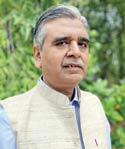
By Rakesh Kumar
(The content of this article reflects the views of writer and contributor, not necessarily those of the publisher and editor. All disputes are subject to the exclusive jurisdiction of competent courts and forums in Delhi/New Delhi only)



















Comments (4)
R
After a long time sow the deep analysis of Bihar political science.Nicely written article.Writer deserves great appreciation......
R
Very well written article. Covered all relevant aspects of Bihar Politics. Congratulations Sir!!!
V
Excellent article covering every facet of the probable arithmetic in Bihar
M
Indepth analysis and beautifully woven all important aspects of present and history. Great work !