


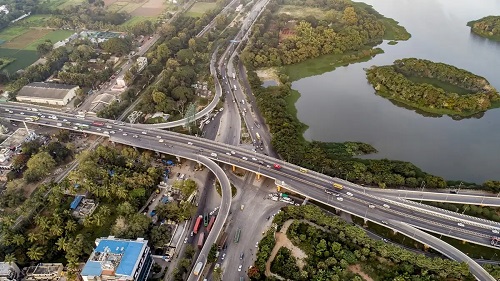
Bengaluru, known for its bustling traffic and burgeoning infrastructure demands, is poised to undergo a transformative change with the introduction of a groundbreaking double-decker road and metro corridor. Spanning an impressive 32.15 km between JP Nagar and Hebbal, this ambitious project aims to alleviate traffic congestion, particularly along the western stretch of the Outer Ring Road (ORR), according to a recent report by Deccan Herald.
The centerpiece of this infrastructure overhaul is set to be Bengaluru's longest flyover, modeled after the successful Ragigudda-Silk Board stretch. This mammoth structure is expected not only to ease traffic woes but also to enhance connectivity across key areas of the city. Complementing this feat will be an 8-km elevated road proposed for Magadi Road, with the combined cost of these ambitious projects estimated at a staggering Rs 9,800 crore.
Deputy Chief Minister DK Shivakumar has taken a hands-on approach in overseeing these developments, recently reviewing plans during visits to crucial locations such as Hebbal, BEL Road, Summanahalli, and Goraguntepalya. His vision includes integrating future metro expansions with elevated roads to minimize land acquisition costs and ensure seamless connectivity for Bengaluru's growing population.
Officials involved in the project have unveiled plans for both metro corridors to adopt a double-decker design, a pioneering move set to redefine urban mobility standards. Despite facing delays in the tendering process for metro civil works, following central government approval last year, significant strides are being made. Notably, a major design modification is slated for Goraguntepalya along the 32.15-km metro line between JP Nagar 4th Phase and Kempapura. This adjustment includes considerations for a new metro station near Goraguntepalya junction, aimed at optimizing commuter convenience and accessibility.
In addition to the metro expansion, dedicated travelators are planned to link the new station to Peenya and Goraguntepalya, ensuring uninterrupted travel and bolstering the overall efficiency of Bengaluru's public transport network. These initiatives are expected to streamline construction costs and reduce the metro line's length by 300 meters, further underlining the project's commitment to sustainable urban development.
Looking ahead, Bengaluru's ambitious infrastructural upgrades promise not only to redefine the city's skyline but also to enhance the quality of life for its residents. With a focus on innovation, efficiency, and sustainability, these developments are poised to set a new benchmark in urban planning and infrastructure management in India.
In conclusion, as Bengaluru prepares to embark on this monumental journey of transformation, stakeholders and citizens alike anticipate a future where modern infrastructure meets the demands of a rapidly evolving urban landscape.














Leave Your Comment