


The political landscape of eastern India witnessed a dramatic transformation on May 4 when the Bharatiya Janata Party (BJP) secured a historic victory in West Bengal, ending the 15-year rule of the Mamata Banerjee-led Trinamool Congress (TMC). The BJP’s sweeping win of 207 out of 294 seats in the West Bengal Legislative Assembly was not merely a state-level political event; it has the potential to significantly reshape India’s relationship with neighboring Bangladesh.
For years, West Bengal was viewed as a difficult terrain for right-wing politics. The BJP’s rise in the state signals a major ideological and political shift. More importantly, because West Bengal shares a long and sensitive border with Bangladesh, the change in government is expected to directly influence bilateral issues ranging from water-sharing agreements to border management and trade.
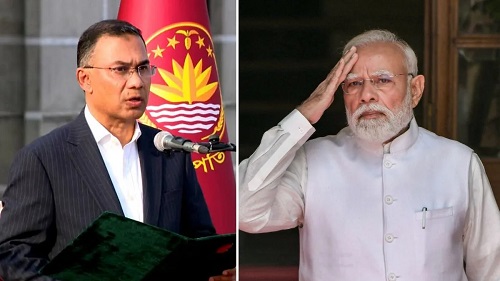
India-Bangladesh relations had remained relatively stable and cooperative during the tenure of former Bangladeshi Prime Minister Sheikh Hasina. However, ties deteriorated sharply under former Chief Adviser Muhammad Yunus, creating tensions between New Delhi and Dhaka. Now, with the Bangladesh Nationalist Party (BNP) led by Tarique Rahman gaining influence in Bangladesh and the BJP forming the government in West Bengal, both nations may see an opportunity to rebuild diplomatic trust and reset relations for the coming years.
One of the most crucial issues that will define future relations is the Ganges Water Sharing Treaty. Signed in 1996 for a period of 30 years, the agreement is set to expire in December this year. Bangladesh has already indicated that its future engagement with India will depend heavily on a renewed and fair water-sharing arrangement. BNP Secretary General Mirza Fakhrul Islam Alamgir recently emphasized that Dhaka wants immediate discussions with New Delhi to implement a new treaty that reflects the needs and expectations of the Bangladeshi people. Water-sharing has always been an emotionally charged issue in Bangladesh, and the handling of this treaty could determine the tone of bilateral relations in the near future.
Another longstanding issue is the proposed Teesta Water Sharing Treaty. The agreement was stalled for years because former Chief Minister Mamata Banerjee opposed it, arguing that sharing Teesta waters would negatively affect North Bengal’s farmers and economy. With the BJP now in power in the state, Bangladesh hopes that the agreement may once again be considered. Dhaka views the treaty as essential for improving agricultural stability and strengthening regional cooperation. For India, the BJP believes that resolving the Teesta issue is strategically important not only for trade and connectivity but also for countering China’s growing influence in Bangladesh.
Border management has also emerged as a major issue following the BJP’s victory. Newly sworn-in Chief Minister Suvendu Adhikari quickly announced his government’s commitment to supporting the Border Security Force (BSF) in fencing the India-Bangladesh border. On May 20, the state government initiated the transfer of land for fencing a 27-kilometre stretch of the border. Adhikari described the move as necessary to curb infiltration and strengthen national security.
However, Bangladesh has reacted cautiously to the development. While acknowledging that fencing may reduce illegal movement, Bangladeshi observers fear it could damage informal cross-border economies that sustain thousands of livelihoods. Concerns have also been raised about possible humanitarian consequences if stricter border controls are implemented without sensitivity.
Another issue creating debate is the Bengal government’s recent order restricting animal slaughter without official certification and banning slaughter in public places. Introduced just before Eid al-Adha, the decision sparked criticism from sections of Bangladesh’s media, which argued that it could create social tensions and affect livelihoods linked to cattle trade.
The BJP’s victory in West Bengal has therefore introduced both opportunities and challenges in India-Bangladesh relations. While there is hope for progress on unresolved issues like the Teesta treaty and border security, concerns over humanitarian and minority-related matters continue to exist. Ultimately, the future of bilateral ties will depend on whether both sides can balance national interests with regional cooperation and mutual trust.




















Leave Your Comment