


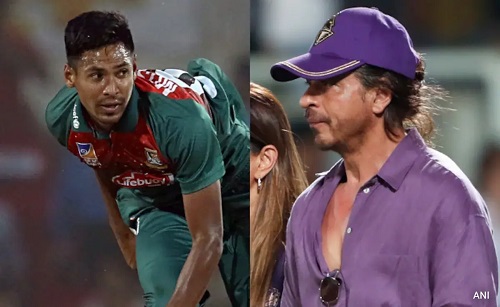
In a dramatic move that underscores the growing entanglement of professional sports with international diplomacy, the Board of Control for Cricket in India (BCCI) has formally instructed the Kolkata Knight Riders (KKR) to release Bangladesh pace bowler Mustafizur Rahman from their squad for the IPL 2026 season. The decision, confirmed by BCCI Secretary Devajit Saikia, follows weeks of mounting public and political pressure linked to civil unrest and deteriorating diplomatic relations with Bangladesh.
The controversy centers on Mustafizur Rahman, who just weeks ago was the toast of the IPL auction. In December, KKR secured the left-arm pacer for a staggering ₹9.20 crore, making him the most expensive Bangladeshi player in the league’s history. His acquisition was seen as a major coup for the franchise, which sought his lethal cutters and death-bowling expertise.
The mood shifted rapidly, however, as political tensions escalated. Widespread protests have erupted within India concerning the deteriorating situation in neighbouring Bangladesh, where reported civil unrest and political instability have sparked international concern. Mustafizur, through no direct action of his own, became an inadvertent lightning rod in this diplomatic storm.
Breaking the board’s initial "wait and watch" policy, BCCI Secretary Devajit Saikia announced the directive in a statement to the news agency ANI.
"Due to the recent developments that are going on all across, BCCI has instructed the franchise KKR to release one of their players, Mustafizur Rahman of Bangladesh, from their squad," Saikia stated.
He added, "BCCI has also said that if they ask for any replacement, BCCI is going to allow that replacement." This clause indicates the board's attempt to balance geopolitical considerations with the competitive integrity of the league and the franchise's needs.
The decision marks a rare instance where the Indian cricket board has intervened in a franchise's player composition for non-disciplinary, non-injury reasons directly tied to international relations. It highlights the increasing vulnerability of global sporting leagues to geopolitical crosscurrents, where athletes can become symbols in broader national discourses.
The move is likely to spark intense debate. Supporters will argue that it is a prudent and necessary step given public sentiment and the broader diplomatic context, prioritizing national concerns over commercial sports interests. Critics, however, may view it as a politicization of sport, unfairly impacting a player's professional opportunity and setting a complex precedent for future selections based on nationality amid political friction.
For the Kolkata Knight Riders, the focus now turns to the auction table or the pool of available replacements to fill the significant void left by a bowler of Mustafizur's calibre. For the BCCI, the episode underscores the challenging tightrope it must walk as the steward of a global sporting spectacle rooted in a nation with dynamic geopolitical realities.
For Mustafizur Rahman, a premier talent in world cricket, his record-breaking IPL contract has been curtailed by forces far beyond the boundary rope—a stark reminder that in today's world, the pitch is rarely just a pitch.




















Leave Your Comment