


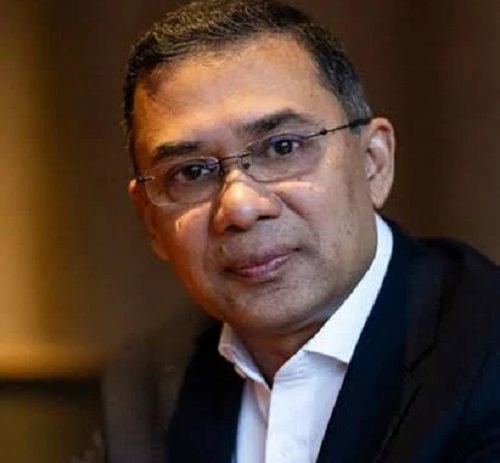
Just days after Tarique Rahman was sworn in as Bangladesh's new Prime Minister on February 17, the country's military underwent a sweeping reshuffle at its highest levels. The changes, issued by Army Headquarters, touch several key strategic commands and notably the country's premier military intelligence agency — signaling that the new BNP-led government is wasting little time in stamping its authority over the armed forces.
Rahman's Bangladesh Nationalist Party swept to power with a commanding two-thirds majority in the February 12 general elections, ending Muhammad Yunus' 18-month interim rule that had followed the ouster of former Prime Minister Sheikh Hasina. At 60, Rahman — long considered Bangladesh's most influential opposition figure — had waited years for this moment, and the rapid military reorganization suggests he is moving deliberately to consolidate his position.
Analysts see the reshuffle as a direct effort to sideline senior army officials appointed under the Yunus administration, replacing them with figures more aligned with the new dispensation.
The most consequential appointment is that of Lieutenant General M Mainur Rahman as the new Chief of General Staff (CGS). Previously serving as General Officer Commanding (GOC) of the Army Training and Doctrine Command (ARTDOC), he succeeds Lieutenant General Mizanur Rahman Shamim, who had recently proceeded on retirement leave.
In a move with significant intelligence implications, Major General Kaiser Rashid Chowdhury has been appointed Director General of the Directorate General of Forces Intelligence (DGFI) — Bangladesh's powerful military intelligence agency. Chowdhury, who was serving as a brigadier general at Army Headquarters, will assume the post upon his promotion to major general. He replaces Major General Mohammad Jahangir Alam, who has been deputed to the Ministry of Foreign Affairs for an ambassadorial posting — a common way in South Asian militaries of easing out officials without a direct confrontation.
The position of Principal Staff Officer (PSO) also changed hands. Lieutenant General SM Kamrul Hasan was replaced by the newly promoted Lieutenant General Mir Mushfiqur Rahman. Like Alam, Hasan has been attached to the foreign ministry for an ambassadorial appointment abroad.
Perhaps the most pointed signal of all involves Brigadier General Mohammad Hafizur Rahman, who was serving as the defence adviser at the Bangladesh High Commission in India. He has been recalled, promoted to major general, and appointed GOC of the 55th Infantry Division — a notable homecoming and elevation for an officer posted abroad under the previous setup. The previous head of the 55th Infantry Division, Major General JM Imdadul Islam, has been moved to the role of Commandant of the East Bengal Regimental Centre (EBRC).
Taken together, the reshuffle follows a recognizable pattern: new civilian governments in South Asia frequently seek to realign the upper echelons of the military soon after taking office, particularly when they have come to power after a period of rule by a rival political formation. Control over the DGFI — which plays a sensitive role in domestic political intelligence — is especially consequential, and the swift change at its helm underscores how seriously the Rahman government is treating the question of institutional loyalty.
Whether these changes translate into lasting political stability or trigger fresh tensions within the military establishment remains to be seen. But one thing is clear: Tarique Rahman is not waiting to find out.


















Leave Your Comment