


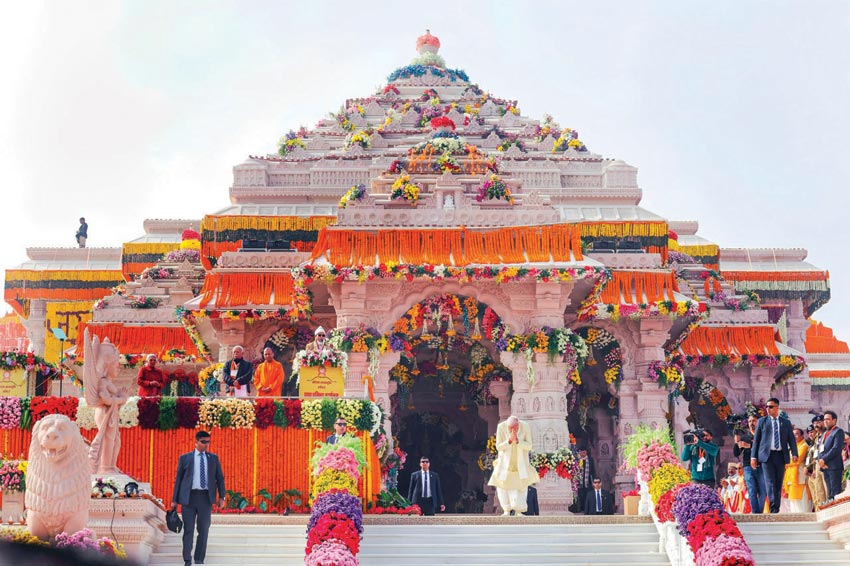
The ancient city of Ayodhya, nestled on the banks of the Sarayu River, has long been a spiritual epicenter of India. Revered as the birthplace of Lord Rama, it has drawn pilgrims for centuries. In recent years, Ayodhya has undergone a remarkable transformation, and the resurgence of this sacred city highlights the timeless relevance of temples as centers of development. The construction of the Ram Temple has not only revived cultural and spiritual fervor but also acted as a catalyst for economic growth, cultural revival, and social unity. Ayodhya's metamorphosis over the past year is unprecedented. The grand Ram Temple stands as the cornerstone of this transformation. The temple symbolizes more than religious devotion—it represents a unifying force for millions of Hindus worldwide. Its construction has sparked a wave of infrastructural development, including improved roads, railway connectivity, and airport, all aimed at accommodating the influx of devotees and tourists. This transformation extends beyond mere physical changes. Ayodhya's revival embodies India's commitment to preserving its heritage while embracing modernity. The city's streets, once modest and narrow, now reflect a vibrant blend of tradition and contemporary urban planning. The economic ripple effects of Ayodhya's resurgence are profound. The Ram Temple has created a burgeoning ecosystem of opportunities, benefiting local artisans, craftsmen, and businesses. Traditional crafts such as stone carving, which were on the brink of extinction, have found new life as artisans contribute to the temple’s intricate architecture. Moreover, the city has seen a surge in hospitality and tourism sectors. Hotels, guesthouses, and restaurants have mushroomed, offering employment opportunities for locals. The Uttar Pradesh government’s initiatives to develop Ayodhya into a global tourism hub have further spurred investment, ensuring sustainable growth. The local economy is also witnessing diversification, with cultural events, festivals, and exhibitions drawing global attention. Ayodhya's prominence as a spiritual destination is now complemented by its potential as an economic powerhouse.
Against this backdrop, it is apt to mention here that Ayodhya’s resurgence is steeped in cultural significance. The construction of the Ram Temple has rekindled interest in the Ramayana, Indian epics, and traditional values. The city's festivals, particularly Ram Navami and Diwali, now attract millions, fostering a renewed sense of pride in India’s ancient heritage. Cultural programmes and research initiatives have found fertile ground in Ayodhya. Institutions focusing on Vedic studies, Sanskrit, and Indian philosophy have begun to flourish, preserving knowledge systems that had been relegated to the margins. The city is reclaiming its identity as a beacon of Indian culture. Temples have historically served as centers of social cohesion, and Ayodhya is no exception. The Ram Temple has become a symbol of unity, transcending regional and linguistic divides. It underscores the shared cultural heritage of a diverse nation, fostering a sense of belonging and collective identity. The temple also exemplifies the spirit of inclusivity. By promoting charitable activities, education, and healthcare initiatives, Ayodhya's revival ensures that the benefits of development reach the underprivileged. Such efforts strengthen the social fabric and embody the spirit of "Sarve Bhavantu Sukhinah" (May all be happy). This resurgence of Ayodhya is not merely a revival of a city but a reaffirmation of a civilization's enduring spirit.

By Deepak Kumar Rath














Leave Your Comment