



SHEKHAR IYER
After Prime Minister Narendra Modi urged us to adopt cost-cutting measures, we have had chief minister after chief minister announce measures to cut spending, reduce non-essential travel, and eliminate long motorcades. Several ministries have begun efforts to eliminate wasteful and unnecessary expenditures.
Because we are grappling with the economic fallout of the ongoing Iran-US war and surging crude oil prices.
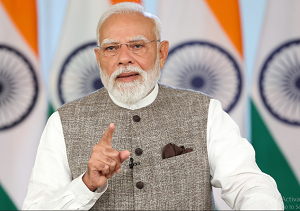
Addressing a BJP rally in Hyderabad on May 10, Modi said India must conserve foreign exchange reserves and reduce fuel consumption as global supply chains remain under pressure due to the prolonged conflict in West Asia.
The US-Iran war has kept the Strait of Hormuz — one of the world’s most critical oil shipping routes — partially disrupted for weeks, triggering fears of prolonged supply shortages.
Modi's appeal came after US President Trump rejected Iran’s latest peace proposals, pushing global crude oil prices above $105 a barrel.
This has intensified concerns over inflation and energy security worldwide. India, which imports more than 88% of its crude oil requirements, has been hit hard by the sharp rise in global oil prices. The rupee has also weakened sharply against the US dollar in recent weeks.
Significantly, Modi said the country must revive habits adopted during the Covid-19 pandemic to reduce fuel consumption and save foreign exchange. India’s fuel import burden has surged sharply since the West Asia conflict escalated earlier this year. Officials warn that continued disruption in the Strait of Hormuz could keep oil prices very high for months.
Modi also appealed to Indians to avoid buying gold for at least one year, saying gold imports put additional pressure on India’s foreign exchange reserves during a global crisis. Foreign exchange is widely used to buy gold. In the national interest, we must resolve not to purchase gold for a year. India is one of the world’s largest importers of gold, and purchases rise significantly during weddings and festive seasons.
Since gold is largely imported, higher demand increases dollar outflow and widens the country’s import bill. The PM also asked citizens to postpone non-essential foreign travel, overseas vacations and destination weddings for a year to conserve foreign currency.
Apart from fuel conservation and reduced imports, Modi also called for lower edible oil consumption, reduced use of chemical fertilisers and greater adoption of natural farming and swadeshi products. There has been a substantial rise in fuel prices.
What about freebies?
Austerity is fine, but isn't it time to take a relook at political freebies? We have seen election after election, with every political party competing to woo voters, with promises to give something or other free of cost!
The current period offers all leaders an opportunity to engage in honest introspection about whether governments should prioritise infrastructure development over unconditional cash transfers and populist giveaways, particularly when state finances are under strain.
There are no major Assembly elections for the remainder of 2026. The next round of elections — in Goa, Manipur, Punjab and Uttarakhand—doesn't take place until early 2027. The Assembly terms in these states are ending in March 2027.
This gives the Centre a critical five-to-six-month window to absorb the economic pain of high prices now and stabilise the exchequer, allowing itself enough buffer to relook at populist calls just ahead of those 2027 polls.
The kind of political risk that Modi is willing to take will determine the economic course of action in the coming months.
The Economic Survey 2025–26 flagged that unconditional cash transfers and populism, often aimed at women and farmers, have ballooned, costing an estimated ₹1.7 lakh crore in FY26.
In February, the Supreme Court criticised states for distributing freebies while ignoring the need for investment in infrastructure, roads, and hospitals. It called for efforts to differentiate between "legitimate public welfare" (e.g., healthcare, education) and "irrational freebies" that create dependency and hamper long-term growth.
After winning the elections, many a chief minister has realised long-term freebie schemes discourage individuals from seeking active employment. They have found that some of the promised schemes are bleeding their exchequer.
It's true that reversing freebies is politically difficult due to the competitive nature of elections. Some argue that when the economy is under strain, the government should boost demand through welfare rather than suppressing it through austerity.
But the current crisis provides an opportunity to re-examine this game of freebies.
We know that from free electricity to loan waivers, from free food grains to laptops and cycles, governments at both the Centre and the States have turned giveaways into political weapons. They attract votes and bring short-term relief to citizens. However, they come at an enormous cost to the country’s future.
Each year, India spends ₹7–10 lakh crore on subsidies and freebies — nearly 20% of the total national budget. If that money could be redirected into the real challenges, providing quality education to all, infrastructure, a boost to farm output, and women’s empowerment, we could leave behind a better India.
We spend just about ₹1.3 lakh crore a year on education, which is one-fifth of the freebies budget. It is tragic to see overcrowded classrooms, crumbling school buildings, underpaid teachers, and poor learning outcomes. Perhaps more funds could transform our schools into modern classrooms with modern digital learning tools, trained teachers, and safe transport. Higher education could expand access and skill training for jobs
Similarly, our infrastructure spending is impressive: around ₹10 lakh crore in capital expenditure. But this does not cover everything. A lot of the funds do not always result in better road quality, public transport, and housing. If freebies were redirected, the quality of life for our people could change dramatically.
For instance, women empowerment schemes get only around ₹25,000 crore a year, as against ₹7–10 lakh crore in freebies.
We could spend on women’s education, skills, safety infrastructure, and financial independence. Empowered women raise healthier children, contribute to the workforce, and strengthen the economy. But our leaders think of our women as vote banks to be wooed with free gas cylinders or one-time cash transfers. This may provide temporary relief, but it does not build long-term empowerment.
In FY26, 12 Indian states together set aside Rs 1,68,040 crore for unconditional cash transfers to women. That is 0.5 per cent of India's entire GDP, which was distributed without any work requirement, training component, or outcome condition. If you include power subsidies, farm loan waivers, free grain, and free transport, the total state subsidy bill has more than doubled since 2018-19 to approximately Rs 4.7 lakh crore. It is not our case that cash transfers, when well-targeted, cannot push up consumption, stimulate local economies, or improve human capital. But that would require the money to go to where it is needed.
We have to remind ourselves that state government debt has tripled in a decade — from Rs 17.57 lakh crore in FY14 to Rs 59.60 lakh crore in FY23, according to the Comptroller and Auditor General of India’s December 2025 decadal audit.
The NK Singh Committee's Fiscal Responsibility and Budget Management review (2017) set a combined Centre-State debt ceiling of 60 per cent of GDP as a prudential anchor. India is at roughly 81 per cent. The ceiling has been broken.
The most serious economic charge against freebie spending is that it displaces capital expenditure. The RBI, Economic Survey 2025-26, and multiple CAG reports have all raised this issue. Most states cut capital outlay by 19 per cent on average compared to just eight per cent for revenue expenditure.
In July 2022, Modi coined the phrase "revdi culture" to describe opposition parties' freebie promises. Less than two years later, the Bharatiya Janata Party governments in Madhya Pradesh and Maharashtra were forced to launch the Ladli Behna and Ladki Bahin schemes, which are, functionally, identical to what the PM had criticised. The BJP won both elections.
Similarly, the BJP won Assam for a third time on the basis of a popular vote, thanks to the last-mile delivery of freebies.
In Bengal, the Suvendu Adhikari-led BJP government is readying its first Budget. It could be facing a near doubling of the state’s expenditure on social welfare schemes if it goes through with the party’s pre-poll promises. These include increasing monthly assistance to women under the Lakshmi Bhandar scheme and the unemployment allowance, and clearing the Dearness Allowance dues owed to state government employees. The expenditure will go up to about Rs 1.29 lakh crore per year. As of now, the state government spends Rs 54,000 crore on Lakshmi Bhandar and unemployment allowance, with DA dues unpaid.
Tamil Nadu Chief Minister and TVK leader Vijay’s top promises include a monthly allowance of ₹2,500 for women heads of families, 200 units of free electricity, and five lakh government jobs. His platform, which focuses on welfare, education, and women's safety, also pledges 6 free LPG cylinders per year and up to ₹20 lakh in collateral-free education loans. The TVK’s projected expenditure on its welfare schemes equals approximately one-third of Tamil Nadu’s total revenue receipts of ₹3.31 lakh crore, as per the 2025-26 state budget, according to a report.
In Tamil Nadu, social welfare measures such as subsidised food and school meals were initiated under MG Ramachandran (AIADMK founder) and later expanded to include free televisions, mixer-grinders, laptops, bus travel, cash assistance, and electricity subsidies under leaders such as J Jayalalithaa (AIADMK) and M Karunanidhi (DMK). M K Stalin's DMK government, which lost power in the recent elections despite freebies, had promised the moon. We need to stop somewhere. The right time to do so is now. (end)
(The content of this article reflects the views of writer and contributor, not necessarily those of the publisher and editor. All disputes are subject to the exclusive jurisdiction of competent courts and forums in Delhi/New Delhi only)



















Leave Your Comment