


Being prepared for war is a pathway to peace," Chankya.
A nation's strength stands as the most impactful defence and deterrent. Peace can be established by possessing strength only. the significance of harnessing a nation's soft power and economic strength as integral components in enhancing the security environment. the emergence of deep technologies like AI, robotics, quantum, semiconductors, biotechnology, drones and hypersonic, Hon’ble Vice-President Shri Jagdeep Dhankhar stressed that “Prowess and mastery of these domains will determine the strategic haves and have-nots of the future”. (extracted from CHANAKYA DEFENCE DIALOGUE 2023 04 NOV 2023 6:39PM by PIB Delhi Release ID: 1974733).
It is sad that India did not follow this strategy immediately after freedom and paid a very heavy price.
Legacy of British Rule.
In 1947 India gained independence with minimal arms manufacturing capabilities. It relied heavily on British-era ordnance factories, which were set up to serve the needs of the British Indian Army during colonial rule.
● India inherited 16 ordnance factories from the British, which were focused on assembling and repairing arms rather than large-scale indigenous production.
● These factories produced small arms, ammunition, and basic military equipment.

Nehruvian blunders hindered the development of defence capabilities.
What would have been a great message of peace and coexistence became blunder because of the Chinese pursuing the art of war. Philosophy of Panchsheel was stabbed in the back by meekly watching accession of Tibet by China, taking of Tibetan refugees by India and loss of thousands of square kilometers in 1962 war with China. Unfortunately this was not the first mistake, in acted meek in past also. Instead of taking decisive military action against the Pakistan supported tribal raiders, to liberate the entire territory, Nehru followed the advice of lord Mountbatten and took the issue to United Nations. promised a plebiscite to the people of Kashmir. The issue is bleeding india for last 76 years. The art of war strategies pursued by China can only be challenged by following the Chankya six fold policy of managing enemies.
Lack of Indigenous Defense Industry could not be mitigated.
● There was no significant indigenous arms research or manufacturing base.
● India depended on imports for advanced weaponry, including aircraft, tanks, and artillery.
● The lethargy led to serious setbacks for India.
Dependence on Foreign Suppliers
● The Indian military was equipped with British weapons like the Lee-Enfield rifle, Vickers machine guns, and British-made artillery.
● Aircraft and armored vehicles were almost entirely imported.
● These arm exporting nation exploited India, for example, during 1965 war they refused supply of spare parts. Fully equipped Pakistan had technical advantage. It was the bravery and indigenous wit of Indian armed forces which dug graveyard for patton tanks and sabre jets.
Post-Independence Focus on Defense Manufacturing.
● Recognizing its weak defense manufacturing base, India took steps to develop self-sufficiency.
● Industry and thinkers like Vikram Sarabhai ( founder of ISRO) and Tatas and Homi Jehangir Bhabha were doing their bit.
● In the 1950s, India established Hindustan Aeronautics Limited (HAL) to focus on aircraft manufacturing.
● Total focus on public sector eliminated competition and these PSU failed the nation in delivering the results.
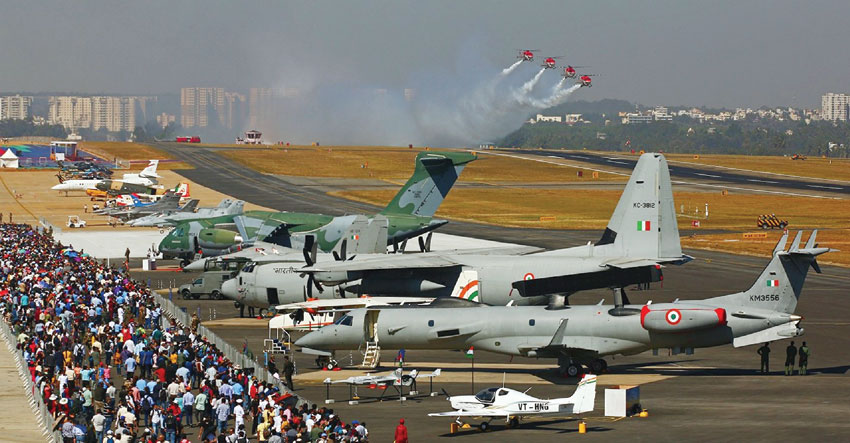
Made in india for defence import substitution.
In last decade the leadership focused on developing indigenous weapons for our forces. PPP model was promoted and private sector was encouraged to join. This move resulted in foreign manufacturer entring as joint venture partners. Foreign companies are also coming to India for manufacturing.
The Israel Weapon Industries (IWI), is collaborating with the PLR. L&T is partnering with a Korean company. Airbus is manufacturing C-295 air craft for the Indian Air Force. the Israeli company manufacture Howitzer guns Elbit Systems and Aerospace in collaboration with Adani Defence. It’s gave the Indian Navy its long-endurance drone, the Drishti 10 Starliner UAV.
The initiative has shown green shoots.
India's defence exports have touched a record Rs 210.8 billion (approximately US$ 2.6 bn) in the financial year 2023-24 denoting a growth of 32.5% over the last financial year.
The growth picture gets more sensational, If we compare the last decade with the previous one. The exports have grown 21 times from Rs 43.1 bn from 2004-05 to 2013-14 to Rs 883.2 bn from 2014-15 to 2023-24.
This explosive growth is fuelled by a strong indigenisation push by the government in defence manufacturing and exports. It has powered many PSU defence stocks to rise. The contribution of private sector and the PSUs have been about 60% and 40% respectively. There has been a consistent rise in the number of export authorisations issued to the defence exporters during 2023-24. From 1,414 export authorisations in 2022-23, the number has jumped to 1,507 in 2023-24.
What Does the world is buying from Indian manufacturers?
The world is buying India exports systems such as the Dornier-228 aircraft, 155 mm advanced towed artillery guns, Akash missile system, radars, simulators, mine-protected vehicles, armoured vehicles, Pinaka rockets and launchers, thermal imagers, body armour, line replaceable units, parts and components of avionics (aviation electronics), and small arms.
Brahmos missiles are the new hope for the nations suffering in aggressive policies of assertive China.
The Republic of Philippines signed a deal to buy three batteries of the Brahmos missiles worth the US$ 375 million. Other southeast Asian nations like Indonesia Vietnam and Malaysia have also shown interest in the BrahMos, and the demand might have a China link which is bullying all its neighbours and who are keen to equip with suitable deterrents.
India is selling military gear to over 85 nations. It exports missiles, artillery guns, rockets, armoured vehicles, offshore patrol vessels, personal protection equipment, radars, surveillance systems and ammunition. Light combat aircraft, helicopters, and even tanks are examples of equipment with export potential.
Export of bullet-proof jackets to 34 countries, including Australia, Japan, Israel, and Brazil is another big milestone.
Selling weapons is not the only goal for india as it seems to be following sixfold policy envisaged by Chankya.
Chankya gave the six fold path to achieve supremacy. These were Sandhi ( treaties),Vigrah (War), Asan (neutrality), Yana ( preparing for war),Samasraya ( allainces) and Dvaidhibhava ( Dual Policy).
Of late india has exhibited these stretagies while dealing with Ukrain war, dealing with Canada. Getting exemption in buyin oil from Iran and Russia are few examples of rising and asserting India.
Integration of the diffrent resources and using the best combination is the goal. India appointed a Chief of Defence Staff (CDS) in 2020 to head the newly curated Department of Military Affairs (DMA) to enhance jointness, integration and theaterisation within the Indian military so that the three services utilise their resources in an integrated way. Parliament has passed the ISO or the Inter-Services Organisations Act in 2023 to govern the reformed “integrated system” and to regulate the personnel deputed in joint inter-service organisations. Making operational the theatre commands is the next goal. These theatre commands and the expansion of our maritime footprint across ‘strategic locations’ in the Indian Ocean Region (IOR) will improve our overall defence capabilities.
The power supremacy is not only in controlling borders but it lies in controlling the Indian Ocean.
With its vital maritime trade routes serving as ‘strategic highways’ connecting West and Southeast Asia, East Asia, Europe and the Americas. For millennials India is the resident power in Indian Ocean. off late the gap between the Indian and Chinese navies has widened, India’s maritime fleet still has only around 150 warships, while China has 370 warships. India has made some strategic moves to counter China’s naval expansion into South Asia but more is needed.
Cyber Soldiers and AI Generals: The Future of War is Here.
With the adoption of the latest technologies, cyber capabilities are becoming increasingly important in modern warfare. Developing robust cyber defence mechanisms and offensive capabilities will protect against cyber threats and ensure resilience. India has been taking steps to ensure this but our IT companies were focused on coding more than the developing AI solutions. Drastic measures are required to match the progress made by existing superpowers.
Every Maharana Pratap needs a Bhamashah.
Economic and industrial support ensures sustained military modernisation. The economic growth gas ensured a substantial defence budget, coupled with a strong industrial base, has supported continuous innovation and production of advanced military hardware in India. As the exports increase, it will be much easier to finance future projects for developing breakthrough technologies.
Chinese bullying is the motivation.
Keeping an aggressive China at bay is India’s biggest defence challenge as it marches on in its quest to be among the big boys of world security.There is a long list of countries which have had historical disputes with China over maritime territories,apart from making claims on Indian states, China has made similar claims on Bhutan, Nepal, Myanmar, Indonesia, Malaysia, Vietnam Philippine etc. The Brahmos missile offers a credible deterrent. The missile's precision and speed make it an effective tool for defending against Chinese naval and land-based threats. What needed is speed in production and impeccable support. The guts to withstand pressure as the assertive China will not leave any opportunity to create unrest by supporting extremists and it has made its intentions clear through it media.
Concerns and challenge.
Although the Indian defence industry is now on a much better footing, it faces several challenges. The foremost challenge is increasing production, at least to a level that meets India’s procurement requirements. Despite the government’s efforts and an ambitious production target of US$26 billion by 2025,The slow progress in India’s defence production and an ever-increasing procurement budget have ensured that India remains dependent on external sources for critical defence hardware requirements.
On the export front, despite registering a noticeable increase in international arms sales, the industry is way off the target set by the government. The biggest challenge in meeting the government’s export target comes from the DPSUs, which have been slow in rising to expectations. Some recent attempts to export major systems have not met with success. Many challenges need to be overcome to enable the industry to achieve higher self-reliance. Defence production needs to be augmented to a level that at least matches India’s growing procurement to avoid direct imports. The industry’s R&D capacity needs improvement to deepen indigenisation and avoid imports, both direct and indirect. There is also a need to expedite the defence procurement decision-making process to facilitate the industry in manufacturing and supplying arms in the shortest possible time frame.
The positive thing is the nation is aware and moving in the right direction.
Conclusion
The growth of India’s defence exports bolsters its economy and enhances its strategic influence globally. By establishing itself as a reliable defence partner, India can strengthen diplomatic ties, foster regional security cooperation, and assert itself as a key player in the defence sector. On the diplomatic front, India's unique approach to comprehensive deterrence, unravelling its philosophy, practicalities and future developments including China's assertiveness and regional economic downturns influenced by various crises.

By Rakesh kumar
(The content of this article reflects the views of writers and contributors, not necessarily those of the publisher and editor. All disputes are subject to the exclusive jurisdiction of competent courts and forums in Delhi/New Delhi only)














Leave Your Comment