


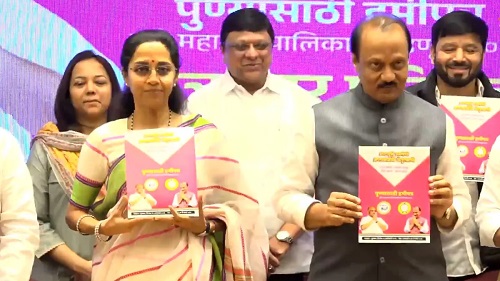
In a dramatic political development that has reshaped the landscape of Maharashtra's urban politics, the two rival factions of the Nationalist Congress Party (NCP) have joined hands to contest the upcoming Pune and Pimpri-Chinchwad civic polls. In a move that signals a temporary but significant thaw in the bitter feud that split the party in 2023, leaders from both camps stood together to release a joint manifesto, presenting a united front to the electorate.
The sight of Deputy Chief Minister Ajit Pawar, leading the NCP faction within the ruling Mahayuti coalition, sharing the dais with his cousin and NCP (Sharadchandra Pawar) leader Supriya Sule, a key figure in the opposition Maha Vikas Aghadi, was nothing short of extraordinary. This collaborative push for the crucial civic bodies, scheduled for polls on January 15, underscores a shared priority: reclaiming urban governance in Maharashtra's cultural and economic heartland.
A Manifesto Born of Consensus
The joint manifesto, unveiled at a press conference addressed by both Ajit Pawar and Supriya Sule, focuses squarely on Pune’s most pressing civic woes. It promises a multi-pronged assault on the city's chronic issues:
Water & Infrastructure: A guaranteed regular supply of clean drinking water, pothole-free roads, and seamless connectivity between major arteries and inner-city routes.
Environment & Health: A pledge to make Pune "free from air pollution" and the provision of hi-tech healthcare services.
Citizen Relief: Populist measures like free travel on PMPML buses and the metro, a property tax waiver for homes up to 500 sq ft, and free computer tablets for students.
Urban Development: Commitments to easing traffic congestion, city cleanliness, and slum rehabilitation.
Politics Over Party Lines
The alliance is a clear strategic manoeuvre. By uniting the traditional NCP vote bank, which was at risk of being split, the factions pose a formidable challenge to the BJP, which controlled both civic bodies from 2017 to 2022. Ajit Pawar, while being part of the state and central governments with the BJP, did not mince words when criticising the local BJP leadership. He accused them of stalling Pune and Pimpri-Chinchwad's development "despite substantial funding from both governments."
The presence of Supriya Sule and other NCP (SP) leaders, who had been largely absent from the campaign trail so far, adds considerable weight to this united push. It suggests a tactical decision by the Sharad Pawar camp to prioritise local civic influence over strict adherence to state-level opposition alliances for these specific polls.
A Contrast in Mumbai
The Pune pact stands in stark contrast to the political dynamics in the state capital. Even as the Pawar factions bridged their divide for Pune, the ruling allies in Mumbai are preparing their own offensive. The BJP-Shiv Sena (Shinde) alliance is set to release its manifesto for the high-stakes Brihanmumbai Municipal Corporation (BMC) elections on Sunday, January 11, with Chief Minister Eknath Shinde and Deputy CM Devendra Fadnavis addressing a major rally at Shivaji Park on Monday.
A Temporary Truce or a New Blueprint?
The burning question is whether this joint front is a one-election wonder, confined to the municipal battleground of Pune, or a precursor to a larger political realignment. For now, it demonstrates the fluid and pragmatic nature of Maharashtra's politics, where local objectives can temporarily override national and state-level rivalries. The electorate of Pune is now presented with a unique choice: a coalition born of a party’s divided history, promising a unified vision for the city’s future. The outcome on January 15 will not only decide the fate of Pune's civic body but could also redefine alliance politics in urban Maharashtra.



















Leave Your Comment