


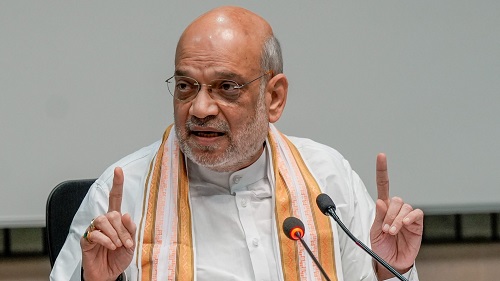
Union Home Minister Amit Shah will chair a high-level conference of Superintendents of Police (SPs) from India's border districts in New Delhi on Thursday, as the Centre intensifies efforts to strengthen border management and tackle emerging security challenges. The meeting is expected to focus on illegal immigration, cross-border infiltration, drone threats, narcotics smuggling and other issues affecting the country's frontier regions.
The conference will bring together SPs from border states and Union Territories, including Jammu and Kashmir, Punjab, Uttarakhand, Rajasthan, Gujarat, Uttar Pradesh, Bihar, West Bengal, and the northeastern states. Senior officials from the Ministry of Home Affairs will also participate in the deliberations aimed at enhancing coordination between border districts and central agencies.
The meeting is designed to review the existing security framework along India's international borders and assess the prevailing situation in vulnerable regions. Officials are expected to discuss strategies to improve surveillance, intelligence sharing and law enforcement mechanisms to effectively counter cross-border threats.
Border districts often face multiple security challenges, ranging from infiltration and illegal immigration to the smuggling of narcotics, arms and counterfeit currency. The conference will seek to identify practical measures to improve coordination among state police forces, central armed police forces and intelligence agencies operating in these sensitive areas.
One of the major issues expected to dominate the discussions is the Centre's ongoing campaign against illegal immigration. The government has repeatedly expressed concern over unauthorised cross-border movement, particularly in districts located along India's eastern international border.
According to official assessments, illegal immigration has implications beyond security concerns, with the government arguing that organised infiltration attempts have the potential to alter the demographic composition of certain border districts. The conference is expected to examine the challenges faced by local police in identifying illegal immigrants, strengthening documentation processes and improving inter-agency coordination to address the issue effectively.
Apart from illegal immigration, the conference is likely to deliberate on the growing threat posed by drones, which have increasingly been used for cross-border smuggling of narcotics, weapons and other contraband, especially along India's western borders. Officials are expected to review the effectiveness of existing anti-drone measures and discuss technological solutions to counter such activities.
Narcotics trafficking is also expected to feature prominently in the discussions. Border regions continue to remain vulnerable to organised drug smuggling networks that exploit porous stretches of the international boundary. The meeting will likely explore ways to strengthen intelligence-based operations and improve coordination among enforcement agencies to dismantle these networks.
The conference comes against the backdrop of the Centre's decision a few months ago to constitute a high-level committee to examine demographic changes occurring in different parts of the country. The committee has been tasked with studying the extent of such changes and identifying the factors contributing to them.
The findings and observations related to this exercise are expected to inform future policy measures concerning border management, internal security and immigration enforcement.
Given the diverse nature of India's international borders, which stretch across mountains, deserts, riverine areas and dense forests, officials believe greater coordination among border district police chiefs is essential for addressing region-specific challenges.
The conference is expected to facilitate the sharing of best practices, operational experiences and successful enforcement strategies among SPs from different states and Union Territories. The outcome of the deliberations could shape future initiatives aimed at strengthening India's border security architecture and ensuring a coordinated response to evolving national security challenges.



















Leave Your Comment