


The Middle East is witnessing a sharp rise in tensions as the conflict involving the United States, Israel, and Iran continues to escalate. The situation has become more serious after Iran reportedly launched drone and missile strikes targeting sites in Saudi Arabia, raising concerns about a broader regional conflict.
According to reports, some of the strikes are believed to have hit key locations within the kingdom, including energy facilities and other strategic installations. The attacks have heightened fears over the stability of the region, particularly as Saudi Arabia remains one of the world’s leading oil producers.
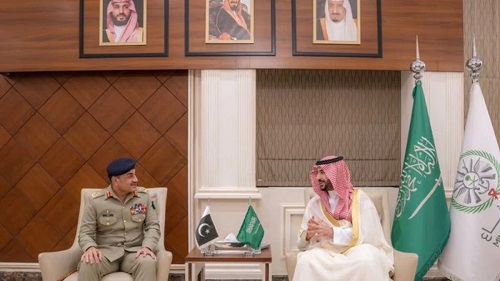
Amid the growing tensions, Saudi Arabia’s Defence Minister Khalid bin Salman held a meeting with Pakistan’s Chief of Army Staff, Field Marshal Asim Munir, to discuss the unfolding security situation. The talks focused on the reported Iranian attacks and possible responses within the framework of the two countries’ strategic defence partnership.
Sharing details of the meeting on social media platform X, Khalid bin Salman said the discussions addressed the need to counter threats to the kingdom’s security. “Met with Pakistan’s Chief of Army Staff and Chief of Defense Forces, Field Marshal Asim Munir. We discussed Iranian attacks on the Kingdom and the measures needed to halt them within the framework of our Joint Strategic Defense Agreement. We stressed that such actions undermine regional security and stability and expressed hope that the Iranian side will exercise wisdom and avoid miscalculation,” he posted.
The meeting assumes greater significance because of the Strategic Mutual Defence Agreement signed between Saudi Arabia and Pakistan in September 2025. The pact, signed by Saudi Crown Prince Mohammed bin Salman and Pakistan’s Prime Minister Shehbaz Sharif, commits both countries to treating an attack on one as an attack on both. The agreement further strengthened the long-standing military cooperation between the two nations.
Under the terms of the deal, any direct attack on Saudi territory could potentially involve Pakistan in the kingdom’s defence efforts. This provision has drawn attention following reports that Iranian drones and missiles struck locations inside Saudi Arabia.
Pakistan’s role is now being closely watched by regional observers. Historically, Islamabad has maintained close military ties with Riyadh, including the deployment of Pakistani troops in Saudi Arabia for training and defence assistance. With the new defence pact in place, analysts believe Pakistan’s security role in the kingdom could become even more prominent if tensions continue to rise.
However, Pakistan faces several domestic challenges that could complicate any direct involvement in a wider Middle East conflict. The country is currently dealing with economic pressures, internal security concerns, and sensitive diplomatic relations with neighbouring states.
Entering a large-scale conflict could place additional strain on Pakistan’s military resources and finances, making the situation particularly complex for Islamabad.
Pakistan has already indicated its concern over the developments. The country’s Foreign Minister Ishaq Dar reportedly conveyed a message to his Iranian counterpart warning against attacks on Saudi Arabia. He suggested that continued strikes could force Pakistan to reconsider its position if its defence commitments under the agreement are triggered.
As tensions continue to simmer, the evolving dynamics between Iran, Saudi Arabia, and Pakistan could play a crucial role in determining whether the conflict remains contained or expands further across the region.


















Leave Your Comment