


"We have implemented a strict Direct Benefit Transfer system. The moment a farmer sells his produce at the mandi, we guarantee that within 48 hours the payment is directly credited into his bank account. No middlemen, no delays. Farmers even receive SMS alerts on their mobile phones confirming the credit. This simple but revolutionary step has given farmers tremendous confidence. Today, when they walk into a mandi, they know their hard work will be respected, their crop will be bought at the declared MSP, and the money will arrive in their account within two days. This has ended decades of exploitation,
" said Krishna Chandra Patra, Minister of Food Supplies, Consumer Welfare, Science & Technology, Government of Odisha, in an exclusive interview to Deepak Kumar Rath, Group Editor, Uday India. Excerpts:
It has now been over a year since your government came into power. You hold the important portfolios of Food and Civil Supplies, and also Science and Technology. Let us begin with the subject closest to the people — the farmers. Prime Minister Narendra Modi had promised that the income of farmers would be doubled, and that Odisha’s farmers, who for years were denied justice and a fair minimum support price (MSP), would finally be empowered. After a year in office, what achievements do you feel your government has delivered for the farmers of Odisha?
Our Hon’ble Prime Minister Narendra Modi had indeed given a solemn assurance to the farmers of India that their income would be doubled. I am happy to share that in Odisha, we have already begun to see this promise turning into reality.
Earlier, many farmers in Odisha struggled to even get ₹200 or ₹500 in their bank accounts. Today, under our government’s policies, those same farmers see ₹40,000, ₹50,000 — even up to ₹1 lakh in their accounts. This change is transformational. Farmers who once could not afford basic necessities now purchase motorcycles, even four-wheelers. They invest in their children’s education and contribute to the economy by spending in the local markets.
Our government has ensured transparent procurement. Last year, Odisha achieved procurement of 58 lakh metric tonnes of paddy, and this year we have already crossed 74 lakh metric tonnes. In the rabi season alone, 20 lakh metric tonnes were procured, compared to only 12 lakh metric tonnes the previous year. As of now, nearly 1.6 million farmers have registered for procurement.
What is most satisfying is that even farmers who had abandoned cultivation years ago, discouraged by corruption and lack of fair prices, are returning to agriculture. They trust that in this government, their crops will be bought at fair rates, their accounts will be credited directly, and they will not be cheated.
That is indeed remarkable progress. But with growing production and procurement comes the challenge of storage. In many coastal districts, farmers face problems because of insufficient infrastructure. Often, paddy bags are left in the open due to lack of warehouses or cold storages, and even Food Corporation of India (FCI) godowns are insufficient. How is your government addressing this gap?
This is a very important point. For 24 years, the previous government neglected the creation of basic infrastructure. There were neither enough mandis nor adequate storage facilities. We are determined to correct this historic injustice.
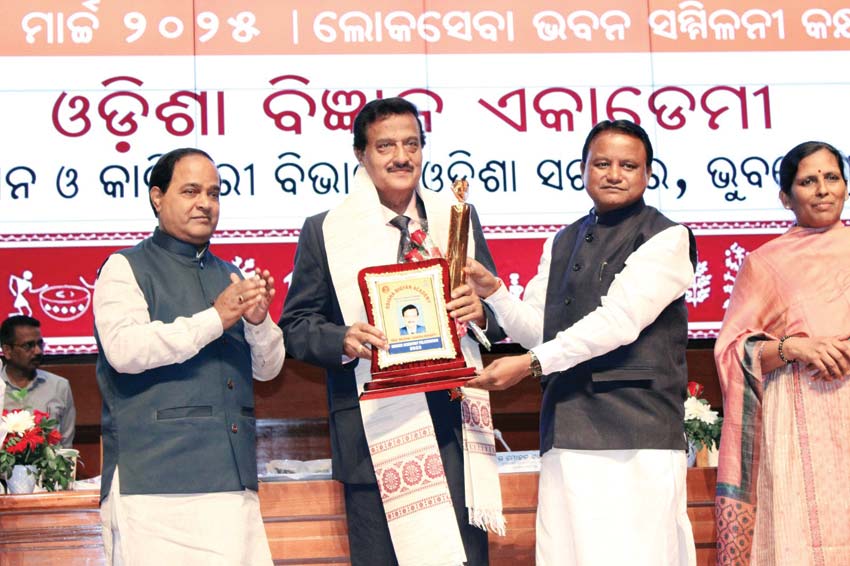
Recently, we initiated the construction of state-owned warehouses with a combined capacity of 10 lakh metric tonnes. Sixteen new godowns, each with a capacity of 25,000 metric tonnes, are being set up across the state. In addition, godowns of 5,000 and 10,000 metric tonnes capacity will also be built as per district requirements.
These are state government facilities, separate from FCI warehouses, and will ensure that farmers’ produce is stored safely. Work has already begun and tenders are in process. Soon, every district will have adequate storage facilities linked to production levels.
You mentioned transparency. Farmers often fear that corruption or middlemen may eat into their earnings. How has your government ensured that payments actually reach farmers directly and quickly?
We have implemented a strict Direct Benefit Transfer system. The moment a farmer sells his produce at the mandi, we guarantee that within 48 hours the payment is directly credited into his bank account. No middlemen, no delays. Farmers even receive SMS alerts on their mobile phones confirming the credit.
This simple but revolutionary step has given farmers tremendous confidence. Today, when they walk into a mandi, they know their hard work will be respected, their crop will be bought at the declared MSP, and the money will arrive in their account within two days. This has ended decades of exploitation.
That’s encouraging. But procurement is not only about money — it also requires strict vigilance. You are known for your surprise visits to mandis, often without prior notice, which keeps officials on their toes. Could you share some examples of what you discovered during these visits?
Yes, I believe a minister’s responsibility is not only to make policies but also to ensure they are implemented honestly. I have personally visited over 100 mandis across Odisha, often unannounced. This allows me to see the ground reality without any pre-arranged show.
During these visits, I caught several corrupt officials red-handed. In fact, 61 officers involved in malpractice and cheating farmers have been suspended. Some were manipulating weights, others were delaying payments or harassing farmers. We took immediate action because our government will never tolerate corruption in food procurement.
On the positive side, I have also witnessed heartwarming transformations. Farmers proudly show me their new vehicles, their improved homes, their ability to send children to better schools — all because of timely payments. These stories strengthen my resolve to keep fighting for them.

Let us now shift to your second portfolio — Science and Technology. Odisha was once known as a hub of research and innovation, but in recent decades this sector has been neglected. What new initiatives is your government introducing to revive science and technology in the state?
We believe that development cannot be one-dimensional. Alongside food security, science and technology are the engines that will drive Odisha into the future.
Our plan is to establish projects such as science parks, planetariums, and district-level science centres across the state. Already, work on new planetariums is underway in several districts. Most significantly, Bhubaneswar will soon host a state-of-the-art Science City, for which over 100 acres of land have been earmarked. This project will serve as a hub for innovation, education, and public engagement with science.
We are also focusing on biotechnology. Odisha has a 570-kilometre coastline — a treasure trove for marine research. We have signed six MoUs with universities and organisations to set up ocean research centres, biotechnology parks, and collaborative projects in medicine and pharmaceuticals. These will not only boost research but also attract investment and create jobs.
Additionally, we are upgrading the Institute of Mathematics into a full-fledged university and strengthening the Institute of Physics with new facilities. A major vaccine production centre in Odisha, which played an important role during the COVID-19 crisis, is also being expanded.
Coming back to your Food and Civil Supplies department, one of your most discussed reforms has been the e-KYC system for ration cards. Could you explain how this has changed the system and eliminated corruption?
Certainly. For years, ration card distribution was riddled with fraud. People who had passed away, government employees, even income tax payers — all continued to hold ration cards illegally. Chawal (rice) meant for the poorest families was being siphoned off by middlemen, dealers, and mafias.
We introduced biometric-based e-KYC — fingerprint and iris scans — for every beneficiary. Those who failed to complete e-KYC were struck off. Through this process, we discovered over 5.7 lakh “dead cards” in the names of people who were no longer alive, yet rice was still being drawn in their names. We also found around 1 lakh people who voluntarily surrendered their ration cards after my public appeal, realising they were not entitled.
By plugging these leaks, we saved nearly ₹1,200 crore annually. This money is now being used to provide fresh ration cards to over 6 lakh genuinely poor families who were earlier left out. Another 15 lakh applications are under process.
Naturally, such bold measures must have upset vested interests. Did you face any resistance or attacks from the so-called ration mafia?
Yes, resistance has been strong. Once, while returning from a public event, my convoy was obstructed with logs placed on the road. These were clear attempts by vested interests to intimidate me. But I consider such challenges part of public life. If the cost of cleaning a corrupt system is a few attacks, I am ready to face them. My duty is to ensure that not a single poor person is deprived of their rightful ration.
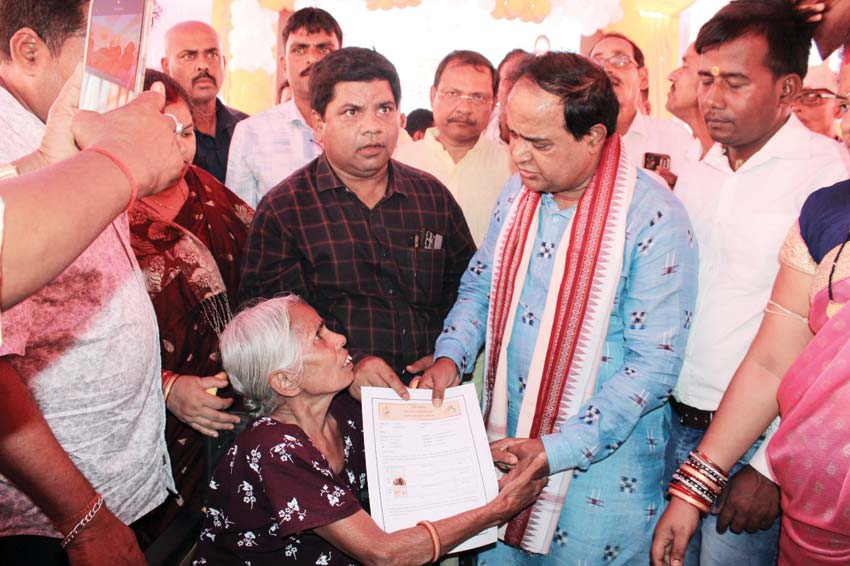
Moving towards your constituency, Dhenkanal, you have spoken about new industries and infrastructure. Could you share some upcoming projects that will transform the region?
Yes, Dhenkanal is poised for a wave of development. First, a major solar energy project is underway in the region. Once completed within a year, it will provide training and employment opportunities to nearly 15,000 students in renewable energy.
Another project in the energy sector is also taking shape, which will create jobs for at least 5,000 young people. In agriculture, mangoes and cashews from Dhenkanal are already being exported to international markets. A new medical college has been sanctioned for the district, and construction will begin shortly. Additionally, the long-awaited ring road around Dhenkanal town is being built, easing connectivity and boosting trade.
At the state level, I must also thank Prime Minister Narendra Modi and our Chief Minister Mohan Charan Majhi for sanctioning the six-lane Bhubaneswar–Cuttack–Shankarpur–Govindpur corridor. This 110 km highway, of which 22 km passes through Dhenkanal, will revolutionise connectivity. Roads, internet, and digital infrastructure together will ensure that no farmer or entrepreneur feels isolated.
You have often said that despite being a minister, you still see yourself as an ordinary worker of the RSS and BJP. How do you balance your responsibilities as a Cabinet Minister with your ideological roots?
It is true. I consider myself, first and foremost, a karyakarta — a worker of the Sangh and the BJP. I attend RSS shakhas regularly, and my political philosophy is shaped by the values I imbibed during the Ram Mandir movement, where I even spent a month in jail as a young activist.
My journey began not because I wanted power, but because my colleagues and seniors trusted me to represent the party. In 1995, I contested my first election, not out of ambition but because the organisation asked me to. The faith of the people and the dedication of my workers brought me here.
Even today, I keep reminding myself that ministerial office is temporary, but the bond with the people and the ideology of service is permanent.
Finally, what is your vision for Odisha’s future?
My vision is simple: when our farmers are prosperous, when our youth have opportunities in science, technology, and industry, when corruption-free governance ensures that every rupee reaches the needy — then Odisha will truly shine.
Prime Minister Modi has always said: if the farmer becomes strong, the nation automatically becomes strong. I believe Odisha will play a central role in realising that dream. Our government will continue to work tirelessly to build transparent systems, promote innovation, and empower every citizen.



















Leave Your Comment