


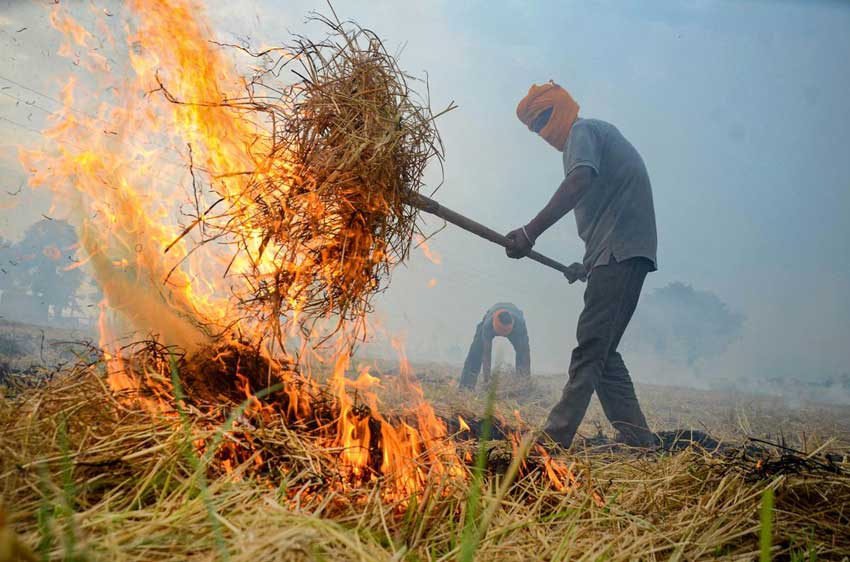
Air pollution in North India reaches alarming levels during the onset of winter season and many places in Air Quality index in Delhi has reached to severe status with values >400. The implications on this on health is immense and many times irreversible. The combination of various factors, including crop burning, vehicle emissions, industrial pollution, and typical north India winter weather conditions, contribute to this environmental crisis. The winter weather conditions, contribute to the trapping of pollutants in the air as the affected region experiences a temperature inversions situation, where a layer of warm air traps a layer of cool air close to the ground. This inversion conditions prevents the dispersal of pollutants, leading to their accumulation in the lower troposphere. In addition, calm upper air wind conditions also restrict ventilation of pollutions at the higher part of the troposphere, as a result, the air pollution levels worsen significantly, posing serious health risks to the population.
In addition, one major meteorological factor attributed to this cause is the strong north westerly wind that facilitate the movement of smoke from burning farmlands from Punjab and Haryana right into the Delhi and National Capital Region (NCR) region. Now what is way forward? It can categories into two temporal scales i.e. immediate and long term plans. In terms of immediate plan of action such as implementation odd-even vehicle movement, closure of physical schools, instruction to stop the farm burning, temporarily stopping of major construction activities, banning of heavy vehicles unless essential to enter into the affected region are activated to ease the pressure on pollution. However, long term sustainable measure should be strategically planned along with all stakeholders for effective and permanent solution to this menace occurring every year.
As a long term solution, the farm land burning should be appropriately regulated either in terms of rotation of appropriate crops or developing better method of disposal of farm waste and even encouraging farmers through incentive in finding amicable way to dispose these waste. However, if no other realistic solution found except burning them, appropriate strict burning window with limited fires may be identified with better meteorological conditions to restrict the spread of smoke. In addition, strict regulations and enforcement towards implementing proper pollution control measures must be adopted across the all sectors through a mutual co-operation committee of NCR and neighboring states for larger benefit of citizens. Furthermore, it is essential to promote the use of cleaner fuel (solar, wind and hydroelectric) to citizens and industries and even incentives and subsidies may be offered to them for using clean energy. It is essential to increase investment in technology, geo-engineering solution and infrastructure to improve air quality. We should adopt strict and stringent emission standards for polluting sources such as industries, vehicles, agricultural section, transportation, constructions activities, and power plants and those need to be diligently enforced in order to reduce in air pollution. In addition, measures such as massive afforestation and development of green space must be adopted particularly in urban areas ensuring a green and healthy environment. Finally, authorities also need to explore practical geo-engineering methods such as artificial rainfall procedure to reduce this large scale air pollution. This massive environmental crisis needs urgent attention and action and only through comprehensive and collective efforts can we hope to mitigate the hazardous effects of air pollution in north India particularly during winter months.

By Sandip Patnaik
(The author is Associate Professor, IIT, Bhubaneswar)
(The content of this article reflects the views of writers and contributors, not necessarily those of the publisher and editor. All disputes are subject to the exclusive jurisdiction of competent courts and forums in Delhi/New Delhi only)




















Leave Your Comment