


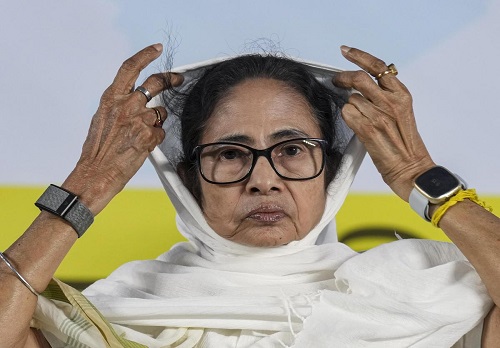
The Trinamool Congress (TMC) is facing one of the most challenging phases in its political journey following its disappointing performance in the 2026 West Bengal Assembly elections. Amid reports of increasing internal dissent and factionalism within the party, TMC supremo Mamata Banerjee is reportedly considering a return to the Lok Sabha, a move that could significantly reshape the party's strategy at the national level.
According to political reports, Banerjee may contest a Lok Sabha by-election from the Baharampur constituency in Murshidabad district. To facilitate her entry into the lower House, TMC MP Yusuf Pathan, the former Indian cricketer and member of the 2011 World Cup-winning squad, could be asked to vacate the seat. Pathan had registered a notable victory in the 2024 Lok Sabha elections by defeating senior Congress leader Adhir Ranjan Chowdhury by a margin of nearly 85,000 votes, making Baharampur a stronghold for the Trinamool Congress.
For Mamata Banerjee, a return to Parliament would mark a significant political comeback. Before becoming the Chief Minister of West Bengal in 2011, she had enjoyed a long and influential parliamentary career. Banerjee first entered the Lok Sabha in 1984 from the Jadavpur constituency, creating a political sensation by defeating veteran CPI(M) leader Somnath Chatterjee. She subsequently served as a Member of Parliament multiple times, primarily representing the Calcutta South constituency, now known as Kolkata Dakshin. Her transition from national politics to state leadership came after the TMC's historic victory in the 2011 West Bengal Assembly elections.
The timing of the reported move is noteworthy. The TMC's defeat in the 2026 Assembly elections, where it managed to secure only 80 seats against the BJP's dominant performance, has triggered widespread dissatisfaction within the party. Reports suggest that several senior TMC MPs are unhappy with the functioning of the party leadership and are contemplating a rebellion or even departure from the organization.
Signs of discontent have become increasingly visible in recent months. Veteran MP Kakoli Ghosh Dastidar, considered a close associate of Mamata Banerjee, publicly expressed dissatisfaction with certain aspects of the party's functioning. She also lodged a complaint with Lok Sabha Speaker Om Birla against fellow TMC MP Kalyan Banerjee, accusing him of verbally abusing her within Parliament. Such incidents have highlighted growing tensions among party lawmakers.
Other senior leaders, including Sukhendu Sekhar Roy and Shantanu Sen, have also reportedly questioned the party's internal decision-making processes and organizational structure. Their criticism has fueled speculation that a larger rebellion could be brewing within the parliamentary wing of the Trinamool Congress.
The party's troubles are not limited to Parliament. In the West Bengal Assembly, the TMC is already grappling with a major internal crisis. A group of 57 MLAs has reportedly elected expelled leader Ritabrata Banerjee as the Leader of Opposition and secured recognition from Speaker Rathindra Bose. The development has effectively created a parallel power center within the legislature and deepened divisions within the party.
Political observers believe that Mamata Banerjee's possible return to the Lok Sabha could be aimed at consolidating control over the party's parliamentary wing and addressing growing dissatisfaction among MPs. Her presence in Parliament could provide stronger leadership, improve coordination among lawmakers, and help prevent further defections at a time when the party is confronting challenges on multiple fronts.
As the Trinamool Congress navigates a period of uncertainty following its electoral setback, all eyes will be on Mamata Banerjee's next move. Whether she chooses to return to the national stage or continue focusing on state politics, her decision is likely to have far-reaching implications for the future of the party and the broader political landscape.



















Leave Your Comment