


The streets of Iran have become the stage for one of the most significant challenges to the country's theocratic regime since the 1979 revolution. What began as localized demonstrations has erupted into a nationwide protest movement, met with a severe and bloody crackdown. As digital blackouts obscure the full picture, fragmented reports from activists paint a harrowing scene: at least 2,000 lives lost, mass arrests, and now, the imminent threat of state execution for protesters.
Into this volatile mix steps a chorus of international voices, with U.S. President Donald Trump taking a notably direct and public stance. Addressing the Iranian people via his Truth Social platform, Trump urged protesters to "KEEP PROTESTING," promising, "HELP IS ON ITS WAY." He later issued a stark warning to Tehran's leadership against carrying out executions, stating the U.S. would take "very strong action" if hangings proceed. The nature of this promised "help" or "action" remains deliberately vague, echoing the maximum-pressure policy that has defined his administration's approach to Iran.
The human cost is crystallizing in individual stories. Human rights groups highlight the case of Erfan Soltani, 26, arrested last week in Karaj. Reports indicate he has been sentenced to death on charges of "waging war against God" (moharebeh) and could be executed imminently without a proper trial. His case is feared to be the first of many, as prosecutors announce capital charges for arrested demonstrators.
Amid an internet blockade now stretching beyond five days—a tool activists say masks the scale of the violence—technological counter-measures are emerging. Elon Musk's SpaceX has reportedly offered its Starlink satellite broadband service free of charge in Iran, waiving subscription fees to allow those with receivers to bypass state controls. This move, facilitated by U.S. digital rights groups, aims to pierce the regime's information curtain.
Politically, the landscape is shifting beyond official channels. Axios reported that White House envoy Steve Witkoff held a secret meeting over the weekend with Reza Pahlavi, Iran's exiled former crown prince. Once groomed to be Shah, Pahlavi has lived abroad for decades but is now being discussed as a potential rallying figure for the opposition. He has publicly urged the U.S. to act "sooner rather than later" against Iran's clerical leadership.
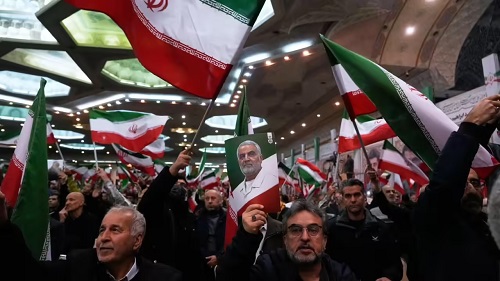
The regime, for its part, is projecting a narrative of control and foreign conspiracy. Supreme Leader Ayatollah Ali Khamenei declared the protest movement "defeated," pointing to large pro-government rallies as a "warning" to the United States. Iran's national security chief escalated the rhetoric, accusing Trump and Israeli Prime Minister Benjamin Netanyahu of being the "main killers of the people of Iran," attempting to frame the unrest as a foreign plot rather than domestic dissent.
The Stakes and the Questions
The situation presents a critical inflection point with profound implications:
Human Rights vs. Sovereignty: The international community, led by the U.S., is invoking human rights to justify potential intervention, while Tehran condemns this as a violation of its sovereignty and an act of hybrid warfare.
The Efficacy of Digital Resistance: Can tools like Starlink effectively undermine state censorship in a security state like Iran, and will this technological empowerment translate to sustained protest coordination?
The Shadow of 2009: The scale of the reported violence already appears to surpass the crackdown following the 2009 Green Movement. The threat of executions signals a regime willing to escalate brutality to a new level to ensure survival.
Unclear Endgames: Trump's vague promises leave open a spectrum of possibilities—from increased sanctions and cyber operations to, as he has alluded to in the past, military options. Meanwhile, the opposition within Iran lacks a unified leadership or a clearly articulated plan for what comes after the regime.
As bodies reportedly line mortuaries and funerals for security forces turn into rallies of allegiance, Iran stands at a precipice. The regime is betting that extreme suppression will extinguish the flames of dissent. The protesters, increasingly isolated yet digitally empowered, are betting that their numbers and fury have reached an irreversible point. And from outside, a U.S. president is betting that his voice, and the threat of his action, can tip the scales. The coming days, and the fate of individuals like Erfan Soltani, will reveal which of these bets will cash in—and at what horrific cost.




















Leave Your Comment