


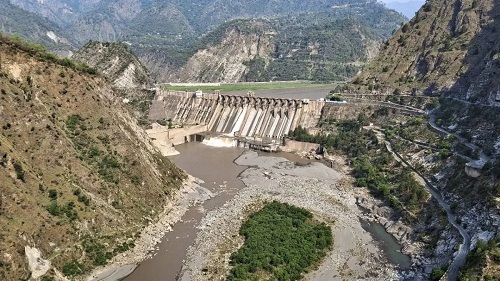
In a move that signals a dramatic escalation in regional hydro-politics, the Taliban-ruled Afghanistan has announced plans to accelerate the construction of a dam on the River Kunar, a critical tributary of the Indus River system that sustains millions in Pakistan. The directive, issued personally by the reclusive Taliban Supreme Leader Mawlawi Hibatullah Akhundzada, threatens to weaponize water resources in a region already reeling from recent military clashes and deep-seated mistrust.
The announcement, made via the Afghan Information Ministry on social media platform X, stated that Akhundzada has instructed officials to build the dam "as fast as possible" and to contract "internal companies," explicitly bypassing foreign entities. This urgent push for hydrological control comes just days after a fragile ceasefire was brokered between the two neighboring nations, following the worst cross-border fighting since the Taliban seized power in 2021.
Water as "Blood": The Strategic Imperative
The Taliban's framing of the issue leaves little room for ambiguity. Earlier in May, the regime's army General, Mubin, during an inspection of the proposed dam site in Kunar, declared that water was "like their blood" and that they would not allow it to "flow out of their veins." This visceral rhetoric underscores a strategic shift in Kabul. For decades, Afghanistan has lacked the infrastructure to utilize its share of water from the Kabul River basin and its tributaries, like the Kunar. By building dams, the Taliban aims not only to address domestic energy and agricultural needs but also to assert national sovereignty in the most tangible way—by controlling a vital resource.
For Pakistan, which is already one of the world's most water-stressed countries, the prospect of reduced flows from the west is a national security nightmare. The Indus River System is the country's agricultural lifeline. Any significant disruption to the flow of the Kabul River, which the Kunar feeds into, would have severe consequences for irrigation and hydropower generation in Pakistan's most populous province, Punjab, and the restive Khyber Pakhtunkhwa region.
A Cascade of Crises
The dam announcement cannot be viewed in isolation. It is the latest ripple in a cascading series of crises between Islamabad and Kabul:
The Militant Nexus: Tensions exploded recently when Pakistan launched airstrikes inside Afghan territory, targeting hideouts of the Tehrik-i-Taliban Pakistan (TTP). Islamabad has long accused the Afghan Taliban of providing sanctuary to the TTP, a charge Kabul denies. The subsequent border clashes involved artillery, airstrikes, and direct assaults, bringing the two nations to the brink of a wider conflict.
Economic Strangulation: The fighting led to the closure of key border crossings, disrupting billions of dollars in trade and leaving trucks laden with goods stranded. For both economies, particularly Afghanistan's, the closures are a severe blow.
The Regional Chessboard: The situation is further complicated by regional rivalries. The mention of "After Bharat [India]" in a social media post by a Baloch activist highlights how some actors frame this within the larger India-Pakistan rivalry. India has historically had friendly relations with the former Afghan government and has invested in Afghan infrastructure, including the Salma Dam. While the Taliban's current stance is independent, Pakistan fears strategic encirclement, with a hostile government in Kabul potentially aligning with New Delhi to squeeze it from both east and west.
The Beginning of a Water War?
The Taliban's dam plan on the Kunar River marks a pivotal moment. It transforms a long-simmering dispute over water sharing into an immediate and potent geopolitical tool. The recent ceasefire may have temporarily halted the exchange of fire, but the decision to rapidly build a dam ignites a new, slow-burning front in the Pakistan-Afghanistan conflict.
The move signals the Taliban's growing confidence in asserting its interests, regardless of Pakistani concerns. For Pakistan, it presents an existential challenge that merges the threats of militancy, economic instability, and now, water scarcity. As both nations navigate this perilous new chapter, the flow of the Kunar River is set to become the next major test of a fractured relationship, with the survival of millions hanging in the balance.






















Leave Your Comment