


In a historic stride toward modernizing its foundational statistical framework, the Union Cabinet, on Friday, December 12, approved a monumental allocation of ₹11,718.24 crore for Census 2027. This decision, taken under the leadership of Prime Minister Narendra Modi, marks a transformative leap from paper-laden processes to a fully digital, first-of-its-kind national census, designed to capture the dynamic pulse of a rapidly evolving India.
Announcing the approval, Union Minister Ashwini Vaishnaw underscored that this substantial investment will equip the nation to gather precise demographic insights amid sweeping technological shifts and urbanization. The funding will fuel everything from cutting-edge mobile application development to the digital infrastructure required to ensure no corner of India, however remote, is left behind.
The Phased Blueprint for a Nationwide Canvas
Census 2027, the 16th national census and the eighth since Independence, will be conducted in two meticulously planned phases:
Phase I: Houselisting & Housing Census – Scheduled for April to September 2026, to be completed within a flexible 30-day window per state.
Phase II: Population Enumeration – Set for February 2027, with the reference moment fixed at 00:00 hours on March 1, 2027. Snow-bound regions of Ladakh, Jammu & Kashmir, Himachal Pradesh, and Uttarakhand will undertake this phase in September 2026, with a reference date of October 1, 2026.
The Digital Backbone: Innovation at Every Step
This census will be powered by a suite of digital innovations, making it seamless, accurate, and transparent:
Mobile-First Data Collection: Enumerators will use Android and iOS apps, moving entirely away from paper schedules.
Self-Enumeration : For the first time, citizens will have the option to fill in their details through a secure public web portal.
Real-Time Oversight
A dedicated Census Management & Monitoring System (CMMS) portal will enable live tracking and quality control.
Census-as-a Service (CaaS)
A landmark initiative to provide clean, machine-readable data to other government ministries for integrated policy-making.
Capturing India’s Social Fabric: The Caste Dimension

In a significant move, following a decision by the Cabinet Committee on Political Affairs in April 2025, Census 2027 will include caste enumeration during the Population Enumeration phase. This electronically captured data promises to deliver unprecedented granular insights into India’s social diversity, enabling more targeted and equitable welfare schemes.
A Massive National Endeavor: Employment and Skill Development

The exercise will mobilize approximately 30 lakh field functionaries, primarily government teachers, supported by over 18,000 technical personnel. This deployment is expected to generate over 1 crore man-days of employment, providing not only honorariums but also valuable digital upskilling in data handling and coordination—a lasting legacy of enhanced local capacity.
Tracking Mobility: The Migration Narrative
A core focus will be on comprehensively capturing India’s migration story. Data will be recorded for every individual at their current place of enumeration, detailing place of birth, last residence, duration of stay, and reasons for movement—from employment and education to marriage. This will provide critical evidence for policymaking in urban planning, labor markets, and social security.
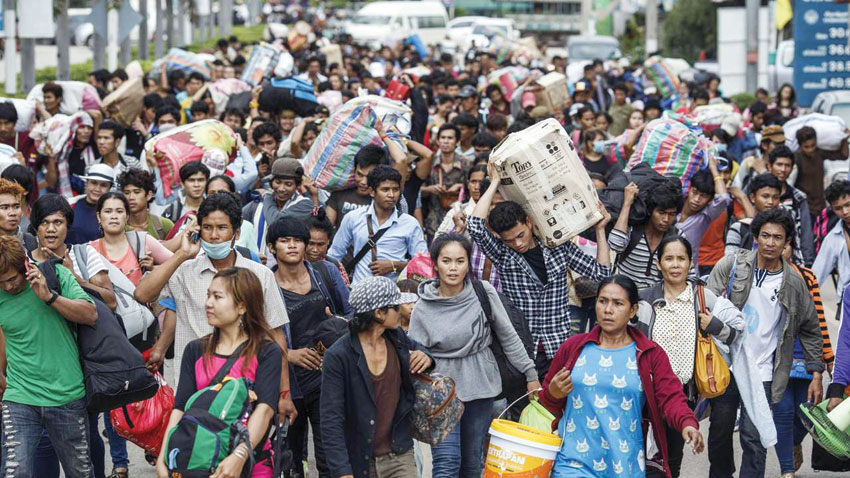
Governed by the Census Act of 1948, this digital-first exercise stands poised to deliver primary data at village, town, and ward levels with unprecedented speed and accuracy. As India prepares for this mammoth technological and administrative milestone, Census 2027 is more than a headcount; it is the foundation for the next decade of evidence-based governance, ensuring that every policy, from healthcare to housing, is built on the bedrock of reliable, real-time data.
UDAY INDIA BUREAU














Leave Your Comment