


The long-cherished dream of seamless, year-round connectivity between the Kashmir Valley and Ladakh moved significantly closer to reality on Tuesday as the Zoji La Tunnel achieved its final breakthrough, marking a major milestone in one of India's most strategically important infrastructure projects.
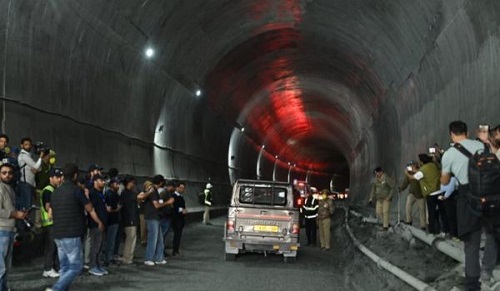
Union Minister for Road Transport and Highways, Nitin Gadkari, remotely triggered the final blast at the breakthrough site near the eastern portal of the tunnel at Minimarg in Ladakh, completing a critical phase in the construction of the ambitious project. The breakthrough is being hailed as a landmark engineering achievement that will transform connectivity in the Himalayan region.
The 13.15-kilometre-long Zoji La Tunnel is being built beneath the formidable Zoji La Pass, which serves as the crucial gateway between the Kashmir Valley and Ladakh. The pass, situated at a high altitude and known for its challenging terrain and severe weather conditions, remains closed for several months each year due to heavy snowfall, disrupting transportation and isolating Ladakh from the rest of the country.
The completion of the breakthrough represents a decisive step towards establishing all-weather road connectivity between Jammu and Kashmir and Ladakh. Once operational, the tunnel will ensure uninterrupted movement throughout the year, eliminating the dependence on seasonal road access and significantly reducing travel disruptions caused by harsh winters.
The milestone event was attended by Jammu and Kashmir Lieutenant Governor Manoj Sinha and Jammu and Kashmir Chief Minister Omar Abdullah, along with senior government officials, engineers, and project personnel. Officials described the breakthrough as a historic moment in India's infrastructure journey and a testament to the country's growing capability to execute complex engineering projects in challenging environments.
Beyond its strategic significance, the Zoji La Tunnel is expected to bring far-reaching economic and social benefits to the region. The project will improve civilian mobility, facilitate faster and more reliable freight movement, and provide a major boost to tourism by ensuring easier access to Ladakh throughout the year. The enhanced connectivity is also expected to stimulate economic activity, create employment opportunities, and improve access to essential services for people living in remote areas that remain cut off during winter months.
The tunnel holds immense importance from a national security perspective as well. By enabling uninterrupted movement of personnel, equipment, and supplies, it will strengthen defence logistics in a strategically sensitive region bordering multiple international frontiers. The project is therefore regarded as a critical asset for both regional development and national security.
Engineers and project authorities have termed the breakthrough a remarkable feat, achieved after years of meticulous planning and execution under difficult geological and climatic conditions. The completion of this phase demonstrates significant progress in overcoming the engineering challenges posed by the rugged Himalayan terrain.
With the breakthrough now accomplished, attention will shift towards the remaining excavation, lining, ventilation, safety systems, and finishing works necessary to make the tunnel fully operational. Once completed and opened to traffic, the Zoji La Tunnel is expected to transform transportation in the region and stand as one of India's most significant infrastructure achievements.
The successful breakthrough marks not only the culmination of a crucial construction phase but also a major step toward realizing a decades-old aspiration—ensuring that Ladakh remains connected to the rest of the country throughout the year, regardless of weather conditions.




















Leave Your Comment