


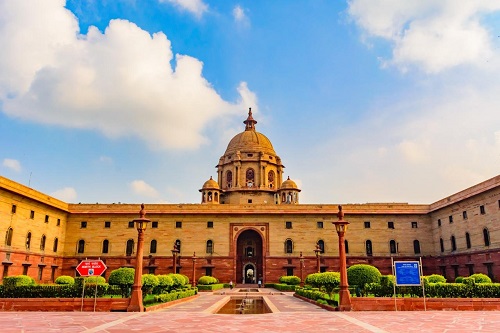
In a major initiative to showcase India's rich civilizational legacy and cultural diversity to the world, the Union Cabinet Committee on Economic Affairs, chaired by Prime Minister Narendra Modi, has approved the development of the Yuge Yugeen Bharat Museum at the historic North and South Block Complex in New Delhi. With an estimated investment of ₹3,230 crore, the ambitious project will transform the iconic colonial-era government buildings into a world-class cultural institution, bringing together India's history, knowledge traditions, artistic achievements and heritage under one roof. The museum is envisioned to have the world's largest display area and is expected to become a major international destination for cultural tourism, education and research.
The Yuge Yugeen Bharat Museum (YYBM) will be developed through the adaptive reuse of the historic North and South Block buildings, ensuring that their architectural character and heritage significance are preserved while giving them a new public purpose. Spread across a proposed built-up area of approximately 1,78,509 square metres, the museum will combine modern exhibition practices, immersive technologies and visitor-centric interpretation to present India's civilizational journey in a comprehensive and engaging manner.
The museum will narrate the continuity and evolution of Indian civilization through carefully curated thematic galleries, exhibitions and displays covering the country's cultural traditions, knowledge systems, artistic practices and tangible and intangible heritage. Its development will include exhibition galleries, collection storage and conservation facilities, visitor amenities, advanced technological installations, immersive experiences, landscaping, intelligent building systems and supporting infrastructure. The project will follow international standards in museum planning, heritage conservation, exhibition design and sustainable cultural management, while reflecting India's unique cultural diversity.
The idea of establishing the Yuge Yugeen Bharat Museum was announced by Prime Minister Narendra Modi on May 18, 2023. The relocation of government offices from the North and South Block buildings created an opportunity to repurpose these historically significant structures for a major national cultural institution. The proposal was appraised by the Public Investment Board on July 27, 2026, and the Ministry of Culture has concurred with its recommendations.
The project will be implemented in phases between financial years 2026-27 and 2030-31. The first gallery, based on the theme of 'Adornment', is expected to open to visitors in the North Block in the latter part of 2027. A modular development strategy is being formulated to facilitate the gradual addition of further galleries and exhibitions.
An extensive exercise is underway to identify and analyse collections for the museum. Around 1.8 million objects have been identified from the National Museum and other museums under the Ministry of Culture, 52 Archaeological Survey of India (ASI) site museums, state museums and private collections. These collections will form an important part of the museum's exhibitions. Apart from Adornment, proposed gallery themes include Architecture and Cityscapes, Mathematics and Astronomy, Languages and Scripts, Faith and Spirituality, and Bharat Connects – Trade and Ideas. Together, these themes will highlight India's contributions to knowledge, science, culture, spirituality, commerce and global exchanges across different historical periods.
The museum is expected to handle an annual footfall of approximately one crore visitors, positioning it among the world's most significant cultural attractions. Its infrastructure will incorporate accessible facilities and advanced visitor services to accommodate domestic and international tourists, students, researchers, scholars and cultural practitioners. The institution will also offer opportunities for academic research, knowledge exchange and public engagement with India's diverse civilizational traditions.
Beyond its cultural and educational significance, the project is expected to generate substantial economic activity and employment. Construction and operational activities will create direct and indirect job opportunities for artisans, craftspeople, researchers, museologists, designers, performers, conservation specialists and other creative professionals. The hospitality, tourism and allied sectors are also expected to benefit from increased visitor numbers.
The initiative will further advance the Make in India vision by encouraging domestic manufacturing of world-class museum materials and products through structured vendor development programmes. Indian artisans, manufacturers, conservation experts and technology providers will have opportunities to contribute to the development and functioning of the institution.
With a total estimated expenditure of ₹3,230 crore, the project has been designed around detailed architectural and exhibition plans, engineering requirements and museum infrastructure assessments. The museum is also expected to generate recurring revenue through ticket sales, food and beverage facilities, events, venue rentals, digital experiences, guided tours, retail outlets and other visitor services.














Leave Your Comment