


Uttar Pradesh Chief Minister Yogi Adityanath has strongly defended politically contentious slogans such as ‘Batenge Toh Katenge’ and ‘Ek Hain Toh Safe Hain’, asserting that their purpose is not to divide voters along communal or social lines but to underline the importance of unity and collective security. Taking a sharp dig at the Samajwadi Party (SP), he argued that Uttar Pradesh had witnessed prolonged periods of lawlessness, communal tension and political patronage before the BJP came to power. With the 2027 Assembly elections approaching, the Chief Minister sought to make law and order, women's safety and governance the central pillars of the BJP's electoral narrative.
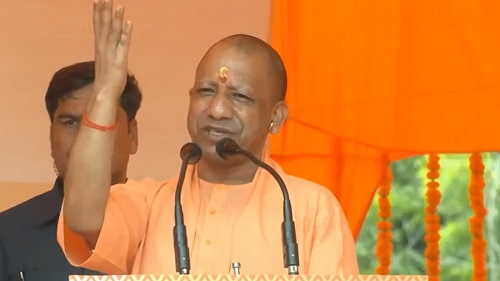
Speaking at News18's Rising Bharat Summit on Wednesday, Adityanath maintained that the slogans should be understood in the context of the state's past experiences rather than viewed as instruments of political polarisation. He said the people of Uttar Pradesh must remain conscious of the consequences of social disunity and instability. Without directly naming the SP and Congress, he warned that attempts to disturb peace and create an atmosphere of uncertainty would not succeed.
Recalling the political and security situation during previous governments, Adityanath described those periods as an era of 'jungle raj' and 'gunda raj'. He referred to frequent curfews, communal riots and violent incidents that, according to him, had become characteristic of the state under SP rule. Citing the 2013 Muzaffarnagar riots, the 2016 Jawahar Bagh violence and communal clashes in Bareilly and Aligarh, he questioned the opposition's claims on governance and public safety.
The Chief Minister particularly emphasised the need to make younger generations aware of Uttar Pradesh's past. He observed that many people between the ages of 15 and 25–27 had grown up during the period of his government and might not fully understand the conditions their parents experienced a decade ago. He argued that young people should know how frequent disturbances, insecurity and restrictions on normal life had affected ordinary families and businesses.
Adityanath also expressed confidence that the BJP would return to power for a third consecutive term in the 2027 Assembly elections, predicting a victory of at least 320 seats in the 403-member Uttar Pradesh Assembly. Declaring that the party was poised to surpass previous electoral records, he said women, young voters, traders and economically weaker sections were increasingly recognising the benefits of the BJP government's policies.
According to him, the BJP and its allies would take their governance record to the people, particularly highlighting improvements in law and order and the delivery of welfare schemes at the grassroots level. He maintained that the government's emphasis on last-mile delivery had helped ensure that benefits reached intended beneficiaries rather than remaining confined to official announcements and administrative files.
Reflecting on his nine-and-a-half years as Chief Minister, Adityanath said the state's public environment had undergone a substantial transformation. He pointed to women's safety as one of the most visible indicators of this change, claiming that women could now complete their professional responsibilities and return home at night without the fear that once dominated their daily lives.
Explaining the factors behind this transformation, he credited Prime Minister Narendra Modi's leadership and guidance, along with what he described as organisational discipline within the BJP. He asserted that party workers had refrained from using political influence to secure personal favours through government institutions. According to him, this distinction between political power and personal interests had strengthened administrative accountability.
The Chief Minister's remarks reflect the BJP's broader strategy of making governance, security and political stability central themes in the run-up to the 2027 Assembly elections. By defending the unity slogans and contrasting his government's record with the previous SP regimes, Adityanath is seeking to turn the state's experience of law and order into a defining electoral issue. His ambitious target of 320-plus seats also signals that the BJP intends to approach the next election not merely as an incumbent seeking another term, but as a party confident of expanding its political dominance in India's most populous state.






















Leave Your Comment