


I was sceptical while reading the above quote by Ruth Mumbi. I took it as a passionate call to improve the pathetic state of women in Kenya. The quote triggered the intention to do more research but I failed to do so for various reasons. The recent launch of Subhadra Yojna in Odisha and Mahtari Vandan Yojana in Chhattisgarh was a reminder not to miss this time. It is a revelation that the vedic literature has placed woman at the highest position with equally high qualifying standards.
The Devi Suktam in Rigveda celebrates the Divine Feminine as the creating force and the sustainer of life. More than a prayer, it emphasises the significant role played by the Divine Feminine in the spiritual and material realms. Definitely It’s a testament to the ancient Vedic recognition of the Goddess as the core of spiritual existence and the universe’s dynamism.
The extreme opposite happened in the medieval period. The invaders coming from all part of the world have one thing in common, destroy the value system which empowered the Indian women. Looting wealth and taking women as slave was the outcome. The society responded meekly; on occasions it echoed the exploitation. Social malpractices like child marriage, sexual abuse, discrimination, denial of access to nourishment, education and respect led to adverse sex ratio.
Reformers kept the fight on and sparks of past glory were visible here and there, Ahilya bai Holkar, Lakshmi Bai, Chennamma and others were the few exceptions reminding of the lost glory.
Napoleon Bonaparte has aptly said, “the future destiny of a child is always the work of the mother.”
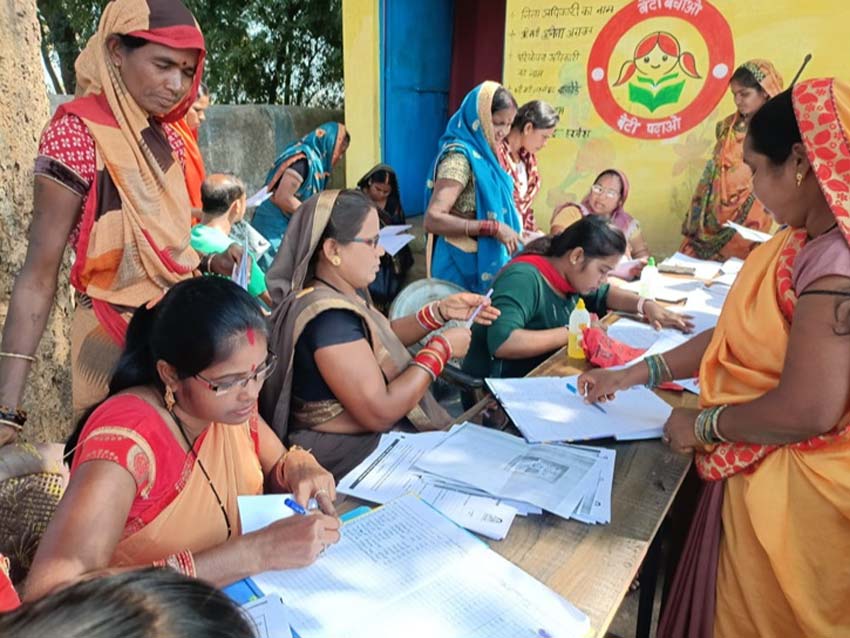
Independent India provided the right to equity, justice and security through articles 14 to 19 but implementing it on ground needed empowerment. Governments were lacking on account of will to implement, funds or the both. As a result, India performed poorly on these parameters. A big thrust was visible when ‘Beti padhao, Beti bachao’ campaign gathered momentum. It has reached to a level where most of the trucks on the road are displaying this slogan on the bumper of their trucks, indicating last mile acceptance.
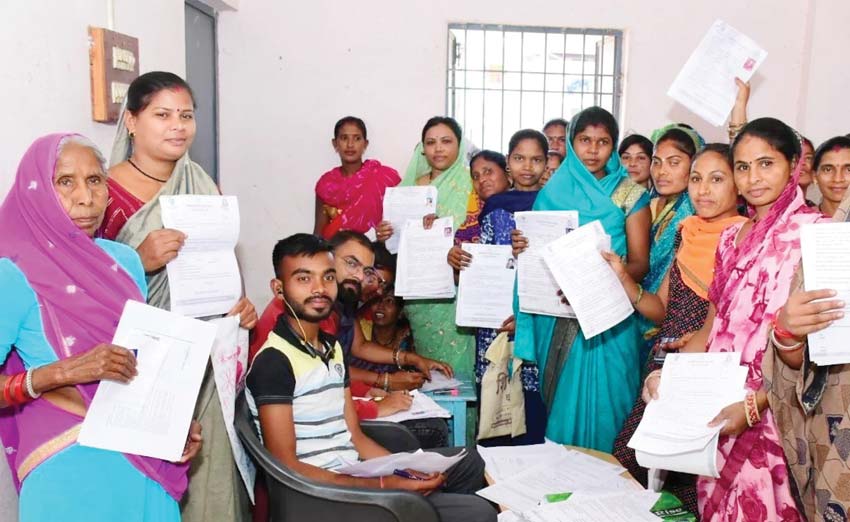
Financial inclusion is a real tool of empowerment, Jan Dhan account, UPI, ADDHAR card have provided the supportive infrastructure. The initiatives aimed at enhancing women's well-being are the Pradhan Mantri Matru Vandana Yojana, Lakhpati Didi, Mudra Loans, Beti Bachao Beti Padhao and Ujjwala.
It is heartening to see that two of the most lagging state on woman and child well-being parameters have taken a pragmatic decision to empower the woman.
Empowering the mother has to be preceded by empowering the woman. Both Mahtari Vandan Yojana in Chhattisgarh and subhdra yojna aims at doing it. The financial assistance is not for one day but for a period spanning over years.
Over one crore women beneficiary can set a new trend but it needs handholding, mentoring and midcourse correction as per need. Financial inclusion can lead to improvement on many parameters provided the system:
How to provide this support.
National Education Policy 2020 (NEP) demands that community engagement be mainstreamed in all teaching-learning, research and service activities of Higher education institution (HEIs). The curriculum of 2 credit course needs to focus on community engagement, especially with vulnerable and excluded households. Both the State government can use government universities to take up this mandate. A little financial support to facilitate travel expenses etc will provide required hand holding to beneficiary on one hand and qualitative research-based learning to the students on the other hand. Young students are sincere as well as ambitious. The higher education institution will improve their rating on account of qualitative research undertaken. During my college days similar study was done by many teams of students in Delhi University. The only expenses made by Deen Dayal Upadhyay Shodh Sansthan was on promotion of the competition and awards given to the winning teams. The work done created affinity with slums for life which was reinforced as corporate social responsibility during my career. A focussed state is more resourceful than a social organisation and it is high time to engage universities to cover full state in one go.
Why helping financially is not the end of the road?
Post independence government have made many attempts to alleviate poverty but failed mostly on account of corruption. Today direct transfer of subsidy has eliminated the corruption on administrative side however societal corruption is still creating havoc. Reservation in panchayat election has helped the women to be sarpanch but husbands are enjoying the power in most of the cases. There is scope that the husband or other family members may exploit the gains delivered for the financial inclusion of the woman. Post disbursement research will provide data to improve the scheme. The students doing the work will learn the lapses on one hand and how to plug these on the other.
Population control under threat.
Population is ticking time bomb for India and is choking its growth. Natural resources like water air forest, flora and fauna have been stretched to their limit. India has to guard itself against remotest chance of subsidies encouraging the growth of population. There are pockets where the communities which ruled India for centuries and led the way to partition are still not ready to reforms. The Uniform Civil Code (UCC), a proposed legal framework that aims to replace the personal laws, which are specific to various religions, with a common set of laws governing every citizen could have eliminated disparity. It has yet to see the light of the day and till then some other alternative has to be invented. Subsidies are provided from the tax payer money and we are accountable to them. The post disbursement research will provide data to improvise.
Road ahead.
Subhdra yojna and Mahtari Vandan Yojna have generated hopes about empowerment of women in these two states. The state administration has been able to promote the schemes. The padyatra have evoked positive response in Odisha and Chhattisgarh ahs already released the second instalment to eligible candidates. The bigger challenge is to ensure that these women do not fall back in the vicious trap of poverty. For last two decade the book “The fortune at the bottom of pyramid” is inspiring nations to illustrate that the typical pictures of poverty had masked the fact that the poor represent resilient entrepreneurs and value-conscious consumers at the same time. Huge deposits in zero balance Jan Dhan accounts has reinforced this belief. A better approach is needed to help the poor, an approach that involves partnering with them to innovate and achieve sustainable win–win scenarios where the poor are actively engaged. The eco system should encourage providing products and services to them which are profitable. This collaboration between the poor, civil society organizations, governments, universities and large firms can create the largest and fastest growing markets in the world.
The strength of these innovative schemes will be tested time and again and success will create the opportunities for the poor by offering them choices and encouraging self-esteem. Entrepreneurial solutions created should place a minimal financial burden on the government finances. These schemes will be successful only when poverty alleviation will become a business development task shared among the large private sector firms and local bottom of pyramid entrepreneurs.
Women empowerment is a multifaceted concept that transcends beyond financial inclusion and gender equality. It is a mission to provide women with the necessary tools, opportunities, and rights to lead a life of dignity and choice. India is a nation marked by its rich cultural diversity and historical significance; the empowerment of women is not just a social imperative but a key determinant of its future. India has grappled with gender disparities for long. Patriarchal norms imposed during the regimes of invaders have supressed the spirit of Vedas. We live the life of a lion cub nurtured by the herd of sheep. This anomaly has restricted women's participation in various spheres of life. One of the cornerstones of women empowerment in India has been education. Educated women are more likely to make informed choices, pursue careers, and participate actively in the socio-economic development of the nation.
Beti bachao Beti padhao, Mudra loan, Ujjwala scheme have provided impetus. The government and various non-governmental organizations have worked tirelessly to increase female literacy rates, leading to a significant rise in the number of educated women in India. This shift has not only empowered women individually but has also contributed to the country's overall development. Economic empowerment is another vital aspect of women's empowerment. These two schemes will help women to prove their mettle in various fields, breaking traditional stereotypes. They may empower their families to join the skilled workforce, become entrepreneurs, and contributing substantially to the nation's economy. If they graduate to mudra loan eligibility then the rise of women led startups and businesses will not only create jobs but also fostered innovation and diversity. The million-dollar question is how many women will join the band wagon of empowered women?
The empowerment of women is not a choice but it’s a necessity, an integral part of the nation's identity called ‘Bharat Mata’. Vande Matram song is a proof that the nation regained its freedom by returning to roots in shakti puja. The journey toward becoming a truly inclusive, equitable, and prosperous society will not be complete till women take a lead. It should lead to a future where the aspirations and potential of every Indian woman gets realized, and where the nation flourishes in unity, strength, and diversity. Women empowerment is not just a goal; it is the cornerstone of India's future success and the key to unlocking its full potential on the global stage. Its is not a coincidence that the formation of first BJP government has been preceded by the election of first tribal woman president. This has proved once again, “Yatra Naryastu Pujyante Ramante Tatra Devata”. Where the women are respected gods bless that region. The journey should continue creating new milestones.
(The content of this article reflects the views of writers and contributors, not necessarily those of the publisher and editor. All disputes are subject to the exclusive jurisdiction of competent courts and forums in Delhi/New Delhi only)

By Rakesh Kumar



















Leave Your Comment