



Viral Desai
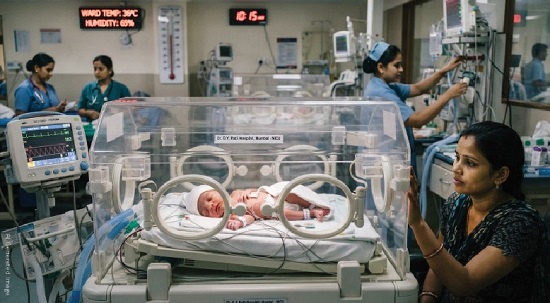
Climate change is often described through images of melting glaciers, flooded coastlines and scorched farmland. These are visible warnings of a planet under pressure. Yet some of its most intimate consequences unfold away from cameras, inside homes, maternity wards and neonatal intensive care units. Here, the damage is measured in weeks of pregnancy lost, fragile lungs struggling to breathe and families waiting anxiously beside an incubator. A warming world is increasingly threatening children before they have even drawn their first breath.
An analysis published by Zero Carbon Analytics on November 2, 2026, brings this concern into sharp focus. It estimates that the additional heat caused by human-induced climate change contributed to approximately 8,830 preterm births in India during April 2024. This is a modelled estimate, rather than a count of individually verified cases: researchers combined temperature information, birth estimates and published evidence linking heat exposure with premature delivery. Its significance lies in revealing a potentially substantial health burden that conventional accounts of heatwave damage can miss.
Two comparisons must be understood clearly. The analysis estimated around 10,050 excess preterm births in India during April 2024 compared with a typical April under the 1991–2020 climate baseline. Separately, it estimated the 8,830 births attributable specifically to human-caused warming by comparing the event with conditions without that warming. These figures answer different questions and should neither be added together nor treated as interchangeable. The state-level findings also belong to the comparison with a typical April.
The climate context is equally sobering. World Weather Attribution found that human-caused warming made the April 2024 South Asian heat event approximately 45 times more likely and about 0.85°C hotter. This regional finding should not be confused with a uniform temperature increase across India. Nevertheless, it demonstrates how greenhouse gas emissions have altered the conditions in which pregnancies now unfold. Heat that once represented an exceptional emergency is becoming a more persistent challenge for public health.
Pregnancy places substantial demands on the body, and extreme heat can add further strain. Researchers have identified several possible pathways connecting heat exposure with adverse pregnancy outcomes, including dehydration, inflammatory responses and changes in blood flow to the placenta. These processes may contribute to the early initiation of labour, although their relative importance remains under investigation. The evidence warrants concern without suggesting that every exposure to hot weather causes premature delivery, or that heat explains every early birth.
India faces this emerging pressure against an already considerable burden of prematurity. WHO–UNICEF estimates placed the country’s preterm birth rate at approximately 13% in 2020, representing around three million babies and more than one-fifth of the global total. Preterm birth means delivery before 37 completed weeks of pregnancy. Complications can include breathing difficulties, while some children experience lasting developmental, visual or hearing impairments. Outcomes vary considerably with the degree of prematurity and access to appropriate care; an early birth should never be presented as a predetermined lifelong tragedy.
The geographical distribution of the estimated heat burden offers an important lesson for planning. Bihar, Uttar Pradesh, West Bengal and Jharkhand together accounted for approximately 65% of India’s estimated excess preterm births relative to a typical April. Large populations influenced the absolute numbers, while smaller states could experience sharper relative increases in risk. Health authorities therefore need to examine both the number of pregnancies potentially affected and the intensity of local exposure. National averages alone cannot identify every community requiring protection.
The practical meaning of protection also depends on a woman’s circumstances. Advice to avoid afternoon heat offers limited reassurance to someone whose earnings depend on daily outdoor work. A recommendation to remain indoors may provide inadequate relief in a poorly ventilated home with an unreliable electricity supply. Maternal heat protection must therefore reach beyond individual behaviour. It requires working conditions, housing, transport and public services that make protective choices possible. Responsibility cannot rest entirely on the pregnant woman.
India has already taken a relevant step. The Ministry of Health and Family Welfare, in collaboration with UNFPA India, has issued guidance for healthcare providers and community health workers on heat and pregnancy, alongside information for pregnant women and families. Acknowledging this progress matters. The next task is to translate guidance into consistent practice, with trained workers, functioning facilities and resources that reach vulnerable households before an emergency occurs.
Heat action plans should explicitly connect weather alerts with maternal healthcare. ASHAs, auxiliary nurse midwives and antenatal clinics should receive timely warnings and clear referral protocols. Health facilities need reliable drinking water, appropriate cooling, backup electricity and dependable transport arrangements. Occupational safeguards should enable pregnant workers to access shade, rest, water and adjustments to strenuous work without sacrificing essential income. These measures deserve dedicated budgets and accountability, rather than remaining seasonal recommendations.
Our urban development choices belong in this response as well. Municipalities should assess heat exposure around maternity facilities, public transport stops and densely populated neighbourhoods. Shade, suitable tree cover, cool roofs and better ventilation deserve consideration alongside clinical preparedness. For environmental action, this creates a clear public purpose: a more liveable neighbourhood should help protect the people whose health is most vulnerable to extreme temperatures.
Better monitoring is also essential. India needs stronger links between local weather information, maternal health records and birth outcomes, with appropriate privacy protections. Such evidence can help distinguish where risk is greatest, assess whether interventions work and improve future estimates. Scientific uncertainty should guide better investigation while health services act on the risks already recognised.
The estimate of 8,830 climate-attributable preterm births challenges us to reconsider what environmental protection means. Behind such a figure are pregnancies, families and healthcare teams facing consequences that extend far beyond a weather bulletin. Protecting mothers and newborns must become a measure of climate preparedness and development itself. A child’s chance of a healthy beginning should carry weight in decisions about emissions, working conditions, public health and the design of our cities. The cradle belongs at the heart of climate policy.
(The author is a known Environmentalist and the pioneer of Satyagraha Against Pollution movement, viraludayindia@gmail.com)
(The content of this article reflects the views of writer and contributor, not necessarily those of the publisher and editor. All disputes are subject to the exclusive jurisdiction of competent courts and forums in Delhi/New Delhi only)


















Leave Your Comment