


The ongoing conflict between the United States and Iran serves as a sobering reminder of the consequences that arise when diplomacy collapses and geopolitical tensions escalate into confrontation. What initially appears as a bilateral dispute between two states increasingly reveals itself as a broader international crisis with implications that extend far beyond the borders of either nation. In an interconnected world, wars between powerful states seldom remain localized; instead, they produce cascading political, economic, and humanitarian effects that influence the stability of entire regions and the functioning of the global order. Historically, relations between the United States and Iran have been fraught with mistrust and strategic rivalry. The roots of the present hostility can be traced back to the Iranian Revolution, which transformed Iran from a key American ally in the Middle East into one of Washington’s most outspoken adversaries. Over the decades, disagreements over Iran’s regional influence, its nuclear ambitions, and American sanctions have deepened the divide. Attempts at diplomatic engagement, such as the Joint Comprehensive Plan of Action, briefly raised hopes for stability by limiting Iran’s nuclear programme in exchange for sanctions relief. However, the subsequent withdrawal of the United States from the agreement in 2018 undermined the fragile diplomatic framework and contributed to renewed tensions. The escalation of conflict between these two nations illustrates how strategic mistrust can spiral into cycles of retaliation. Military confrontations, proxy engagements, and economic sanctions have all become instruments in this struggle. Such measures not only intensify hostility but also diminish the space for diplomatic compromise. In the absence of sustained dialogue, each side increasingly views the other through the lens of threat perception, thereby reinforcing a self-perpetuating security dilemma.
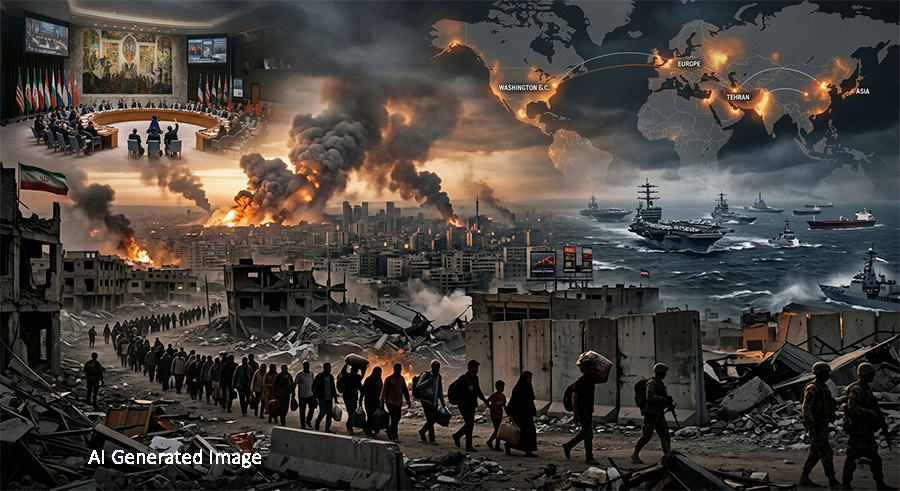
Against this backdrop, it cannot be gainsaid that beyond the immediate political confrontation, the conflict carries serious implications for global economic stability. The Persian Gulf region, particularly the strategically vital Strait of Hormuz, serves as one of the world’s most important energy corridors. Any disruption to maritime traffic in this narrow waterway can significantly affect international oil supplies and trigger volatility in global energy markets. Given the dependence of many economies on Middle Eastern energy resources, escalating tensions between the United States and Iran threaten to reverberate across global financial systems, influencing inflation, trade, and economic growth worldwide. Equally concerning are the humanitarian consequences that accompany prolonged conflicts. Military escalation inevitably places civilian populations at risk, leading to displacement, infrastructure destruction, and deteriorating living conditions. The broader Middle East—already grappling with instability arising from conflicts in countries such as Iraq, Syria, and Yemen—could witness further fragmentation if tensions between the United States and Iran intensify. Regional actors may become entangled through alliances or proxy dynamics, thereby widening the scope of violence and deepening humanitarian crises. The conflict also raises important questions about the effectiveness of international institutions and norms designed to prevent war. Multilateral diplomacy, economic cooperation, and arms control agreements have long been regarded as mechanisms to mitigate tensions between rival states. Yet the erosion of trust in such frameworks demonstrates how fragile these mechanisms can become when geopolitical interests override collective commitments. Ultimately, the confrontation between the United States and Iran underscores the urgent necessity of sustained diplomatic engagement. Dialogue, even between adversaries, remains the most effective instrument for preventing escalation and preserving global stability. Without renewed efforts toward negotiation and confidence-building, the conflict risks evolving into a broader geopolitical crisis with far-reaching consequences for international peace and security.
















Leave Your Comment