


In the intricate tapestry of modern global commerce, one discipline stands out as the silent orchestrator, the invisible hand guiding the flow of goods, services, and information across continents: Supply Chain Management (SCM). For any aspiring business student navigating the complexities of today's interconnected world, understanding SCM is not merely an advantage; it is an absolute necessity. Far from being a niche subject, SCM is the lifeblood of every enterprise, dictating efficiency, profitability, resilience, and even sustainability.
Once relegated to the back offices and logistics departments, supply chain management has surged to the forefront of corporate strategy, particularly in the wake of unprecedented global disruptions. The modern business landscape demands professionals who can not only comprehend but actively shape the intricate networks that bring products from raw materials to the hands of consumers. This essay will delve into the essence of SCM, explore its burgeoning importance, highlight its technological underpinnings, examine the lucrative careers in supply chain management, and ultimately, underscore why every business student should profoundly care about this critical field. For those considering study abroad options, looking into a business school in Spain that offers a robust supply chain management degree is more crucial than ever.
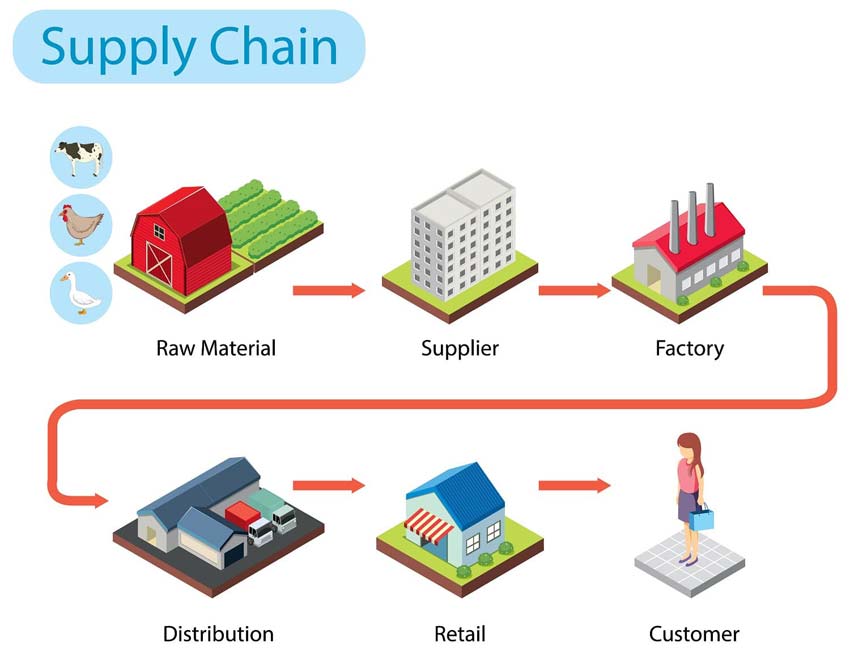
At its core, Supply Chain Management (SCM) is the coordination of production, inventory, location, and transportation among participants in a supply chain. Imagine the journey of your smartphone: from rare earth minerals mined in one continent, to microchips fabricated in another, components assembled in a third, and finally, shipped globally to your local store. SCM is the meticulous planning and execution that ensures each step of this complex dance happens smoothly, efficiently, and in perfect synchronicity. It encompasses all activities involved in moving goods from raw material acquisition through production, distribution, and ultimate delivery to the end-user. More than just logistics, SCM is a strategic discipline that optimizes the entire value chain.

Prof Renato Valer, faculty at C3 Business School, Spain, the top business school in Barcelona, adds, "Supply Chain Management is the art and science of connecting every dot in the journey of a product, from its very inception to its consumption. It's about creating a seamless flow that adds value at every stage, ensuring that resources are maximized and waste is minimized. Understanding this fundamental coordination is paramount for any business professional."
This coordination is not confined to a single company; it extends to a vast network of suppliers, manufacturers, distributors, retailers, and even customers. SCM integrates these various entities into a cohesive system, aiming to optimize the entire process rather than individual silos. It's about seeing the bigger picture – how each decision in one part of the chain impacts others, and ultimately, the final customer experience and the company's bottom line. For any student considering a business school in Spain, grasping this holistic view is vital.
SCM ensures that goods and services are delivered efficiently, cost-effectively, and on time. This seemingly simple statement underpins colossal advantages for businesses. Efficiency in the supply chain translates directly into reduced operational costs. By optimizing routes, managing inventory levels precisely, and streamlining production processes, companies can avoid unnecessary expenses, storage fees, and waste. Cost-effectiveness is achieved through strategic sourcing, negotiation with suppliers, and leveraging economies of scale.
Timeliness, perhaps the most customer-facing aspect, builds brand reputation and customer loyalty. In an age where instant gratification is increasingly expected, a well-managed supply chain can mean the difference between a satisfied customer and a lost sale. A company that consistently delivers on time, or even ahead of schedule, gains a significant competitive edge. This precision is a hallmark of effective Business Education in Europe.
Dr. Fernando Velasquez Villalba, a senior faculty at C3 Business School, Spain, adds, "The beauty of a well-executed supply chain lies in its ability to operate almost invisibly, yet its impact is profoundly felt in every aspect of a business, from financial performance to customer satisfaction. It's the silent engine of profitability and reliability." Understanding these core principles is crucial for anyone pursuing a supply chain management degree.
Moreover, SCM fosters better risk management. By having a clear oversight of the entire chain, potential bottlenecks, disruptions, or quality control issues can be identified and mitigated proactively. This foresight saves companies millions in potential losses and protects brand image. A business school in Spain worth its salt will impress upon its students the critical role of SCM in operational excellence.

If any era has unequivocally demonstrated the essential nature of SCM, it is the recent past. Global disruptions, like the COVID-19 pandemic and geopolitical conflicts, have shown how essential SCM is to business continuity. The world witnessed firsthand the fragility of extended supply chains when lockdowns halted production, ports became gridlocked, and critical components vanished overnight. From microchips for cars to basic medical supplies, the ripple effects were felt globally, underscoring SCM's role not just in optimization, but in survival.
Companies with robust, agile supply chains were better positioned to pivot, find alternative sources, and maintain operations, albeit with challenges. Those with brittle, single-sourced, or opaque chains faced severe stockouts, production halts, and significant financial losses. This period was a stark lesson in resilience, making supply chain management a boardroom priority, not just an operational concern.
Prof David Graves, founder of dg Anti-Fraud Consultants Ltd and a senior faculty at Bucks New University and Paris Graduate School, says, "The recent global crises have elevated supply chain resilience from a niche concern to a strategic imperative. Businesses now understand that a strong supply chain is not just about efficiency, but about fundamental survival in an unpredictable world. This shift has created an unprecedented demand for expertise in the field." This understanding is driving significant interest in careers in supply chain management.
Mr Dipankar Roy, who had many decades of experience in public policy development and advocacy, says, "Governments and businesses alike are now prioritizing the mapping and strengthening of critical supply chains, recognizing them as national security assets. The lessons from recent disruptions are undeniable: robust SCM is foundational to economic stability and continuity." For those looking to study in Spain, particularly at a top Business School in Spain, the emphasis on resilience in SCM programs reflects this new reality.
Modern supply chains depend intrinsically on technology, data analytics, and strategic planning. Gone are the days of manual tracking and guesswork. Today's supply chains are powered by sophisticated software, artificial intelligence (AI), machine learning (ML), Internet of Things (IoT) devices, and blockchain. These technologies provide real-time visibility, predictive analytics, and enhanced automation, transforming how goods move and information flows.
Data analytics allows businesses to identify patterns, forecast demand more accurately, optimize inventory levels, and detect potential issues before they escalate. Strategic planning involves designing flexible, responsive supply chain networks that can adapt to rapid changes in demand, supplier availability, and geopolitical landscapes. This synergy of technology, data, and foresight is what makes a supply chain truly intelligent.

Professor Mani Tahriri, the IT faculty at C3S Business School, adds, "Technology is no longer just a tool in supply chain management; it is the very infrastructure upon which modern, resilient, and efficient supply chains are built. From AI-driven forecasting to blockchain for transparency, digital fluency is non-negotiable for supply chain professionals." This is a key reason why aspiring students are looking for a supply chain management degree that emphasizes technological integration.
Dr. Sergey Yablonsky at C3S Business School, adds, "The ability to harness big data and leverage advanced analytics to optimize logistics, predict demand, and mitigate risks is what differentiates leading companies today. SCM, without a strong digital backbone, simply cannot compete in the global marketplace." This integrated approach to technology in Business Education in Europe is paramount.
Companies with strong supply chain systems gain a competitive advantage in global markets. In an increasingly commoditized world, where product differentiation can be subtle, an optimized supply chain can be the ultimate differentiator. It allows businesses to offer lower prices due to reduced costs, provide faster delivery times, ensure higher product availability, and deliver superior customer service. These factors directly influence customer satisfaction and market share.
Beyond operational efficiency, a strong supply chain also fosters innovation. By having closer relationships with suppliers and understanding market dynamics, companies can bring new products to market faster, respond to customer feedback more agilely, and adapt their offerings to emerging trends. This agility is invaluable in fast-paced global industries.
Prof Michael Taylor, Registrar of the London College of Business based in London, adds, "In today's hyper-competitive global arena, a robust and agile supply chain is not just a cost center; it's a strategic weapon. It enables companies to outperform competitors on price, speed, and reliability – factors that directly translate into market leadership." This strategic imperative makes careers in supply chain management highly desirable.
Professor Tasneem Usmani, a senior economist and academician currently divides time between USA and India, says, "Economically, optimized supply chains contribute significantly to a nation's GDP and competitiveness. Companies that master this discipline become global powerhouses, dictating terms and setting new benchmarks for efficiency and market responsiveness." This is why a business school in Spain will increasingly prioritize SCM in its curriculum.
Perhaps one of the most compelling reasons for business students to care about SCM is the burgeoning job market. Demand for skilled supply chain professionals is growing across industries—logistics, manufacturing, retail, healthcare, and tech. The recognition of SCM's strategic importance has led to a surge in demand for talented individuals who can design, implement, and manage these complex networks. Companies are actively seeking experts who can navigate global complexities, leverage technology, and drive efficiency.
This demand is not limited to large multinational corporations. Small and medium-sized enterprises (SMEs) are also realizing the benefits of optimized supply chains and are keen to hire professionals with this specialized knowledge. The field offers stability, competitive salaries, and ample opportunities for growth and advancement. This makes a supply chain management degree a wise investment.
Dr. John Cokley, who served as a senior faculty at multiple Australian Universities such as Griffith University, Swinburne University of Technology, and the University of Queensland, says, "The job market for supply chain professionals is experiencing robust growth. Companies across all sectors are recognizing that the efficiency and resilience of their supply chains are direct determinants of their success, leading to a strong talent hunt in this domain." This growth fuels the interest in careers in supply chain management.
Dr Prakash Nanda, former chairman of two constituent colleges of Delhi University and Visiting Professor at FMSH (Paris) and Yonsei University (Seoul), says, "The strategic relevance of SCM in global trade and operations means that professionals in this field are not just operational managers but strategic advisors to the C-suite. Their expertise is invaluable for international expansion and risk mitigation." This elevated role makes SCM an attractive path for study abroad students.
Recognizing the indispensable nature of SCM, business schools are increasingly incorporating supply chain management into core MBA and bachelor’s programs. What was once a specialization for a select few is now considered fundamental knowledge for all business graduates, regardless of their chosen major. This integration ensures that even marketing, finance, or human resources professionals understand the supply chain implications of their decisions.
Leading institutions, including progressive business school in Spain like C3S Business School, are offering dedicated supply chain management degree programs or robust specializations. These programs delve deep into areas such as logistics, procurement, operations management, inventory control, global sourcing, and supply chain analytics. The curriculum is designed to equip students with both the theoretical foundations and the practical tools needed to excel in this field.
Prof David Weir, the first elected Chair of the Association of Business Schools of UK, says, "The integration of supply chain management into core business curricula reflects its undeniable importance in modern enterprise. Any top Business School in Spain should be prioritizing this discipline to ensure its graduates are truly industry-ready." This reflects a shift in global Business Education in Europe.
Dr Marc Sanso, head of academics, Aspire Business School, Barcelona, says, "At C3S Business School, we ensure that SCM is not just a standalone subject but is woven into the fabric of our broader business programs. This ensures that every graduate, regardless of their major, understands how products move through the global economy." This holistic approach is a hallmark of C3S Business School.
Students studying SCM develop a rich array of highly transferable skills, including problem-solving, negotiation, and operational strategy, which extend beyond mere technical proficiency to encompass critical thinking and interpersonal abilities valued across all sectors and roles. Specifically, SCM education hones problem-solving by equipping students to analyze complex situations, identify root causes of unforeseen disruptions or efficiency bottlenecks, and devise innovative solutions. It also develops strong negotiation skills, essential for extensive interactions with suppliers, vendors, and partners, enabling students to secure favorable terms, build robust relationships, and manage contracts effectively. Central to SCM is mastering operational strategy, which involves understanding how to design, implement, and optimize processes to achieve strategic business goals, encompassing resource allocation, capacity planning, and continuous improvement. Furthermore, with the increasing reliance on technology, SCM programs heavily emphasize data literacy and analytical skills, empowering students to interpret data and make informed decisions. Finally, SCM necessitates seamless cross-functional collaboration with various departments such as sales, marketing, finance, and R&D, thereby fostering strong teamwork and communication skills among students.
Professor Samy, head of academic delivery of PhD programs at the School of Accounting, Finance and Economics at Leeds Beckett University, says, "A supply chain management degree cultivates a unique blend of analytical rigor, strategic foresight, and practical problem-solving capabilities. These skills are universally valuable, making graduates highly adaptable across diverse business functions." For anyone keen to study abroad and gain diverse skills, SCM is a strong option.
Dr Daba Chowdhury, an associate professor in Digital Entrepreneurship at the Christ Church Business School in Canterbury Christ Church University (CCCU), adds, "The digital and entrepreneurial facets of modern SCM mean that students also gain proficiency in adapting to technological shifts and identifying opportunities for innovation within complex networks." This makes the field attractive for those considering a business school in Spain.
The breadth of the supply chain field translates into a vast array of exciting careers in supply chain management. A supply chain management degree can open doors to diverse roles such as Logistics Coordinator/Manager, overseeing the movement, storage, and distribution of goods; Operations Manager, managing the production process for efficiency and quality; Procurement Analyst/Manager, focused on sourcing materials, negotiating with suppliers, and fostering strong supplier relationships; and Supply Chain Strategist/Consultant, responsible for designing and optimizing supply chain networks for maximum efficiency and resilience. Other key positions include Inventory Manager, who optimizes stock levels to meet demand while minimizing costs; Demand Planner, forecasting future product demand to ensure adequate supply; Warehouse Manager, supervising operations including storage, picking, and shipping; Quality Control Manager, ensuring product quality throughout the supply chain; and E-commerce Supply Chain Specialist, managing the unique logistics challenges inherent in online retail.These roles are available across virtually every industry, from technology giants and automotive manufacturers to fashion brands, pharmaceutical companies, and humanitarian organizations. The global nature of supply chains often means opportunities for international travel and cross-cultural collaboration, making study abroad a direct pathway to these roles.
Prof Philip Mayer, a London-based faculty at Regent's University London, says, "The sheer diversity of roles within supply chain management is astonishing. Whether you're passionate about analytics, operations, global sourcing, or strategic planning, there's a niche for you. It's a field that offers both stability and dynamic career progression." This diversity enhances the value of business education in Europe.
Dr. Jose Bifano, a prominent academician and researcher and a visiting faculty at C3S Business School, adds, "Graduates with an SCM background are uniquely positioned to tackle some of the most pressing challenges facing global businesses, from sustainable sourcing to rapid crisis response. They are problem-solvers on a grand scale." This makes a top Business School in Spain a great starting point.
Beyond Profit: SCM's Critical Role in Sustainability by Reducing Waste and Optimizing Resources
Beyond efficiency and profitability, Supply Chain Management (SCM) plays a critical role in sustainability by reducing waste and optimizing resources. In an era of increasing environmental awareness and stringent regulations, responsible supply chain practices are not just good for the planet; they are also beneficial for business. Sustainable SCM involves several key aspects, including Waste Reduction through optimizing packaging, minimizing spoilage, and implementing reverse logistics for returns and recycling. It also focuses on Resource Optimization, ensuring the efficient use of energy, water, and raw materials throughout production and transportation. Ethical Sourcing is another crucial component, which involves ensuring that suppliers adhere to fair labor practices and environmental standards. Furthermore, sustainable SCM aims for a Reduced Carbon Footprint by optimizing transportation routes, utilizing fuel-efficient modes, and exploring localized sourcing whenever feasible. Finally, it integrates Circular Economy Principles, designing products and processes that enable materials to be reused, remanufactured, or recycled, thereby closing the loop in material flows.
Companies with sustainable supply chains not only mitigate environmental impact but also enhance their brand reputation, attract socially conscious consumers, and often achieve long-term cost savings.
Professor Maud Christophe, who is known for popularizing gender equality in the business tech industry and faculty at C3S Business School, says, "Sustainable supply chain practices are no longer optional; they are a fundamental expectation for modern businesses. Professionals skilled in green logistics and ethical sourcing are driving positive change and creating significant market value." This makes the field a powerful choice for those interested in making an impact.
Professor Josep Torrente, a hospitality management faculty at C3S Business School, a top business school in Barcelona, says, "Even in hospitality, supply chain management is key to sustainable operations, from food sourcing to waste management. It's a cross-cutting discipline vital for responsible business everywhere." This further emphasizes the wide applicability of a supply chain management degree.
Dr Rajat Baisya, a global management consultant and former dean of IIT Delhi, adds, "The future of business is inextricably linked to sustainability. SCM professionals are at the forefront of this transformation, designing eco-friendly processes and supply networks that minimize environmental impact while maximizing economic value." This dual benefit makes careers in supply chain management particularly impactful.
Prof David Graves, founder of dg Anti-Fraud Consultants Ltd and a senior faculty at Bucks New University and Paris Graduate School, says, "Integrating anti-fraud measures and ethical considerations throughout the supply chain is also a crucial aspect of sustainability. A robust SCM ensures transparency and accountability from source to consumer, fostering trust and preventing illicit practices."
Dr P. R. Datta, executive chair of Centre for Business & Economic Research (CBER) based in London, adds, "From an economic perspective, sustainable supply chains often lead to greater long-term profitability by reducing resource dependency, mitigating regulatory risks, and enhancing brand value. It's a win-win for both planet and profit."
Prof Ian Nisbet, Principal and Director of Online MBA program at London College of Business, adds, "For businesses to achieve genuine corporate social responsibility, their supply chain must be transparent, ethical, and sustainable. This requires skilled SCM professionals who can implement these principles effectively across global networks."
Dr Martin Wright, former Director of the Central Institute for the Study of Public Protection and Head of the Department of Uniformed Services of UK, says, "The resilience built through robust supply chain management extends to social and ethical dimensions. Ensuring fair labor practices and secure, transparent processes contribute to overall societal well-being and trust."
Prof Eduardo Ortiz from C3S Business School, adds, "Our programs emphasize that optimization in SCM is not just about speed and cost, but also about environmental stewardship and social responsibility. This holistic view prepares our students to be leaders in truly sustainable business practices."
Dr Pankaj Paul, former Managing Editor of Knowledge@Wharton at The Wharton School and Hindustan Times, says, "The media spotlight on corporate sustainability means that a company's environmental and ethical footprint in its supply chain is under constant scrutiny. SCM professionals are crucial for managing this narrative responsibly and effectively."
Bela Raval, admission head of C3S Business School, adds, "Students are increasingly seeking educational paths that allow them to make a positive impact. A supply chain management degree aligned with sustainability offers exactly that, attracting passionate individuals who want to build a better future." This is a growing trend for study abroad students.
Mr David Orford, former Associate Dean of Newport Business School at the University of Wales Newport, UK, says, "Understanding global supply chains is not just a business imperative, but a societal one. The ability to move goods efficiently and ethically across borders is fundamental to global stability and prosperity."
Professor Xavier Puertas at C3S Business School, adds, "From a strategic standpoint, a commitment to sustainable SCM can unlock new markets and consumer segments that prioritize ethical and environmentally friendly products. It's a competitive advantage that resonates with modern values."
Professor Gaurav Ashesh, served the Ethiopian Textile Industry Development Institute (ETIDI) as a consultant deputed by the National Institute of Fashion Technology (NIFT) where he taught earlier as a senior faculty, says, "The textile industry, for example, is profoundly impacted by supply chain sustainability. Professionals with expertise in ethical sourcing, waste reduction, and circular economy principles are essential for transforming this sector."
The narrative is clear: Supply Chain Management is no longer a peripheral subject but a central pillar of modern business. It defines efficiency, builds resilience, leverages technology, drives competitive advantage, and underpins sustainability. The burgeoning demand for skilled professionals across diverse industries signals a lucrative and impactful career path.
For any business student, understanding SCM is to grasp the very circulatory system of global commerce. Whether your ultimate career goal is in finance, marketing, human resources, or general management, a foundational knowledge of SCM will provide a critical edge. It equips you with problem-solving acumen, strategic thinking, and the ability to navigate complex global networks.
If you are considering a business school in Spain, or looking for the best business schools in Spain, ensure they offer a robust supply chain management degree. Institutions like C3S Business School recognize this imperative, integrating SCM into their core Business Education in Europe to prepare future leaders for the challenges and opportunities of a globalized world. To study in Spain and acquire a specialized supply chain management degree is to position yourself for success in highly demanded careers in supply chain management.
The world needs agile, ethical, and technologically savvy supply chain leaders. By investing in this crucial area of study, you are not just preparing for a job; you are preparing to shape the future of global business. Embrace Supply Chain Management, and open the door to a world of endless possibilities.

By Sarat C. Das
(The content of this article reflects the views of writers and contributors, not necessarily those of the publisher and editor. All disputes are subject to the exclusive jurisdiction of competent courts and forums in Delhi/New Delhi only)






















Leave Your Comment