


The reported death sentence imposed by a Saudi court on Sri Lankan Hindu youth Sivarasa Anojan over a social media comment has raised concerns about proportionality, impartiality and religious freedom. Vinod Bansal, national spokesperson of the Vishva Hindu Parishad (VHP), has questioned what he describes as the selective application of blasphemy laws and the international community’s silence when Hindu religious sentiments are allegedly violated. The controversy extends beyond one individual’s case, raising a fundamental question: can justice command universal respect if its protections and punishments are perceived to depend on religious identity?
The reported death sentence against Sivarasa Anojan has brought renewed attention to the sensitive intersection of religious sentiment, freedom of expression and the administration of justice. The case, as highlighted by Vinod Bansal, national spokesperson of the Vishva Hindu Parishad, has also triggered a broader debate about whether laws concerning religious insult are applied consistently across communities and national boundaries.
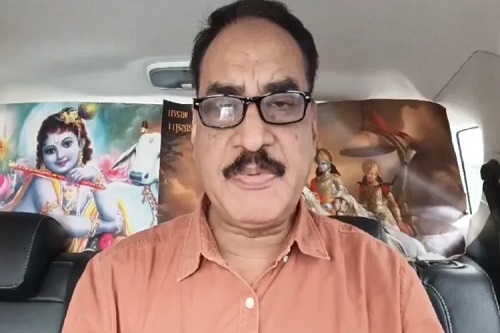
In a post on X, Bansal criticised what he described as the unequal application of blasphemy laws in countries such as Pakistan, Bangladesh and Saudi Arabia. He argued that when allegations concern the religious sentiments of non-Muslims, particularly Hindus, the same standards of investigation, accountability and legal protection must apply. According to him, a legal system cannot claim impartiality if comparable allegations are treated differently depending on the religious identity of those involved.
At the centre of the controversy is the reported punishment awarded to Anojan by a Saudi court over a social media comment. Bansal described the sentence as extremely serious and unjust, calling for its reconsideration by the Saudi authorities. He specifically appealed to Saudi Arabia's leadership, including King Salman, to ensure that the case receives fair consideration and that justice is served for the young man and his family.
Bansal's argument rests on a principle that transcends religious and national boundaries: religious sentiments deserve respect, but the law must protect everyone equally. If an individual is accused of insulting another person's faith, the allegation should be investigated impartially, with the accused afforded a fair opportunity to defend themselves. Equally, allegations that Hindu deities, places of worship or religious symbols have been deliberately insulted should not be dismissed merely because the affected community is a minority in a particular setting.
Bansal also questioned the silence of secular organisations, intellectuals and international human rights institutions over incidents that allegedly target Hindu religious sentiments. His criticism reflects a wider concern among sections of the Hindu community that international advocacy sometimes appears inconsistent in its response to religious discrimination.
The United Nations and its human rights mechanisms therefore have a legitimate role in examining credible allegations of religious discrimination and advocating safeguards against arbitrary or disproportionate punishment. Such engagement should be grounded in verified facts, applicable international standards and a commitment to protecting individuals without religious bias.
Ultimately, the controversy raises a question that the international community cannot afford to ignore: are religious freedom and human rights universal principles, or are they applied according to political convenience and religious identity? The answer must be reflected not merely in statements of concern but in consistent standards of accountability and protection.
The global community should therefore approach the case with sensitivity, factual scrutiny and a clear commitment to equality before the law. Protecting Hindu religious sentiments and the human rights of Sanatanis is compatible with protecting the rights of every other community. Justice becomes meaningful only when that protection is universal, impartial and free from discrimination.






















Leave Your Comment