



Pradeep Krishnan
Independent India has witnessed many battles for social reform. Sati was abolished, Child marriage was challenged and Untouchability was outlawed despite centuries of social acceptance. Reformers succeeded because the Indian State ultimately chose constitutional morality over religious orthodoxy.
Yet there remains one sphere where successive governments, particularly the Congress party, have repeatedly displayed a remarkable lack of courage: reform within sections of Muslim society when such reform encounters resistance from powerful clerical establishments.
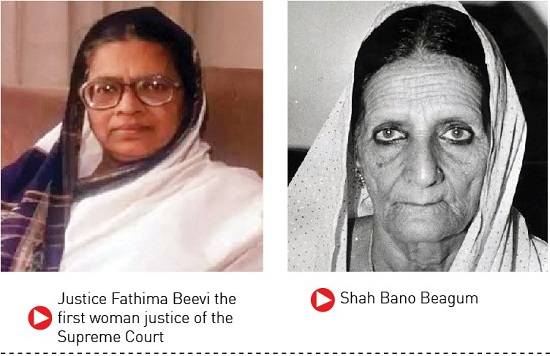
The latest controversy surrounding Keralam's influential Sunni cleric Kanthapuram A.P. Aboobacker Musliyar is not merely another passing headline. It is a reminder of a deeper national malaise. Reports indicate that Kanthapuram defended a directive discouraging women from sharing public platforms with unrelated men and argued that women's presence in public life could lead to "great destruction." He further asserted that women should remain confined to their homes and compared women to precious ornaments that must be kept safely locked away. The remarks have been widely reported and have triggered sharp reactions across Kerala and beyond.
For any society that claims to believe in equality, such statements should have been rejected unequivocally and universally. Instead, India once again witnessed a familiar spectacle: hesitation, equivocation, rationalisation, and political calculation. The issue is not whether Kanthapuram has the right to express his views. In a democracy, he certainly does. The issue is whether political parties that endlessly preach gender equality possess the courage to oppose such views when they emerge from influential religious quarters. That is where the real controversy begins.
A medieval Vision in a Modern Republic
India today stands poised to play a leading role on the global stage. Across every sphere of national life, Indian women are at the forefront of this transformation—flying fighter jets in the Indian Air Force, heading multinational corporations, spearheading scientific and technological missions, serving in Parliament and state governments, occupying key constitutional positions, and representing the nation with distinction in international forums. Their achievements reflect the aspirations of a modern India that increasingly draws its strength from the talents and leadership of its women.
Yet in 2026, one of India's most influential Muslim clerics is publicly defending the proposition that women should largely remain within the confines of their homes and away from public platforms. The contradiction is staggering.
The tragedy is even greater because these remarks do not emerge from a vacuum. This controversy is part of a long-running ideological resistance to gender equality that has surfaced repeatedly whenever questions of reform, women's rights, and constitutional values arise. Significantly, this is not the first time Kanthapuram has attracted criticism on such issues. Earlier controversies included reported remarks that gender equality was contrary to Islam and that women were primarily suited for child-bearing. The latest statements therefore appear not as an isolated lapse but as part of a consistent worldview.
The Original Sin of Congress Secularism
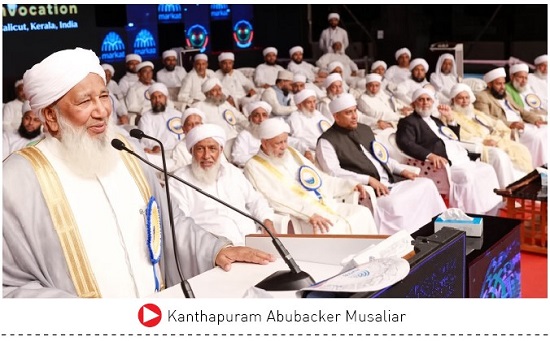
The significance of the present controversy becomes clearer when viewed against the backdrop of one of the most consequential episodes in post-Independence India—the Shah Bano case of 1985.
The Supreme Court's verdict in favour of Shah Bano, an elderly divorced Muslim woman seeking maintenance from her former husband, was widely regarded as a landmark affirmation of gender justice and constitutional equality. The judgment upheld the principle that a divorced Muslim woman was entitled to maintenance under the secular provisions of Indian law, reinforcing the idea that the Constitution stood above sectarian considerations in matters of justice.
However, what followed remains one of the most controversial chapters in India's political history. Instead of firmly supporting the Supreme Court's ruling and the rights of a vulnerable woman, the Rajiv Gandhi government yielded to pressure from sections of the conservative Muslim clergy. The enactment of the Muslim Women (Protection of Rights on Divorce) Act, 1986 effectively diluted the impact of the Shah Bano judgment and was widely perceived as a capitulation to religious orthodoxy.
For many Indians, the episode exposed the contradictions inherent in the Congress Party's brand of secularism. What was presented as secular accommodation was increasingly viewed as political appeasement. The interests of a divorced Muslim woman seeking justice were subordinated to electoral considerations and the demands of conservative religious leadership.
The Shah Bano reversal sent a powerful message across the country: when constitutional principles and vote-bank politics come into conflict, political expediency often prevails. More than four decades later, that episode continues to shape debates on secularism, minority politics, women's rights, and legal reform. It remains a stark reminder of how the pursuit of electoral advantage can impede social reform and deny justice to those most in need of constitutional protection.
History Repeated
More than three decades after the Shah Bano episode, India witnessed a strikingly similar battle during the controversy surrounding instant Triple Talaq. Across the country, thousands of Muslim women raised their voices against a practice that had left countless victims facing sudden abandonment, financial insecurity, and social humiliation. Women approached the courts seeking justice, civil society groups and women's organisations launched sustained campaigns for reform, and numerous victims publicly shared their painful experiences, exposing the human cost of a practice they viewed as discriminatory and unjust.
Despite these efforts, resistance to reform remained formidable. Even after the Supreme Court intervened and the Narendra Modi government initiated legislative measures to abolish instant Triple Talaq, significant sections of the political opposition appeared reluctant to support the reform unequivocally. Critics argued that many opposition parties seemed more preoccupied with political messaging and preserving electoral constituencies than with addressing the genuine grievances of affected Muslim women.
The controversy exposed a glaring contradiction in India's political discourse. Many of the same voices that routinely championed feminism, gender justice, and women's empowerment in public forums and television debates suddenly invoked cultural sensitivities and minority rights when the question of reforming practices affecting Muslim women arose. For many observers, the contrast was impossible to ignore. Once again, the rights and aspirations of Muslim women appeared to be caught between the demands of constitutional equality and the compulsions of vote-bank politics.
The Uniform Civil Code Debate
Few issues expose the deep ideological and political fault lines within Indian politics as sharply as the debate over the Uniform Civil Code (UCC). Envisioned under Article 44 of the Constitution as a Directive Principle of State Policy, the UCC is viewed by its proponents as a long-pending constitutional objective aimed at ensuring equal rights and equal legal standards for all citizens, irrespective of religion. Supporters argue that a common civil framework would strengthen the principles of equality, justice, and uniform citizenship that lie at the heart of the Indian republic.
Its opponents, however, have consistently portrayed the proposal as an encroachment upon religious freedom and a threat to the distinct cultural and religious identities of minority communities. As a result, the debate has remained deeply polarised, with successive governments often reluctant to engage with its core issues.
Vande Mataram And the Politics of Exceptionalism
The pattern of political accommodation is not confined to debates over women's rights alone. It has repeatedly surfaced in controversies involving national symbols, cultural identity, and questions of national integration. Few examples illustrate this better than the recurring disputes surrounding Vande Mataram.
For generations of Indians, Vande Mataram has been far more than a song. It was the anthem of India's freedom movement, inspiring countless revolutionaries, nationalists, and ordinary citizens in their struggle against British colonial rule. It became a powerful symbol of national awakening and patriotic resistance, occupying a revered place in the collective memory of the freedom struggle.
Yet objections raised by sections of Muslim leadership periodically transformed the issue into a political controversy. Instead of unequivocally defending a national symbol that had inspired the fight for independence, many political leaders chose the path of accommodation, ambiguity, and calculated silence. Rather than asserting the unifying historical significance of Vande Mataram, they often appeared more concerned with managing political sensitivities and preserving electoral alliances.
The CAA Debate and Identity Mobilisation
The Citizenship Amendment Act (CAA) triggered one of the most intense and polarised political debates in contemporary India. While opinions on the legislation remain sharply divided, the controversy revealed a broader trend in the country's political discourse—one increasingly shaped by identity-based mobilisation rather than objective examination of policy and legal provisions.
As the debate unfolded, religious identity and community sentiment emerged as central political instruments. Competing political narratives frequently appealed to fears, anxieties, and perceptions within different communities, transforming what could have been a substantive policy discussion into a larger contest over identity and electoral influence. In the process, community concerns became powerful tools of political mobilisation, often overshadowing nuanced engagement with the actual provisions and implications of the legislation.
The Ally That Explains Everything
The response of the Indian Union Muslim League (IUML) to the controversy has been particularly noteworthy. The IUML, a key constituent of the Congress-led United Democratic Front (UDF) in Kerala and one of the Congress party's most significant political allies in the state, chose to defend Kanthapuram's remarks, characterising them as a mere "scholarly expression."
That defence raises several important questions. Can views that seek to restrict women's participation in public life escape critical scrutiny simply because they are articulated by a religious scholar? Would similar remarks emanating from leaders of other communities be treated with the same degree of political indulgence? And would statements advocating limitations on women's public presence be dismissed as nothing more than a scholarly opinion if they had originated from a prominent Hindu religious figure?
These questions go to the heart of a long-standing debate about consistency in public discourse and political responses. Critics argue that standards often appear to change depending on the source of a controversial statement, leading to perceptions of selective outrage and selective silence.
The IUML's position did not come as a surprise to many observers familiar with Kerala's political landscape. For decades, the state's politics has operated within a complex ecosystem in which the support, goodwill, and approval of influential religious and community leaders have often carried significant electoral weight. Political parties across the spectrum have had to navigate these realities, frequently balancing ideological commitments against electoral compulsions.
The Muslim League is acutely aware of these dynamics. So too, critics contend, is the Congress party, which has maintained a long-standing political partnership with the IUML. It is this political context, many argue, that helps explain the measured responses, cautious statements, and, in some quarters, conspicuous silence that often accompany controversies involving influential religious figures. The Kanthapuram episode has once again brought into focus the uneasy intersection of electoral politics, religious authority, and the professed commitment of political parties to gender equality and social reform.
Rahul Gandhi’s Moment of Truth
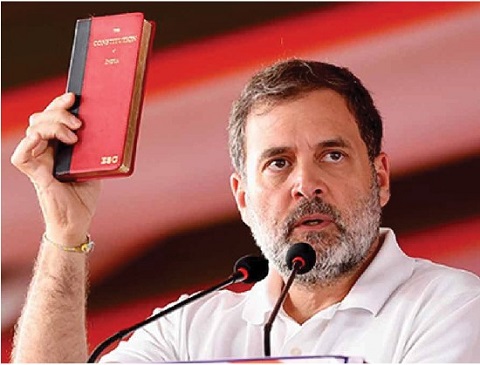
Rahul Gandhi has consistently claimed himself as a defender of the Constitution and its values. In speech after speech, he has spoken about women's empowerment, social justice, equality, and the protection of fundamental rights. However, the true measure of any principle lies not in rhetoric but in its application. Constitutional values acquire meaning only when political leaders are willing to uphold them even in difficult or politically inconvenient circumstances.
The controversy surrounding Kanthapuram's remarks presents precisely such a test. Will Rahul Gandhi unequivocally reject the proposition that women's role should be confined largely to the home and that their participation in public life should be restricted? Will he publicly distance himself from the defence mounted by his party's long-standing ally, the Indian Union Muslim League, which described the remarks as a "scholarly expression"? Will he affirm that the constitutional principles of equality and individual liberty must prevail over regressive social prescriptions, irrespective of the source from which they originate? Will he ever show the guts to condemn the ridiculous statement made by the Muslim cleric?
Instead, what the country witnessed was the studied silence of Congress leaders, both at the national and state levels—yet another episode of carefully calibrated political quietude shaped by coalition compulsions and electoral considerations. This is not merely a political issue; it is fundamentally about the consistency and credibility of India's secular and democratic discourse. At a time when questions of women's rights, constitutional equality, and social reform have once again moved to the centre of public debate, clarity from national leaders is not only necessary but expected.
India deserves a clear answer. So do the millions of Muslim women whose aspirations, freedoms, and constitutional rights form the central issue in this debate.
After days of conspicuous silence, and only in the face of widespread criticism from the public, social media users and civil society voices who openly challenged Kanthapuram's remarks, V. D. Satheesan, the Chief Minister of Keralam, was finally compelled to issue a statement condemning the controversy. Satheesan, who frequently projects himself as a champion of progressive values, constitutional morality, and social reform, appeared to issue what many viewed as a face-saving response. Describing Kanthapuram's remarks as incompatible with the ethos of a modern and progressive Kerala, he argued that they stemmed from a misinterpretation of Islam. However, the timing of his intervention—coming only after mounting public criticism—raised questions about whether it reflected conviction or political compulsion.
However, beyond this belated intervention, few senior Congress leaders in the state have found it necessary to unequivocally challenge Kanthapuram's deeply regressive views on women. Significantly, with the notable exception of Smt. Bindu Krishna, one of the very few Congress voices to openly question such attitudes, the party leadership and its allies have largely chosen silence over confrontation.
The reluctance to confront views raises serious questions about the Congress party's professed commitment to gender justice. Will Rahul Gandhi and Priyanka Vadra summon the political courage to publicly challenge their own party leaders and allies for maintaining this conspicuous silence? The answer, unfortunately, appears self-evident. The episode has once again exposed the widening gap between the Congress party's rhetoric and its actions. Grand declarations about defending the Constitution, fighting patriarchy, and championing women's empowerment ring hollow when confronted with politically inconvenient realities. If the party remains unwilling to speak out against such regressive views, it will only reinforce the perception that its commitment to constitutional values and gender justice is often subordinated to electoral compulsions and vote-bank considerations.
Priyanka Vadra and the Politics of Selective Feminism
The controversy also places Priyanka Vadra and the Congress party's broader discourse on women's rights under renewed scrutiny. Over the years, Priyanka has frequently spoken about women's empowerment, gender justice, and the need to create greater opportunities for women in public life. Such commitments resonate strongly in a country where the quest for equality and dignity remains an ongoing social and political challenge.
Yet advocating women's empowerment in political speeches is often easier than confronting deeply entrenched social and religious orthodoxies when they become politically sensitive. The real test of any commitment to gender equality arises when principles collide with electoral considerations, alliance politics, and influential community interests.
The present controversy presents precisely such a challenge. If feminism and gender justice are truly universal values, they must be applied consistently to all women, irrespective of their religious identity. The rights, aspirations, and freedoms of Hindu, Christian, Sikh, Muslim, and women from every other community deserve the same degree of concern, protection, and advocacy. Likewise, if patriarchal attitudes and restrictions on women's freedom are considered unacceptable, they remain unacceptable regardless of who articulates them or the community from which they originate.
Yet, in the present case, the silence has been striking. Priyanka Gandhi, the Member of Parliament from Wayanad, has thus far not publicly spoken out against Kanthapuram's deeply regressive remarks on women. This silence is particularly noteworthy given that a substantial section of her constituency comprises Muslim women, many of whom are directly affected by the larger debate on women's rights, equality, and social reform within the community. The question therefore naturally arises: if political leaders claim to champion women's empowerment and gender justice, can they afford to remain silent when those very principles are challenged by influential religious figures?
This is the central question that controversies such as the Kanthapuram episode bring into focus. Can principles of equality be applied consistently across communities, or do political considerations influence the intensity and nature of the response? Critics argue that selective application of feminist principles risks undermining their credibility and transforming a universal commitment to women's rights into an exercise shaped by political convenience.
For many observers, therefore, the issue extends beyond the remarks of a single cleric. It is also a test of whether political leaders who champion women's empowerment are prepared to uphold those values uniformly, even when doing so may involve challenging influential religious or political constituencies.
The Courage of Muslim Women
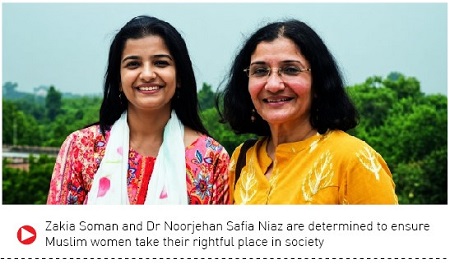
Perhaps the most significant and encouraging development to emerge from the controversy has been the response of Muslim women themselves. Far from accepting attempts to restrict their role in society, many Muslim women across Keralam and beyond have openly challenged the assumptions underlying such prescriptions. They have rejected the notion that a woman's place is confined exclusively to the domestic sphere and have asserted their right to participate fully in public, educational, professional, and social life.
Equally important, many have questioned the argument that public visibility and participation somehow diminish a woman's dignity. Their response reflects a growing conviction that personal faith and individual freedom are not mutually exclusive values. For these women, religious identity does not require withdrawal from public life, nor does the pursuit of education, leadership, and professional achievement undermine their cultural or spiritual commitments.
Their intervention has brought an important perspective to the debate. At a time when political parties, religious organisations, and public commentators are engaged in arguments over doctrine and authority, Muslim women themselves have emerged as some of the strongest advocates of dignity, equality, and constitutional rights. Their voices serve as a reminder that the debate is ultimately not about abstract theological questions but about the lives, aspirations, and freedoms of millions of women.
These women deserve to be heard and supported. Their concerns should not be met with silence, dismissed through patronising explanations, or reduced to bargaining chips in political negotiations. Instead, they deserve the solidarity of all those who genuinely believe in gender justice and equal citizenship.
History offers an important lesson in this regard. Meaningful social reform has rarely originated from entrenched establishments acting on their own initiative. More often, transformative change has been driven by courageous individuals and groups willing to challenge inherited orthodoxies and demand a more just and equitable social order. From struggles against social discrimination to movements for women's rights and legal reform, progress has typically been achieved because determined individuals refused to accept existing limitations as permanent.
The response of Muslim women to the present controversy belongs to that larger tradition of democratic and social reform. Their willingness to question restrictive narratives and assert their rightful place in public life may well prove to be one of the most consequential aspects of this entire debate.
The Real Choice Before India
The controversy surrounding Kanthapuram's remarks is ultimately about far more than the views of a single cleric or the contents of a single speech. It has reopened fundamental questions that India has grappled with for decades—questions about reform, constitutional values, women's rights, and the role of vote-bank politics in shaping public policy.
At its core, the debate is about whether India will continue to tolerate a political culture in which necessary social reforms are repeatedly deferred because they are considered electorally inconvenient. It is about whether constitutional morality will finally prevail over clerical vetoes and whether the rights guaranteed by the Constitution can be applied uniformly, irrespective of religious identity or political considerations.
The controversy also raises a larger question about the position of Muslim women in India's political discourse. Will they continue to be viewed through the prism of community politics and electoral calculations, or will they be recognised as equal citizens entitled to the same freedoms, opportunities, and constitutional protections enjoyed by every other Indian woman? Equally important, it tests the sincerity of political leaders who invoke the language of equality, empowerment, and justice on a daily basis. Are those principles universal, or do they become negotiable when political alliances and vote-bank considerations enter the equation?
For decades, India has heard familiar arguments whenever questions of reform within the Muslim community have arisen. The time is not right, it is said. The community is not ready. Reform must wait. Difficult questions can be postponed. Political sensitivities must take precedence. Again and again, social change has been deferred in the name of caution, consensus, and electoral pragmatism.
Yet history points in a different direction. Progress has rarely been achieved by postponing reform indefinitely. Societies advance when reformers challenge entrenched orthodoxies. They move forward when individual rights prevail over inherited dogmas. They grow stronger when political leadership is guided by conviction rather than convenience and by principle rather than expediency.
In that sense, the central question before the country is no longer what Kanthapuram believes. His position has been stated publicly and debated extensively. The more relevant question is what India's political leadership believes. What do Rahul Gandhi, Priyanka Vadra, the Congress leadership, and their allies stand for when confronted with controversies of this nature? Are they prepared to defend constitutional equality with the same conviction regardless of the community involved? Are they willing to challenge regressive ideas even when doing so carries political costs?
The answers to those questions matter because silence, too, is a political statement. When influential voices advocate restrictions on women's participation in public life, the absence of a clear response inevitably invites scrutiny. If that silence continues, many will interpret it not merely as caution but as acquiescence.
Ultimately, the greatest obstacle to social reform is not the existence of conservative or regressive ideas. Every society contains competing viewpoints and ideological currents. The real challenge arises when political establishments choose to accommodate such ideas rather than confront them, when electoral calculations take precedence over constitutional principles, and when the pursuit of votes outweighs the pursuit of justice.
That is why the Kanthapuram controversy matters. It is not merely a debate about one cleric's remarks. It is a test of India's commitment to reform, equality, and constitutional citizenship. And it is a test that the country's political leadership can no longer indefinitely avoid.
The Kanthapuram controversy has ultimately exposed not merely the persistence of regressive attitudes towards women, but also the staggering hypocrisy of India's self-proclaimed secular establishment. For decades, the Congress party has wrapped itself in the language of constitutionalism, women's empowerment, social justice, and equality. Rahul Gandhi and Priyanka Vadra are rarely seen without invoking the Constitution as the ultimate moral compass of Indian democracy. Yet the true test of constitutional commitment lies not in holding up a copy of the Constitution at political rallies but in defending its principles when they become politically inconvenient. The reality confronting Muslim women today is stark. Whenever they have sought justice—whether in the Shah Bano case, the struggle against Triple Talaq, the demand for equal rights under a Uniform Civil Code, or the challenge against regressive clerical pronouncements—they have too often found themselves abandoned by the very political forces that claim to champion their rights. Time and again, Congress has chosen silence over reform, appeasement over principle, and electoral arithmetic over constitutional morality. The question before Rahul Gandhi, Priyanka Vadra and the Congress leadership is simple: will they stand with the millions of Muslim women seeking dignity, equality, and freedom, or will they continue to stand with those who seek to confine them behind the walls of orthodoxy? India deserves an answer. More importantly, Muslim women deserve an answer. For no amount of constitutional symbolism can conceal the uncomfortable truth that the greatest betrayal of Muslim women has often come not from clerics alone, but from politicians who knew better, spoke of equality, yet repeatedly lacked the courage to defend it.
(The content of this article reflects the views of writer and contributor, not necessarily those of the publisher and editor. All disputes are subject to the exclusive jurisdiction of competent courts and forums in Delhi/New Delhi only)





















Comments (2)
C
Super, a determined committed journalist,pride of rss parivar kerala.
C
Well researched and well written article. A must read for everyone who are concerned about the oneness of the nation.