


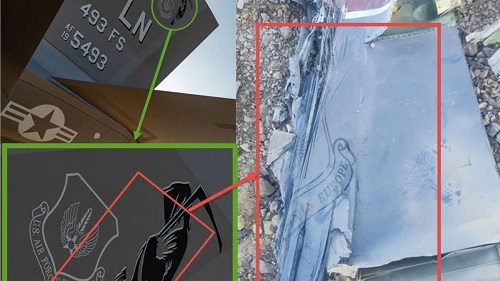
The ongoing war between the United States and Iran has entered a more dangerous phase, with two American warplanes shot down in a single day—marking the first confirmed losses of US aircraft inside Iranian territory since the conflict began. The incidents have raised serious concerns about the vulnerability of US air operations and the growing intensity of the confrontation.
One of the downed aircraft, an F-15E Strike Eagle, was carrying two crew members when it was hit. While one crew member was successfully rescued, the second remains missing, triggering a high-risk search and rescue mission deep inside hostile Iranian territory. The situation is further complicated by active Iranian military presence and heightened alert levels across the region.
In a separate incident, a US A-10 Warthog was struck while operating over Kuwait. The pilot managed to eject safely and was quickly recovered, but the back-to-back losses have shaken confidence in US control of the skies in the region.
Efforts to locate and rescue the missing F-15E crew member have proven extremely dangerous. Two US Blackhawk helicopters deployed for the mission reportedly came under fire from Iranian forces. Although both helicopters managed to escape, the incident underscores the high-risk nature of rescue operations within contested airspace.
Iran’s powerful military wing, the Islamic Revolutionary Guard Corps (IRGC), has also launched its own search effort in southwestern Iran. In a controversial move, Iranian authorities have urged civilians to report or capture the missing US pilot, even offering rewards for information or direct action.
Senior Iranian leadership is portraying the situation as a turning point in the war. Parliament Speaker Mohammad Baqer Qalibaf stated that the conflict’s focus is shifting—from broader strategic objectives to actively targeting US military personnel on the ground.
Meanwhile, in Washington, the White House confirmed that President Donald Trump is receiving real-time updates on the unfolding rescue mission, highlighting the urgency and sensitivity of the situation.
The downing of multiple aircraft in rapid succession has exposed the increasing risks faced by US forces operating in the region. Reports indicate that other aircraft, including additional A-10 Warthogs and KC-135 refueling tankers, were forced into emergency evasive maneuvers to avoid similar threats.
Military analysts note that even partially degraded air defense systems can pose serious dangers to advanced aircraft, especially in contested environments where radar coverage and missile systems remain active.
The broader conflict shows no signs of de-escalation. Iran has rejected a US-backed ceasefire proposal reportedly mediated by Pakistan, and hostilities continue to spread across the Middle East. Ongoing strikes and counterstrikes have impacted multiple regions, including attacks targeting Israel, US-allied Gulf states, and critical infrastructure in Kuwait.
As tensions intensify, the loss of aircraft and the fate of the missing pilot have become focal points in a rapidly evolving conflict—one that appears to be entering an even more volatile and unpredictable phase.

















Leave Your Comment