


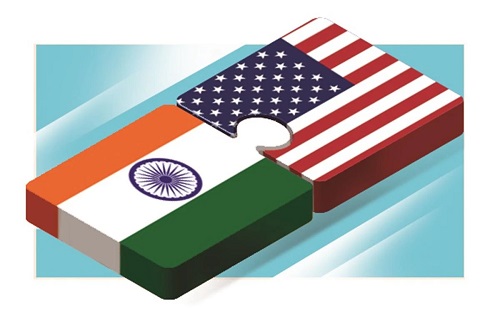
The United States has announced a sweeping reset of its global tariff structure, lowering duties on Indian exports from 18% to a unified 10% rate applicable to all major trading partners. The move arrives just two weeks after a landmark India-US trade agreement had already slashed US duties on Indian goods from 50% to 18% — marking one of the most rapid reductions in bilateral trade barriers in recent memory.
The new 10% global tariff also replaces previous rates of 15% levied on Switzerland, South Korea, the European Union, and Japan, and 20% on Vietnam. The United Kingdom, which already benefited from a 10% rate, sees no change.
US President Donald Trump was emphatic in underscoring the durability of the India-US trade relationship, even as the tariff overhaul reshapes global trade dynamics.
“I think my relationship with India is fantastic, and we’re doing trade with India,” Trump said, heaping praise on Prime Minister Narendra Modi, whom he described as “a great man.” Trump also pointed to India’s cooperation in reducing its oil imports from Russia as a sign of the deepening strategic partnership between the two nations.
The tariff reset comes in the wake of a US Supreme Court decision curtailing the Trump administration’s use of emergency economic powers to impose tariffs unilaterally. Despite the legal setback, the White House moved swiftly to reassure trading partners that all bilateral agreements remain intact.
“This is only temporary, as the administration will pursue other legal authorities to implement more appropriate or pre-negotiated tariff rates,” a senior White House official said.
For Indian exporters, the latest adjustment is a significant commercial win. The effective tariff on Indian goods entering the US market has now plummeted from 50% to 10% in under a month — a reduction that trade analysts say could meaningfully boost exports in sectors ranging from pharmaceuticals and textiles to technology services.
Trump also defended the broader use of tariffs as a geopolitical tool, claiming they have helped resolve several international disputes. He indicated the India-US deal would proceed “in a different way” without compromising existing commitments — a signal that Washington views New Delhi as a long-term strategic economic partner.


















Leave Your Comment