


A decade ago, I stood before the serene columns of the Jefferson Memorial at Washington DC. In that moment of reflection, the words of Thomas Jefferson seemed to echo with unusual clarity. His belief in freedom of expression was not confined to the mere right to speak; it was rooted in a deeper conviction—that a mature society must possess the moral strength to tolerate disagreement without descending into hostility. That ideal of coexistence through acceptance remains a defining pillar of any great nation.
Measured against that standard, the current media climate in India raises important questions.
The issue is not simply one of bias or sensationalism—flaws that exist the systems everywhere—but of the ecosystem that enables and, at times, amplifies them. India’s media operates within a regulatory framework that is often fragmented, outdated, and unevenly enforced. In such an environment, accountability becomes inconsistent, allowing sections of the media to disseminate unverified claims, propagate misleading narratives, or present sharply partisan viewpoints with limited immediate consequence.
This is not a problem of isolated lapses; it is structural. When competing versions of “truth” are repeatedly broadcast—often accompanied by exaggerated headlines and selectively framed debates—the distinction between fact and opinion begins to erode. Over time, the damage extends beyond individual stories. It weakens the very foundation of public trust.
A society uncertain about what to believe soon becomes uncertain about whom to trust. And in that uncertainty lies a deeper risk—not only to the credibility of the media, but to the quality of public discourse itself.
“Rajdeep Sardesai issued an unconditional apology to an IPS officer in November 2019 for spreading fake news in 2007” OpIndia 11 jan 2020
This episode illustrates a deeper problem: the gap between error and accountability in high-visibility, attention-driven media. The correction came after 13 years—and only through the persistence of an individual seeking redress. By then, the original misinformation had long circulated, shaped perceptions, and settled into public memory.
When individuals are left to challenge powerful media institutions on their own, the imbalance is evident from the outset. Even when accountability is eventually established, it often arrives too late to undo the damage. The more difficult question is not whether a correction is issued, but whether it reaches the same audience whose views were influenced in the first place.
Justice that arrives late arrives weakened
In the intervening years, narratives evolve, public attention shifts, and new cycles of information take over. In such a landscape, delayed accountability risks becoming symbolic rather than corrective—acknowledging error without meaningfully restoring trust or repairing its impact
Moreover, regulatory gaps can allow ideological leanings to harden into agendas. Instead of acting as neutral platforms for diverse perspectives, some platforms appear to consistently amplify particular viewpoints while sidelining others. This does not just shape opinion—it actively constructs narratives that audiences may accept as reality.
It is important to recognise that freedom of expression includes the freedom to hold and present opinions. However, when that freedom is exercised without sufficient checks—legal, ethical, or institutional—it risks being misused. The issue is not that the media is free, but that the mechanisms ensuring responsibility sometimes lag behind the power that media institutions wield.
One must understand that the value of free speech should be created through an informed and discerning public, as well as a culture of accountability. Freedom, in his view, was not self-sustaining; it required constant vigilance to prevent its distortion.
India’s democratic framework provides the foundation for a vibrant and independent media. But for that promise to be fully realised, there must be a stronger alignment between freedom and responsibility—through clearer standards, better enforcement, and a renewed commitment within the media itself to uphold credibility over convenience.
Ultimately, the health of public discourse depends not just on the right to speak, but on the integrity of what is spoken. A nation’s greatness lies not only in allowing voices to be heard, but in ensuring that those voices contribute meaningfully to truth rather than obscure it.
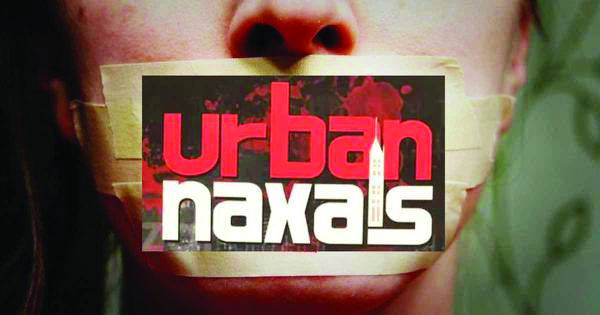
The urban naxal: The Dangerous Normalization of violence:
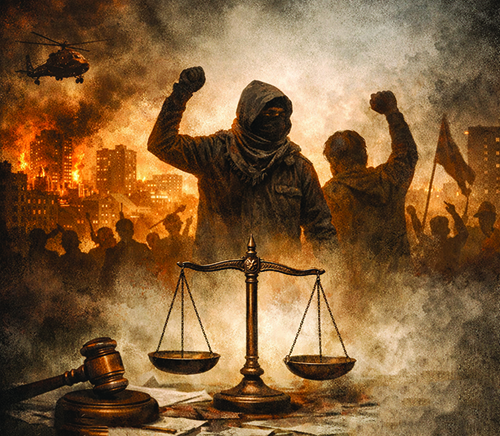
The hunger for justifying the chosen viewpoint has created scholars, intellectuals and influencers who promote and defend such narratives. When the debate is on naxalism the social media named these as Urban Naxals.
The term Urban Naxalism refers to the way Naxalite ideology and activities started in rural India and have gradually gained ground in urban India. Naxalism traces its roots in agrarian dissent in rural areas; now it cuts across urban space, drawing into its fold semi-urban educated goers who endorse the Maoist cause. These urban Naxals typically work in secret from cities, use their professional standing, social influence, and intellectual capabilities for the propagation of extremist philosophy, fabrication and management of events, and sometimes in plotting some actions against the state. An understanding of Urban Naxalism is important for understanding threat postures of internal security and government response strategies.
Security experts and government officials argue that they are more dangerous than armed rural cadres for the following reasons:
● Ideological Subversion: They are accused of using propaganda and "ideological subversion" to undermine national unity and recruit young, impressionable minds from universities.
● Infrastructure & Funding: They act as "primary movers" of arms and funds, creating a pipeline that sustains insurgents in the jungles.
● Infiltration of Institutions: According to internal strategic documents, their goal is to slowly infiltrate key sectors like the legal system, bureaucracy, police, and media to weaken the state from within.
● Legal & International Support: They use their positions as lawyers or activists to provide legal cover for insurgents and project Maoists as champions of human rights to gain international sympathy.
● Invisible Threat: Former police officials note that while rural Naxals are visible armed combatants, "Urban Naxals" operate subtly from homes or offices, making them harder to identify and track.
Many scholars and civil rights groups argue the term is a "bogey" used by the state to silence dissent and criminalise legitimate activism. They point out that several high-profile arrests under this label have later collapsed in court due to a lack of evidence. The article will address these issues in detail as it relates to all the divisive forces including urban naxals.
What can be considered genuinely harmful “anti-national” activity?
A more precise way to frame it is to focus on actions rather than labels. Across India’s history, concerns have typically centred on:
● Support for hostile powers during conflicts
For example, during the Sino-Indian War, some factions were accused of ideological alignment with China, which created internal security concerns.
● Collaboration with violent or secessionist groups
Especially during the insurgency phases in Kashmir, groups linked to or supported by elements in Pakistan have been treated as direct threats to national security.
● Disinformation and propaganda
In recent decades, this includes coordinated efforts (sometimes foreign-backed) to influence public opinion, spread false narratives, or deepen social divisions.
● Justification or glorification of violence
This is where debates around “humanizing” militants become sensitive—understanding causes is different from endorsing actions.
What India can strengthen to isolate such elements
A durable approach isn’t just about suppression—it’s about making the system resilient so that genuinely harmful actors have little influence:
Strong institutions and rule of law.
Independent courts, professional law enforcement, the law is in place. Most of the affected states have updated the UAPA.
Transparency and sustainable evidence-based investigations are the areas where we fail to ensure that offenders are punished. Our present system seeks glory in arresting and refusing bail. No accountability is there for lost cases, as a result, we have not developed the skills and integrity needed for a professional policing system. All reports on reforms are gathering dust.
● An approach that focuses primarily on prosecution while neglecting prevention creates a dangerous imbalance—it allows maximum damage to be inflicted in minimal time, while the response comes much later.
● A closer look at patterns suggests that hostile elements often act with speed and coordination, exploiting this very gap. Meanwhile, the state’s policing apparatus tends to concentrate on prosecuting major incidents—murders, bomb blasts, or large-scale unrest—rather than anticipating and disrupting threats early.
● The experience with urban naxals and organisations such as the Students Islamic Movement of India and Popular Front of India illustrates this lag. In both cases, it took years—sometimes over a decade—for decisive legal action to be taken. By that time, networks, narratives, and influence had already taken root.
● In an era shaped by rapid information flows and emerging technologies like artificial intelligence, such delays are not just problematic—they are potentially self-defeating.
● Equally concerning is that the challenge is no longer limited to shadowy or unknown actors. Increasingly, even prominent public figures, including those in positions of authority, engage in rhetoric that can deepen divisions and amplify tensions.
“Udhayanidhi Stalin's Comments Against 'Sanatana Dharma' Amount To Hate Against Specific Community “ Madras High Court”. Live Law, 7 March 2024.
Clear distinction between dissent and threat
India’s constitutional framework—shaped by leaders like B. R. Ambedkar—protects free speech while allowing limits for security. If everything critical is labeled “anti-national,” the term loses meaning and credibility.
Counter-disinformation capability
Investing in media literacy, fact-checking ecosystems, and rapid official communication helps neutralize propaganda without over-censorship.
Failure of Prasar Bharti and Press Information Bureau.
As happened with police, state owned institutions have failed to perform their duty. Prasar Bharti has struggled to become a global narrative leader. It is ironic that India is aspiring to lead the world without setting the agenda despite having such a huge media infrastructure. Nobody feels ashamed that our national broadcaster failed to make a mark in influencing the national or international debates. If one googles for ‘US Iran war’ news. None of the media promoted by Prasar Bharti is visible. It is time to introspect how Al Zazira, run by a small country, is leading the media space?
Lack of Strong Global Brand Identity
Organizations that shape global narratives—like BBC World Service or Al Jazeera—have:
● Clear editorial voice
● Consistent international presence
● Trust built over decades
Prasar Bharati, by contrast:
● Is still seen as largely domestic
● Has limited visibility inside/outside India
● Hasn’t positioned itself as a global storyteller.
Nationalist voices often perform better than state run campaigns on social media.
Speed and agility Individual creators or loosely connected groups can:
● React instantly to events
● Post without editorial layers
● Experiment constantly
Social media rewards speed, not process. Emotional storytelling wins online
State control explains everything” —it doesn’t.
Even within constraints, a public broadcaster like Prasar Bharati could do far stronger investigative and international journalism. But the gap usually comes from a combination of less obvious factors like seniority overruling skills and enthusiasm.
Investigative journalism is a system, not just freedom
High-impact investigations rely on:
● Dedicated investigative teams
● Legal backing and risk tolerance
● Long timelines (months or years per story)
● Data, forensic, and field resources
Prasar Bharati neither built this institutional ecosystem nor engaged with the competent vendors.
It is high time that the leading economy of the world should take a lead in setting narrative and responding to anti india propaganda.
Use of brutal force to counter naxal urban or similar forces can be a small fraction of the solution. The bigger and effective response is defeating it on the information battlefield. Prasar Bharti needs to come out of its slumber and start rewarding performance over seniority. If done efficiently it will develop:
Political maturity and responsible rhetoric
When mainstream actors set narrative and avoid overusing charged labels, it prevents polarization. Over-politicizing “nationalism” can unintentionally amplify fringe voices.
Strategic communication and national narrative
A confident, plural idea of India—rooted in democracy and diversity—can be more persuasive than purely defensive nationalism. A theme emphasized by “ “Sabka Sath Sabka Vikas”.
A strong nation does two things at once:
● Firmly counters real security threats
● Protects legitimate debate and criticism
If the balance tilts too far toward suppression, it risks alienating citizens and giving fringe actors more traction. If it tilts too far toward permissiveness without safeguards, it can expose vulnerabilities.
In short, isolating genuinely harmful elements is less about broad labeling and more about precision—targeting actions that threaten sovereignty while keeping the democratic space healthy and credible. The debate to curb urban naxal should generate a broader framework to eliminate disinformation network of all types and in one go.

Rakesh Kumar
(The content of this article reflects the views of writer and contributor, not necessarily those of the publisher and editor. All disputes are subject to the exclusive jurisdiction of competent courts and forums in Delhi/New Delhi only)

















Leave Your Comment