


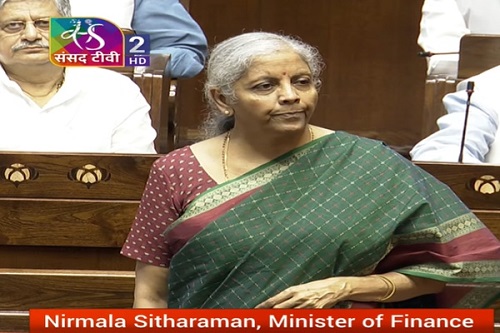
In a fiery session of the Rajya Sabha today, Union Finance Minister Nirmala Sitharaman staunchly defended the Union Budget against allegations of bias towards opposition-ruled states. Amidst heated exchanges during the Zero Hour, Sitharaman accused the opposition, led by the Congress, of misleading the public regarding allocations in the Budget.
Opposition Allegations and Minister's Response
The session began with Leader of Opposition Mallikarjun Kharge raising concerns over what he termed as discriminatory practices in the Union Budget. Kharge emphasized that the budgetary allocations seemed skewed, prompting threats of opposition protests. He questioned the feasibility of development without a balanced budgetary approach.
Responding to these allegations, Finance Minister Nirmala Sitharaman refuted claims of neglect towards states under opposition rule. She clarified that the budget speech couldn't possibly detail every state's allocations but assured that all states benefit from central government programs. Sitharaman highlighted recent cabinet approvals for numerous development projects in Maharashtra and West Bengal, underscoring the government's commitment to equitable development.
Parliamentary Dynamics and Opposition Walkout
The contentious debate culminated in a dramatic walkout by opposition parties from both the Rajya Sabha and the Lok Sabha. In the Upper House, Chairman Jagdeep Dhankhar denied adjournment notices, urging political leaders to handle such matters judiciously without disrupting routine proceedings. Dhankhar noted the rarity of accepting such notices, highlighting that in the past 36 years, only six have been sanctioned.
Similarly, in the Lok Sabha, members from Congress, Samajwadi Party, DMK, TMC, and others expressed dissatisfaction, alleging discrimination against states other than Andhra Pradesh and Bihar. Speaker Om Birla criticized the disruptive behavior during the Question Hour, admonishing the opposition for pre-planned protests that obstruct parliamentary decorum.
Government's Stand and Future Implications
Parliamentary Affairs Minister Kiren Rijiju echoed concerns about the opposition's conduct, citing agreements made during all-party meetings to ensure smooth functioning of the House. Rijiju emphasized the need for constructive dialogue over discordant protests, especially during critical parliamentary sessions.
The standoff underscores deep-seated political tensions as parties gear up for further deliberations on the Union Budget. With allegations of discrimination lingering, the debate is set to shape future parliamentary sessions and political discourse across the country.
As the fallout continues, the spotlight remains on the government's efforts to navigate legislative challenges while addressing opposition concerns amidst a charged political atmosphere.

















.jpg)


Leave Your Comment