


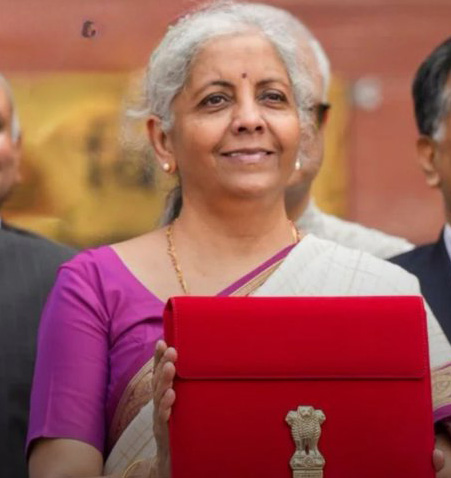
The Union Budget 2026, presented with characteristic clarity and restraint by Finance Minister Nirmala Sitharaman, is more than a fiscal exercise; it is a moment of economic statecraft. Her ninth consecutive Budget, delivered for the first time on a Sunday in independent India, reflects a government whose priority is not spectacle but strategy. At a time when many economies are wrestling with volatility, political churn, and social impatience, Budget 2026 stands out for its maturity and predictability.
What is most striking about this Budget is what it refuses to do. It avoids populism. It resists the temptation of short-term applause. There are no headline-grabbing tax giveaways, no last-minute sops, no attempts to influence sentiment artificially. Instead, the government has chosen the harder path, doubling down on long-term growth engines like manufacturing, infrastructure depth, financial reform, human capital, and India’s soft power sectors. This seriousness marks an inflection point: India is playing the long game.
The repositioning of textiles is emblematic of this shift. What was once treated as a welfare-heavy sector is now recognised as a strategic weapon of exports, employment, and global competitiveness. Mega Textile Parks, the push for technical textiles, SAMARTH 2.0, and the revitalisation of Khadi and handloom through global branding signal a structural transformation of rural and artisanal India. In this approach, looms become leverage; fabric becomes economic diplomacy.
Equally decisive is the reaffirmation of infrastructure as India’s growth insurance. With capital expenditure touching ₹12.2 lakh crore, the Budget continues the Modi government’s relentless expansion of highways, ports, power systems, rail networks, and urban corridors. The seven new high-speed rail corridors from Mumbai-Pune to Varanasi-Siliguri, symbolise more than connectivity; they symbolise ambition. Similarly, the expansion of waterways, ship-repair ecosystems, seaplane logistics, and coastal cargo reflect a logistics imagination that goes beyond the conventional.
Government’s stance on “sin goods”, making cigarettes, pan masala, and tobacco products more expensive, is both principled and pragmatic. These are not revenue tricks; they are public health corrections. Strong taxation on harmful products sends an unmistakable social message while reinforcing fiscal discipline.
On the financial front, the government has preferred reform over relief. The High-Level Committee on Banking for Viksit Bharat, deeper corporate bond markets, liberalised foreign equity investment, and restructuring of PFC-REC together highlight a willingness to modernise financial plumbing rather than chase headlines. Likewise, human capital receives a forward-looking push through the Education-to-Employment Standing Committee, expansion of AYUSH institutions, skilling of 1.5 lakh caregivers, and support for AVGC and creator-economy ecosystems.
The immediate reaction of the share market, a touch of nervousness, is neither surprising nor alarming. Markets often react faster than they reflect. They may search for populist signals, but investors value stability, predictability, and reform depth far more. As the Budget’s measures begin to take effect, confidence will return. Citizens too will gradually recognise the value of a non-populist Budget when its benefits, jobs, connectivity, lower logistics costs, better services, touch their daily lives.
India today remains the brightest spot among global democracies, the fastest-growing open-market economy with government stability, policy clarity, and geopolitical resilience. Yet the road ahead demands participation. The youth, especially, must step forward, not as spectators but as collaborators, in shaping the grand project of Viksit Bharat. The Amrit Kāl has begun. The Budget provides the direction; the nation must now supply the determination.
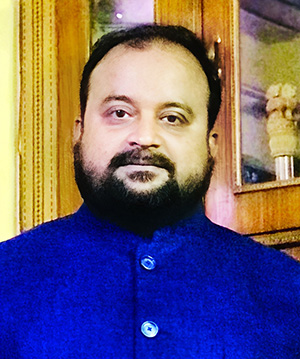
Deepak Kumar Rath



.jpeg)
.jpeg)
.jpeg)
.jpg)
.jpeg)


.jpeg)


.jpeg)


_(1).jpg)



.jpg)


.jpeg)
Leave Your Comment