


The government has announced the special session of Parliament. But what issues will be discussed at the extraordinary Parliament session that will take place between September 18 and September 22? Whether it will be a "One Nation, One Election" measure, the Uniform Civil Code, women's reservation bill, population control legislation, or universal income plan, suspense is very high in the nation. The tension is anticipated to be resolved when Speaker Om Birla calls a meeting of the Business Advisory Panel, a 15-member body that includes opposition members, and distributes the agenda papers in advance of the planned session, as per the protocol.
It is within the rights of a majority government to call for early Lok Sabha elections. The 17th Lok Sabha may be dissolved early without parliamentary approval. Therefore, the Special Parliamentary session must include some ornamental or substantive legislative work, which must fructify or produce electoral benefits within the next six months. The Uniform Civil Code or a universal income programme would seem good in such a situation. The Women's Reservation Bill, population control laws, and "One Nation, One Election" would all face legal obstacles in the meantime.
However, given the media hysteria and speculative evidence, simultaneous Assembly elections in as many as 12 states with the general elections appear to be highly likely. According to sources, a new committee led by former president Ram Nath Kovind will examine the viability of India's "one nation, one election" system, or nationwide simultaneous national and state elections, marking a significant advancement on the long-discussed proposal.
The action was taken a day after the Centre announced that the parliament would have an extraordinary session from September 18 to September 22 without releasing the agenda. Intense rumours that a bill on "one nation, one election" will be introduced during the session followed the unexpected statement, but no one from the government has verified this.
So, what is the One Nation, One Election program?
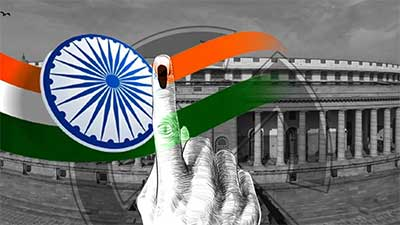
The One Nation, One Election (ONOE) program is a proposal to hold simultaneous elections for the Lok Sabha (the lower house of Parliament) and all state assemblies across India. This means that elections would be held every five years, instead of the current system where Lok Sabha elections are held every five years and state assembly elections are held at different times in different states.
The ONOE program was first proposed by the National Democratic Alliance (NDA) government in 2014. The government has argued that the ONOE program would save money, reduce the burden on the electorate, and improve the efficiency of governance.
Why did the Indian government form a panel to look into the ONOE program?
The Indian government has formed a panel to look into the ONOE program because there are a number of challenges that need to be addressed before the program can be implemented. These challenges include:
·The need to amend the Constitution to allow for simultaneous elections.
·The need to ensure that all states are ready for simultaneous elections.
·The need to address the concerns of opposition parties, who have raised concerns about the impact of the ONOE program on federalism.
What are the pros and cons of the ONOE program?
The ONOE program has both pros and cons.
First, I will talk about the pros.
·The ONOE program would save money. The government estimates that it would save around Rs. 5,000 crore or US$670 million per election.
·The ONOE program would reduce the burden on the electorate. Voters would only have to vote once in five years instead of multiple times.
·The ONOE program would improve the efficiency of governance. There would be less time between elections, which would allow the government to focus on governing instead of campaigning.
Now I will talk about cons
·The ONOE program would be challenging to implement. It would require amending the Constitution and ensuring that all states are ready for simultaneous elections.
·The ONOE program would be unpopular with opposition parties. They have raised concerns that the ONOE program would give the ruling party an unfair advantage.
·The ONOE program could lead to instability. If the ruling party loses power in the Lok Sabha elections, it could also lose power in the state assemblies. This could lead to political instability.
Now how have opposition leaders reacted to the ONOE program?
The opposition has reacted cautiously to the ONOE program. Some opposition leaders have supported the idea, while others have expressed concerns about the impact of the program on federalism.
The Congress party, the main opposition party, has said that it is open to the idea of simultaneous elections, but only if it is implemented in a way that does not undermine federalism. The party has also said that it wants to see a detailed proposal from the government before it takes a final decision on the issue.
The Trinamool Congress, another major opposition party, has said that it is opposed to the ONOE program. The party has argued that the program would give the ruling party an unfair advantage and would undermine federalism.
Then, what is the way forward?
The Indian government is still in the early stages of exploring the ONOE program. The panel formed by the government will submit its report in the next few months. The government will then need to decide whether to implement the ONOE program and, if so, how to do it.
The ONOE program is a complex issue with no easy answers. The government will need to carefully consider the pros and cons of the program before making a decision. The opposition parties will also need to be involved in the process to ensure that the program is implemented in a way that is fair to all.















Leave Your Comment