


A major diplomatic revelation has placed the spotlight firmly on Pakistan’s continued role in cross-border terrorism, following the release of the 37th report by the United Nations’ Analytical Support and Sanctions Monitoring Team. The report, which assesses the global threat posed by designated terrorist entities, has directly linked the Pakistan-based Jaish-e-Mohammed (JeM) to the deadly explosion near the Red Fort in New Delhi on November 10—an attack that claimed 15 lives and injured several others.
According to the findings, a member state formally informed the UN monitoring team that JeM had claimed responsibility for the brazen assault in the Indian capital.
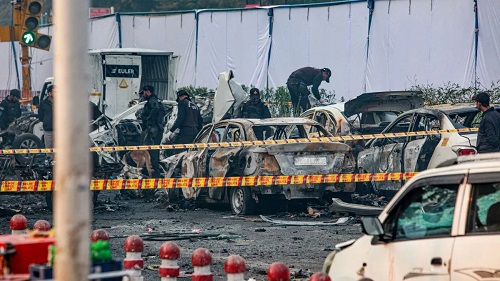
The incident in question occurred on the evening of November 10 near the Lal Quila Metro Station. A powerful explosion tore through a slow-moving Hyundai i20, instantly killing 15 occupants and causing a chain reaction that set multiple nearby vehicles ablaze. The blast caused extensive damage to the area and sent shockwaves through the national capital’s security apparatus.
Indian authorities have since linked the explosion to a suspected terror module recently uncovered in Faridabad. Multiple suspects have been detained for questioning as investigators work to dismantle the wider network believed to be responsible.
The UN report also highlights a significant organisational development within JeM. On October 8, the group’s chief, Masood Azhar—a designated global terrorist—announced the creation of a separate women’s wing named Jamaat-ul-Muminat. While this specific wing is not currently listed under UN sanctions, the report alleges that its primary objective is to support terrorist activities.
The emergence of a formal female cadre marks a worrying evolution in JeM’s operational capabilities, potentially allowing the group to bypass traditional security screening methods that focus predominantly on male operatives.
Perhaps the most striking aspect of the UN report is the clear divergence of opinion among member states regarding JeM’s current status. The report notes that one country maintains the organisation is “still active,” while another has asserted that the group has become “inactive.”
This discrepancy echoes Islamabad’s longstanding defence. Pakistan has previously claimed that both JeM and Lashkar-e-Taiba (LeT) are no longer operational on its soil, following sanctions imposed by the UN. However, the documented claim of responsibility for the November 10 attack—acknowledged in the official UN record—directly contradicts these assertions of inactivity.

















Leave Your Comment