


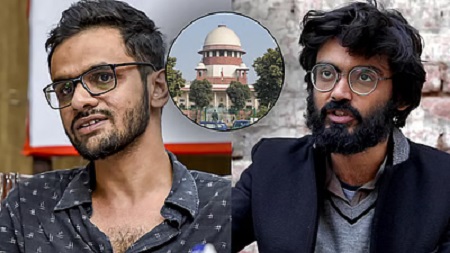
The Supreme Court’s decision to defer consideration of interim bail for Umar Khalid and Sharjeel Imam has brought the prolonged legal battle over the February 2020 northeast Delhi riots back into focus. On Wednesday, November 25, the apex court declined to grant them immediate interim relief in the UAPA case concerning the alleged larger conspiracy behind the violence. However, it issued notices to the Delhi Police, seeking its response, leaving the question of their temporary release open for further consideration.
The hearing took place before a bench comprising Chief Justice of India Surya Kant and Justices Joymalya Bagchi and V. Mohana. Senior advocate Kapil Sibal appeared for Khalid, while senior advocate Siddharth Dave represented Imam.
During the proceedings, Sibal requested interim bail for Khalid, pointing to his prolonged detention. Dave also pressed for similar relief for Imam, arguing that his client had spent years in prison without the trial making meaningful progress.
However, the bench was unwilling to grant immediate relief. When the lawyers urged the court to consider interim bail, the Chief Justice responded, "Not today". The court instead decided to seek the Delhi Police's response before taking up the interim bail requests.
The principal argument advanced by Khalid and Imam revolves around the extraordinary length of their incarceration and the slow progress of the trial. Their petitions contend that keeping them behind bars for an indefinite period, without substantial progress in the examination of witnesses, raises serious questions about the constitutional guarantee of personal liberty.
According to Imam's petition, the chargesheet in the case was filed on September 25, 2020, naming 18 accused. The prosecution has listed more than 900 witnesses, including 47 protected witnesses. Imam has argued that despite spending approximately six years and nine months as an undertrial prisoner, not even a single prosecution witness has been examined.
The latest proceedings follow the Delhi High Court's September 30 decision rejecting the fresh bail applications of both activists. The High Court declined to interfere with the trial court's July 4 orders refusing regular bail, observing that the Supreme Court's earlier findings concerning their alleged roles had to be respected.
The January 5 Supreme Court ruling had distinguished Khalid and Imam from five co-accused who were granted bail. The court had considered their alleged positions in the prosecution's account of the conspiracy and concluded that their cases stood on a different footing. These findings, however, relate to the bail proceedings and do not constitute a final determination of their guilt.






















Leave Your Comment