


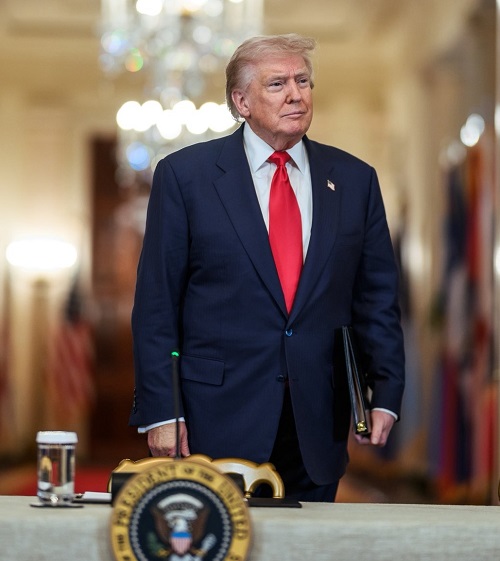
US President Donald Trump has signed a sweeping sanctions law that opens the door to tariffs of up to 100 per cent on countries purchasing Russian oil and gas, putting major buyers such as India and China under fresh pressure. The legislation seeks to tighten the economic squeeze on Moscow over the Ukraine war, while giving the White House broad powers that could also reshape global energy trade and US relations with key trading partners.
US President Donald Trump has signed into law a major sanctions package targeting Russia and Iran, giving Washington sweeping new powers to penalise countries that continue to purchase Russian oil and natural gas. The legislation, formally titled the Lindsey O. Graham Sanctioning Russia and Iran Act of 2026, authorises tariffs of up to 100 per cent on imports from countries that fall within its provisions, potentially affecting major Russian energy buyers such as India and China.
The measure represents a significant escalation in the US economic campaign against Moscow. It targets Russia’s energy and defence sectors, senior officials and the so-called “shadow fleet” of tankers that Washington says has helped Russia circumvent Western restrictions on its energy exports. The legislation also extends sanctions relating to Iran.
The legislation reached Trump after securing support in both chambers of Congress. The Republican-controlled House approved it by 262 votes to 159 on September 16, following Senate approval in August. The measure was originally associated with the late Republican Senator Lindsey Graham, a prominent critic of Russia, and was subsequently named in his honour.
One of the most consequential provisions concerns countries purchasing Russian crude oil or natural gas. The law gives the US president extensive authority to impose tariffs on major purchasers and on countries that assist Moscow in evading sanctions. The legislation therefore goes beyond directly targeting Russia and creates potential consequences for third countries that maintain significant energy trade with Moscow.
The congressional vote also highlighted differences within the Democratic Party. While Democrats have generally supported measures aimed at increasing pressure on Russia over the Ukraine conflict, some opposed granting the president such extensive authority over tariffs and trade policy.
For India, the legislation presents a difficult economic and energy-policy challenge. Russian crude has become an important component of India's oil procurement in recent years, while India remains heavily dependent on imports to meet its overall energy requirements.
New Delhi has stressed that its priority is energy security and that oil procurement will continue to be based on diversified sourcing and changing market conditions. The Ministry of External Affairs has also said India has conveyed to US interlocutors its concerns about the possible implications of the legislation for bilateral relations and international energy markets.
Importantly, the new law does not mean that Indian exports automatically face a 100 per cent US tariff. Rather, it creates a statutory framework under which the administration can impose such duties on countries covered by the legislation. The actual application, timing and level of tariffs remain significant factors in determining the economic impact on India.
The implications extend beyond India and China. Russia is one of the world's major energy producers, and any substantial disruption to its crude and gas exports could affect global supply chains and prices.
There is also a potential contradiction at the heart of the strategy. While restricting Russian energy purchases is intended to reduce Moscow's revenues, tighter restrictions on Russian supplies could also contribute to higher international oil prices if alternative supplies cannot quickly compensate for the lost volumes. Higher global prices could, in turn, increase the cost of energy for importing countries.
This makes the implementation of the law particularly significant for major economies that rely on imported crude.



















Leave Your Comment