


Diplomatic efforts to contain the widening Middle East conflict have run into fresh uncertainty after US President Donald Trump reportedly rejected an Iranian proposal that linked a ceasefire to the reopening of the strategically vital Strait of Hormuz. At the same time, Iraq has opened direct discussions with Washington seeking exemptions for airports affected by sanctions on Iranian airlines, while Saudi Arabia reported intercepting Houthi missiles and drones aimed at its territory. The developments underline the continuing military, diplomatic and humanitarian pressures across the region.
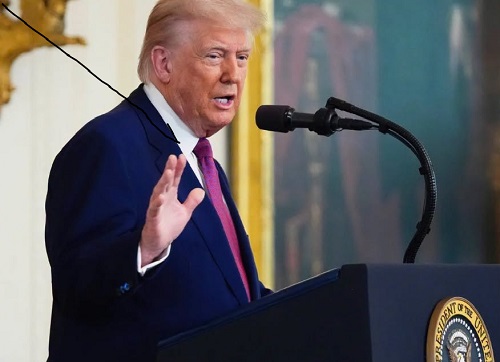
US President Donald Trump has reportedly rejected an Iranian proposal aimed at reopening the Strait of Hormuz and bringing an end to hostilities across the region, according to a report by The Wall Street Journal, which cited US officials. Iran, meanwhile, is awaiting an official response from Washington to the framework it has put forward.
The Iranian proposal envisaged a seven-day process under which fighting would be brought to an end on all fronts. In return, Tehran sought the lifting of the US blockade on Iranian ports, the release of frozen Iranian funds and a waiver of sanctions affecting Iranian oil exports.
The Strait of Hormuz would subsequently be reopened under the proposed arrangement. The waterway is one of the world's most important energy corridors, making any prolonged disruption a matter of concern for global oil markets and international shipping. Reuters had earlier reported that Iran was prepared to reopen the strait within a week if Washington reduced military pressure and lifted its blockade.
The reported US rejection adds another complication to diplomatic efforts surrounding the conflict. Earlier this week, Trump had indicated that a possible agreement with Iran could emerge after the US midterm elections, while Tehran continued to signal that it was prepared to engage diplomatically if Washington eased military and economic pressure.
Amid the broader confrontation, Iraq is attempting to prevent the dispute from causing further disruption to civilian air travel. Baghdad is holding direct talks with the United States to obtain exemptions for some Iraqi airports from measures affecting Iranian airlines.
According to the Iraqi prime minister's media office, the proposed exemptions are intended to allow air services to resume for humanitarian and civilian purposes. These include travel by patients seeking medical treatment, students, religious pilgrims and other civilians.
The request follows the suspension of Iranian flights at Iraqi airports after Washington threatened sanctions against companies and airports providing services to Iranian carriers. Iraqi officials have stressed the humanitarian consequences of the restrictions, particularly for people whose travel is connected to medical treatment, education and religious visits.
Najaf, an important destination for Iranian travellers, has been among the airports affected by the disruption. Baghdad's negotiations with Washington therefore represent an attempt to create a limited humanitarian channel without changing the wider US sanctions policy toward Iran.
The regional security situation also deteriorated with a fresh Houthi attack targeting Saudi Arabia. Yemen's Saudi-led coalition said it intercepted two ballistic missiles and two drones launched by the Houthis toward the kingdom.
According to the coalition, the ballistic missiles were directed toward Khamis Mushait, while the drones were heading toward Riyadh. Reuters reported the interceptions on Saturday, citing the Saudi-led coalition.
The timing of the attack has drawn additional attention because it came only hours after the military chiefs of Saudi Arabia, Pakistan and Turkiye met in Riyadh to discuss threats facing Saudi Arabia. The meeting took place against the backdrop of growing regional tensions and concerns about the possibility of the conflict spreading further across the Gulf.
Saudi Arabia, Pakistan and Turkiye had earlier signed the Makkah Joint Defence Agreement on August 7, 2026. The agreement provides that an armed attack against one of the three countries would be regarded as an attack against all three.
Taken together, the latest developments show how diplomatic initiatives, sanctions, air connectivity and military confrontations are becoming increasingly interconnected. Iran's proposal places the Strait of Hormuz at the centre of efforts to de-escalate the conflict, while Iraq's appeal highlights the civilian consequences of sanctions. At the same time, the latest Houthi attacks demonstrate the continuing risk of the conflict spreading across multiple fronts.
For now, however, the reported US rejection of Tehran's seven-day framework leaves the prospects for an immediate reopening of the Strait of Hormuz and a broader regional ceasefire uncertain.




















Leave Your Comment