


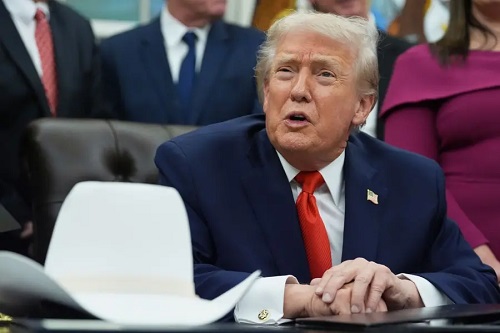
In a move that could significantly escalate economic pressure on Russia and ripple through global energy markets, President Donald Trump has reportedly "greenlit" a bipartisan sanctions bill that authorizes punitive tariffs on nations purchasing Russian oil, gas, and uranium. According to Republican Senator Lindsey Graham, a key architect of the legislation, the bill could be used to penalize major economies like India, China, and Brazil for transactions that "fuel Russian President Vladimir Putin's war machine."
The proposed legislation, chiefly written by Senator Graham and Democratic Senator Richard Blumenthal, represents one of the most aggressive congressional efforts to date to financially cripple Moscow amidst its ongoing war in Ukraine. The bill would empower the U.S. President to impose secondary sanctions and tariffs of up to 500 percent on countries that knowingly purchase Russian energy exports and other key commodities.
"The goal is to cut off the source of financing for much of Russia's military actions," Graham stated, emphasizing that the measure is designed to complement diplomatic efforts to end the conflict.
Senator Graham confirmed that he met with President Trump at the White House on Wednesday, securing his support for the bill, which has been in development for months. A White House official also verified the development to the Associated Press.
Graham suggested the timing is strategic, noting, "This will be well-timed, as Ukraine is making concessions for peace and Putin is all talk, continuing to kill the innocent." He indicated a Senate vote could occur as early as next week, though the legislative calendar remains uncertain due to pending government funding measures and an upcoming recess.
The bill’s potential impact extends far beyond Russia. By threatening exorbitant tariffs on third-party purchasers of Russian oil, the U.S. is directly challenging the economic policies of several strategic partners and competitors:
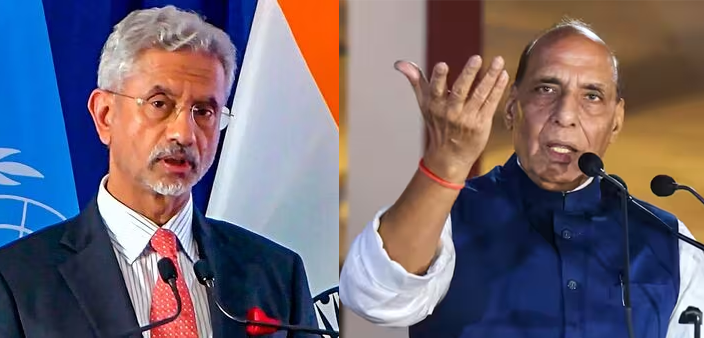
India and China, which have become leading buyers of discounted Russian crude since the invasion of Ukraine, would face severe economic consequences if tariffs were applied.
Brazil and other nations that have maintained or increased trade with Russia could also be targeted.
This approach marks a significant escalation in the use of secondary sanctions, effectively demanding that global nations choose between access to the U.S. market and continuing energy trade with Russia.
The legislation enjoys broad bipartisan support in the Senate, with dozens of co-sponsors, and has a companion bill in the House of Representatives drafted by Republican Rep. Brian Fitzpatrick. However, the White House had previously sought revisions to provide the administration with more flexibility in implementation. It is unclear whether those changes were incorporated.
The Trump administration is concurrently engaged in high-stakes diplomacy to end the nearly four-year-old war in Ukraine, with special envoy Steve Witkoff and Jared Kushner, Trump’s son-in-law, leading negotiations. The sanctions bill is viewed as leverage to force Russian concessions at the negotiating table.
If enacted, the Russia Sanctions Bill would represent a formidable new tool in Washington’s arsenal, fundamentally shifting the dynamics of global energy trade and alliance structures. It signals a willingness to impose substantial costs not only on adversaries but also on neutral or non-compliant third countries—a policy with profound implications for international diplomacy, inflation, and energy security worldwide.
As the Senate considers this measure, the world watches to see whether the United States will deploy what Senator Graham bluntly calls the "economic crippling" of Russia, regardless of the collateral damage to major trading partners. The coming weeks will determine if this legislative threat becomes a transformative reality.















Leave Your Comment