


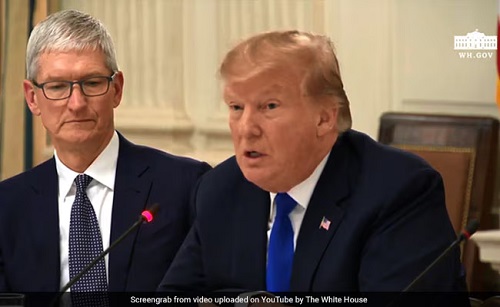
At a recent business event in Doha, US President Donald Trump publicly expressed his reservations about Apple's expansion plans in India, urging CEO Tim Cook to reconsider further manufacturing investments in the country. Trump cited India's high tariff barriers as a significant hurdle for US companies attempting to penetrate the Indian market.
"I said to him, my friend, I am treating you very good. You are coming up with $500 billion, but now I hear you are building all over India. I don't want you building in India," Trump stated, highlighting his concerns over India's tariff policies, which he perceives as unfavorable to US exports.
Trump claimed that India had proposed a tariff-free deal on US goods, which Apple could benefit from, but India has not officially announced such a proposal. "They (India) offered us a deal where basically they have agreed to charge us literally no tariffs," Trump asserted, despite the lack of confirmation from Indian authorities.
The US President's remarks come at a critical juncture for Apple, which has been actively expanding its manufacturing capabilities in India. Apple currently operates three plants in the country, with plans for additional facilities in the pipeline. These efforts are part of Apple's strategy to diversify its production away from China in response to ongoing trade tensions and tariffs imposed by the Trump administration.
Earlier reports indicated that Tim Cook anticipated a majority of iPhones sold in the US would soon be manufactured in India. In the fiscal year ending March, Apple significantly ramped up its iPhone assembly in India, totaling approximately $22 billion, marking a notable increase compared to previous years.
Trump's comments underscore the complexities of international trade relations, particularly between the US and India, amidst efforts by multinational corporations like Apple to navigate global supply chain dynamics. The implications of Trump's stance on Apple's strategic decisions in India remain to be seen, amid broader economic and geopolitical considerations shaping global trade policies.





















Leave Your Comment