


The political landscape of West Bengal has undergone a tectonic shift, marking the end of a fifteen-year era and the beginning of a new chapter in its storied electoral history. A party once character-ized as ‘foreign’ to the unique socio cultural fabric of Bengal has not only secured a mandate but has done so with the highest recorded voting percentage in the state’s history.
This transition is deeply symbolic, the Bharatiya Janata Party (BJP), which traces its ideological roots to the soil of Kolkata through Bharatiya Jana Sangha founder Shyama Prasad Mukherjee, has finally succeeded in hoisting its flag at the helm of Bengal. The 2026 verdict is a culmination of a decade-long momentum that began in 2014, evolving from a mere political challenge into a decisive cultural and administrative rejection of the incumbent regime.
The Catalyst of Fair Play: The Role of the Election Commission and SIR
The defining feature of the 2026 election was the unprecedented level of institutional oversight that ensured a free and fair polling process. Central to this was the Special Intensive Revision (SIR), a rigorous electoral roll cleanup exercise that resulted in the deletion of nearly 90 lakh duplicate or illegitimate entries. While the exercise faced intense political friction, it ultimately provided the ‘clean slate’ necessary for a genuine mandate.
Supported by the deployment of over 2.4 lakh Central Armed Police Force (CAPF) personnel, the Election Commission neutralized the traditional ‘muscle power’ and local intimidation tactics that had historically marred Bengal’s polls. This high-security environment gave the electorate the con-fidence to participate in record numbers, turning the ‘tug of war’ in the minds of the people into a historic surge for change.
The Duel of Leadership: The Giant-Killer vs. The Bubble
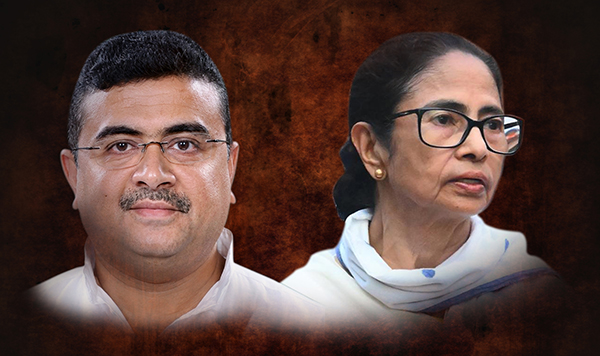
The 2026 election also marked the definitive rise of Suvendu Adhikari as a political titan. Having al-ready defeated the Chief Minister in Nandigram in 2021, Adhikari achieved a historic double by un-seating Mamata Banerjee in her own bastion of Bhabanipur. His victory shattered the myth of in-vincibility surrounding the TMC supremo.
Conversely, Mamata Banerjee, once the ‘Agnikanya’ (Firebrand) leader of Bengal, was perceived as having retreated into a ‘bubble.’ Heavily dependent on a close-knit coterie and external con-sultants like I-PAC (whose exit before the election added to the chaos), she was ignoring legitimate criticism and using the police force to suppress dissent. This isolation allowed her opponents to frame her not as a grass-roots protector, but as a leader who had lost touch with the evolving aspi-rations of her people.
Polarization and the Shift in Social Dynamics
The 2026 mandate was undeniably influenced by a deep sense of social and religious consolidation. Over the years, the Trinamool Congress (TMC) government’s minority outreach programs, initially framed as inclusive development, were increasingly perceived by a significant section of the elec-torate as a policy of strategic appeasement.
Incidents of communal friction in districts like Basirhat, Asansol, and Murshidabad combined with the administrative paralysis in dealing with local strongmen like Shahjahan of Sandeshkhali fueled a potent pro Hindu consolidation. The rhetoric of the ruling party, which many felt threatened the security of the majority community, acted as a catalyst, shifting the political discourse from secular welfare to a defensive rightist alignment. Also the issue of demographic change more particularly in the border districts of Malda and Murshidabad has become a National Security Issue.
The Safety Paradox: Women’s Security and the RG Kar Catalyst
For years, the TMC’s electoral dominance was anchored by its female vote bank, fortified by wel-fare schemes like Lakshmir Bhandar. However, the 2026 election revealed that safety carries more weight than subsidies. The brutal rape and murder of a young doctor at RG Kar Medical College (the ‘Abhaya’ case) in 2024 served as a breaking point for the women of Bengal.
The administration’s perceived mishandling of the case characterized by allegations of evidence tampering and a lack of empathy shook the conscience of both the urban ‘Bhadralok’ and rural families. The entry of the victim’s mother into the political fray on a BJP ticket and winning the elec-tion personalized the ‘crusade for justice,’ signaling to the 50% female electorate that their dignity and security could no longer be traded for monthly stipends.
A Systemic Rot: Corruption, ‘Dadagiri,’ and the Syndicate Culture
The transition was further fueled by a widespread rejection of what many termed the ‘Corruption Industry.’ From the Sarada and Narada scams to multi-crore irregularities in the Ration and Educa-tion departments, the systemic nature of the graft was undeniable. The recovery of massive cash reserves from the associates of senior ministers like Partha Chatterjee became a visual metaphor for the government’s priorities.
Beyond high-level scams, the daily life of the common citizen was stifled by ‘Dadagiri’ a culture of local bullying where ‘syndicates’ controlled everything from construction materials to government jobs. The ‘Tola baazi’ (extortion) at the councilor and panchayat levels created a environment of sheer arrogance and disdain for the public, turning the 2026 vote into a powerful anti-incumbency movement rooted in the desire for dignity.
The 2026 verdict is more than just a change of government, it is a mandate for administrative re-form and a departure from decades of political stagnation. By choosing a rightist administration, the people of West Bengal have signaled a desire to align with the national developmental narra-tive, prioritizing job creation, institutional integrity, and personal safety over populist rhetoric. As the state closes the chapter on fifteen years of TMC rule, the challenge for the new leadership will be to fulfill the immense expectations of an ‘Aspirational Bengal’ that is no longer content with the status quo.
(The content of this article reflects the views of writer and contributor, not necessarily those of the publisher and editor. All disputes are subject to the exclusive jurisdiction of competent courts and forums in Delhi/New Delhi only)



















Leave Your Comment