


Just a few days ago, we had Ekadashi. Many do not fully grasp what these *tithis* (lunar days) are, why they exist, or what significance they hold. Friends, Indian civilization did not merely measure time by the hands of a clock; rather, it experienced, lived, and deeply understood it. This is precisely why the movement of the moon was integrated with such meticulous precision into the calculation of time here. The concept of the *tithi* is the direct result of this profound scientific and cultural perspective. It illustrates that the Indian perception of time was not static, but rather *flowing and rhythmic*—a continuum where every single moment possessed its own unique quality, influence, and psychological dimension.
To comprehend the Indian *tithi* system, it is essential, first and foremost, to understand that it is directly predicated upon the moon's revolution around the Earth and the dynamic angular relationship between the Sun and the Moon. Ancient Indian astronomers observed that the moon is not self-luminous; rather, it reflects the light of the Sun. Furthermore, the specific shape or phase of the moon that we perceive from Earth—ranging from the *Krishna Paksha* (waning phase) to the *Shukla Paksha* (waxing phase)—is, in reality, entirely dependent upon the angle formed between the Sun and the Moon.
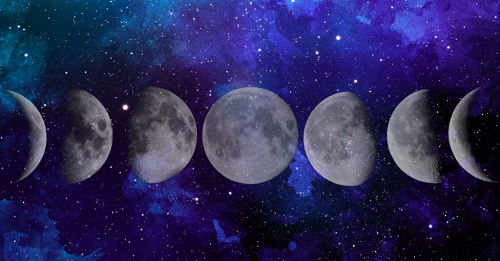
It is upon this very foundation that the definition of a *tithi* was established. A new *tithi* commences whenever the angular separation between the Sun and the Moon increases by 12 degrees. Since a complete circle encompasses 360 degrees, this calculation yields 30 distinct *tithis* (360° ÷ 12° = 30).These 30 *tithis* collectively constitute a *lunar month*, which is further divided into two distinct halves: the *Shukla Paksha* (the waxing phase, spanning from the New Moon to the Full Moon) and the *Krishna Paksha* (the waning phase, spanning from the Full Moon to the New Moon). During the *Shukla Paksha*, the moon's luminosity progressively increases, whereas during the *Krishna Paksha*, it gradually diminishes. This waxing and waning is, in essence, the visible manifestation of the ever-changing angular relationship between the Sun and the Moon. Viewing this from an angular perspective, at the time of *Amavasya* (New Moon), the Sun and the Moon are situated in approximately the same direction—meaning the angle between them is close to 0°. As the Moon advances along its orbit, this angle begins to increase—12°, 24°, 36°... and in this sequence, *Tithis* (lunar days) such as *Dwitiya*, *Tritiya*, and *Chaturthi* are formed. When this angle reaches approximately 180°, *Purnima* (Full Moon) occurs; at this point, the Moon appears fully illuminated because it is positioned in the direction exactly opposite to the Sun.
This very scientific foundation is reflected in the Indian *Panchang* (Hindu calendar). While the Western Gregorian calendar is entirely solar—dividing days into fixed 24-hour segments—the Indian *Panchang* operates on a "Luni-Solar" (lunar-solar) system. In this system, months are calculated based on the lunar cycle, yet the balance of seasons and years is maintained based on the Sun.
The most fascinating characteristic of a *Tithi* is that it does not constitute a "fixed day." Since the Moon's orbital speed is not constant—at times moving faster, at others slower—the duration of a single *Tithi* can vary, ranging from approximately 19 to 26 hours. This is why a *Tithi* may conclude within a single calendar day or span across two days. It is on this basis that the dates for festivals and religious observances (*Vratas*) are determined—they are not tied to a specific Gregorian date, but rather to that particular angular alignment.
For instance, *Ekadashi* is observed when the angular separation between the Sun and the Moon falls within the range of 120° to 132°. Ashtami falls between 84° and 96°, while Trayodashi occurs between 144° and 156°. Thus, every *Tithi* (lunar day) is, in essence, an "angular window" that signifies the specific position of the Moon.
This entire system makes it evident that the Indian calendar is not merely a framework of dates, but rather an astronomical clock that directly links celestial movements to human life. *Tithis* remind us that we are not disconnected from the rhythm of the cosmos, but are, in fact, an integral part of it—a realm where time does not merely pass, but unfolds in the heavens and is experienced here on Earth. This serves as a testament to just how advanced and intellectually sophisticated ancient India was—a civilization that these "Western red monkeys" have long portrayed as primitive. The time has come for you to discover these truths for yourselves and to share them with your children.





















Leave Your Comment