


The United Kingdom has recently unveiled its latest advancement in military technology: the DragonFire Laser. This state-of-the-art directed energy weapon represents a significant leap forward in the realm of defense, capable of neutralizing aerial threats with unparalleled precision. As the world takes note of this technological marvel, it raises intriguing questions about its potential applications and the mysteries surrounding recent aerial incidents.
Technical Overview of the DragonFire Laser
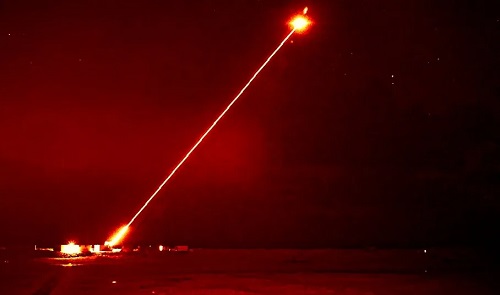
The DragonFire Laser is a directed energy weapon (DEW) that employs high-energy lasers to incapacitate or destroy targets. Developed by a consortium of defense contractors including MBDA, QinetiQ, and Leonardo, this weapon system is designed to offer a rapid, precise, and cost-effective response to modern threats.
Key features of the DragonFire Laser include
High Precision: The laser can target and destroy small, fast-moving objects such as drones from miles away with pinpoint accuracy. This capability is crucial in an era where unmanned aerial vehicles (UAVs) are increasingly used in both reconnaissance and offensive operations.
Versatility: Beyond drones, the DragonFire Laser is effective against a range of aerial threats, including helicopters. Its ability to track and engage multiple targets makes it a versatile tool for modern warfare.
Rapid Response: Unlike traditional kinetic weapons, lasers can engage targets almost instantaneously. This rapid response time is vital in scenarios where split-second decisions can mean the difference between success and failure.
Cost Efficiency: Once operational, the cost per shot of a laser weapon is significantly lower than that of missile-based systems. This economic advantage allows for sustained operations without the high expenditure associated with conventional ammunition.
Operational Capabilities
The DragonFire Laser’s ability to disable drones and helicopters from considerable distances highlights its potential to transform battlefield dynamics. In recent demonstrations, the weapon successfully engaged various targets under different conditions, proving its reliability and effectiveness. Its integration into the UK's defense arsenal signals a strategic shift towards leveraging advanced technology to counter emerging threats.
The Iranian Helicopter Incident: A Case for Speculation
The recent downing of an Iranian helicopter has sparked a wave of speculation and conspiracy theories. Official reports attribute the incident to adverse weather conditions, notably fog, which ostensibly caused disorientation and mechanical failure. However, the disappearance of weather maps for that day and the unusual circumstances surrounding the event have led some to question this narrative.
Could the DragonFire Laser have played a role? While there is no concrete evidence to support this claim, the capabilities of such a weapon naturally lead to speculation. The precise nature of laser attacks, which can leave minimal physical evidence, adds an air of mystery to the incident. Decoys and misinformation further complicate the picture, leaving room for doubt and conjecture.
Implications and Future Prospects
The unveiling of the DragonFire Laser represents a significant milestone in military technology. Its implications extend beyond the immediate tactical advantages, prompting a re-evaluation of defense strategies worldwide. As other nations scramble to develop or acquire similar capabilities, the nature of aerial combat and defense will inevitably evolve.
For the UK, the DragonFire Laser enhances its defensive posture and deterrence capability. It also positions the country as a leader in directed energy technology, potentially influencing future alliances and defense collaborations.
Conclusion
The DragonFire Laser marks a new era in military defense, offering unmatched precision and efficiency against modern aerial threats. While its deployment raises intriguing questions and speculations, particularly in light of recent incidents like the Iranian helicopter crash, its impact on global defense strategies is undeniable. As this technology continues to evolve, it will undoubtedly shape the future of warfare and international security dynamics.



















Leave Your Comment