


Uday India Bureau
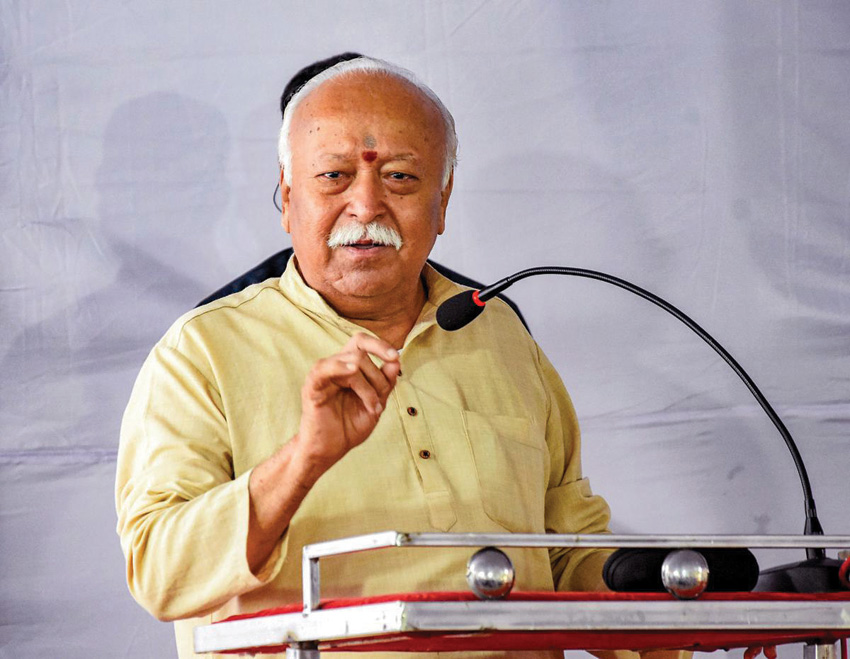
In a significant intervention, Rashtriya Swayamsevak Sangh (RSS) chief Mohan Bhagwat has openly criticized the frequent raking up of Hindu-Muslim issues, cautioning against the creation of communal discord. His statement comes amidst heightened political narratives often centered around temple-mosque disputes and related legal cases. While Bhagwat did not explicitly name any political party or group, his remarks are bound to have substantial political repercussions, particularly for the Bharatiya Janata Party (BJP), which shares ideological proximity with the RSS.
Today we will delve into the potential political impact of Bhagwat’s statement, exploring its implications for BJP’s electoral strategy, public perception, and the broader socio-political landscape in India.
Reasserting the RSS’s Ideological Stand
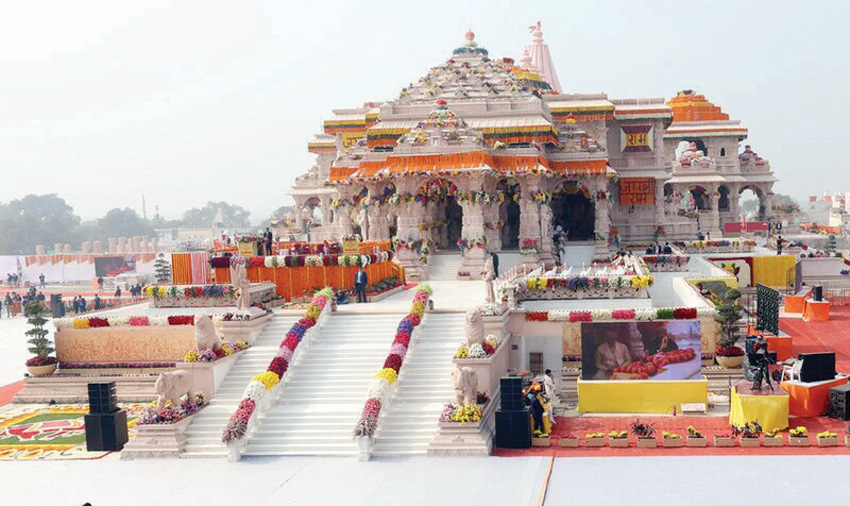
Mohan Bhagwat’s statement underscores the RSS’s effort to clarify its ideological stance. The Sangh’s long-standing goal of constructing the Ram Temple in Ayodhya has been realized, marking a significant milestone in its ideological journey. Bhagwat’s remark that "raking up new issues every day for disdain and enmity should not be done" reflects a nuanced perspective—a call to shift focus from contentious debates to constructive socio-cultural engagement.
For the RSS, this is an opportunity to project itself as a mature and responsible organization that prioritizes national unity over divisive rhetoric. This position may appeal to a broader segment of society, including those who perceive communal conflicts as counterproductive to India’s progress.
Implications for the BJP’s Electoral Strategy
The BJP has often been accused of leveraging Hindu-Muslim polarization as a tool to consolidate its vote bank. Temple-mosque disputes and allied controversies have played a role in shaping political narratives in states like Uttar Pradesh, Gujarat, and Karnataka. Bhagwat’s statement, however, challenges this approach. By cautioning against daily provocations that foster communal discord, Bhagwat implicitly signals a need for the BJP to recalibrate its strategy.
1. Softening the Hardline Narrative: Bhagwat’s words may prompt the BJP to adopt a more inclusive approach in its campaigns, focusing on development and governance rather than communal issues. This could help the party expand its appeal beyond its traditional Hindu vote bank, especially among minorities and liberal Hindus.
2. Managing Internal Dynamics: The statement could also create ripples within the BJP. Leaders and affiliates who rely on hardline rhetoric might face internal scrutiny or pressure to tone down their approach. This internal balancing act will be crucial for the BJP as it seeks to maintain ideological coherence while broadening its electoral appeal.
3. Impact on State Elections: With key state elections and the 2024 general elections on the horizon, Bhagwat’s remarks may influence campaign narratives. States like Rajasthan, Madhya Pradesh, and Chhattisgarh—where social cohesion is vital for electoral success—could see a shift in BJP’s messaging.
Public Perception and Opposition’s Response
Bhagwat’s statement is likely to be welcomed by those advocating for communal harmony. It may soften criticisms of the Sangh Parivar being solely focused on divisive agendas, thereby enhancing the RSS’s image among moderates.
However, the opposition parties could use Bhagwat’s remarks to target the BJP. They might argue that the BJP’s electoral strategies often contradict the RSS chief’s call for restraint. Statements from opposition leaders might highlight instances of communal polarization under BJP rule, creating a narrative of inconsistency within the Sangh Parivar.
1. Congress and Regional Parties: The Congress and regional parties like the Samajwadi Party and Trinamool Congress could leverage Bhagwat’s remarks to question BJP’s sincerity in fostering harmony. They may also position themselves as genuine proponents of secularism and inclusivity.
2. Aam Aadmi Party (AAP): The AAP, which often highlights governance over ideological issues, might seize this opportunity to contrast its development-centric model with BJP’s alleged reliance on communal narratives.
The Broader Socio-Political Impact
Bhagwat’s remarks come at a time when India’s socio-political fabric is under strain from rising communal tensions. By emphasizing unity and cautioning against divisive politics, the RSS chief’s statement could serve as a much-needed intervention to de-escalate tensions.
1. Civil Society and Intellectual Discourse: The statement could invigorate civil society organizations and intellectuals advocating for communal harmony. It may encourage public debates that focus on shared heritage and collective progress rather than divisive agendas.
2. Grassroots Movements: At the grassroots level, the RSS’s cadre may find new directions for community engagement, focusing on social welfare and cultural preservation over contentious political issues.
A Turning Point or a Tactical Move?
While Bhagwat’s statement is significant, questions remain about its long-term impact. Is this a genuine shift in the Sangh Parivar’s approach, or a tactical move to address growing criticism of divisive politics? The answer may lie in how the BJP and RSS affiliates align their actions with Bhagwat’s vision in the coming months.
Conclusion
Mohan Bhagwat’s criticism of raking up Hindu-Muslim issues represents a pivotal moment in India’s socio-political discourse. For the RSS, it is an opportunity to reframe its image as a unifying force. For the BJP, it poses a challenge to balance ideological commitment with broader electoral aspirations.
As India prepares for crucial elections, Bhagwat’s call for restraint could influence political narratives, public perception, and inter-community relations. Whether this statement heralds a genuine shift or remains a rhetorical gesture will depend on how the BJP and the Sangh Parivar translate it into action.
Uday India Bureau



















Leave Your Comment