


The Northeast has always been a complex geopolitical and strategic space, shaped by ethnic diversity, historical fault lines and external influences. The relative peace achieved in the past decade was the result of our Govt’s sustained efforts focussed on governance, development, security and diplomacy. However, the current ongoing turbulence is not an isolated event but rather a confluence of multiple internal and external factors converging at a critical juncture.
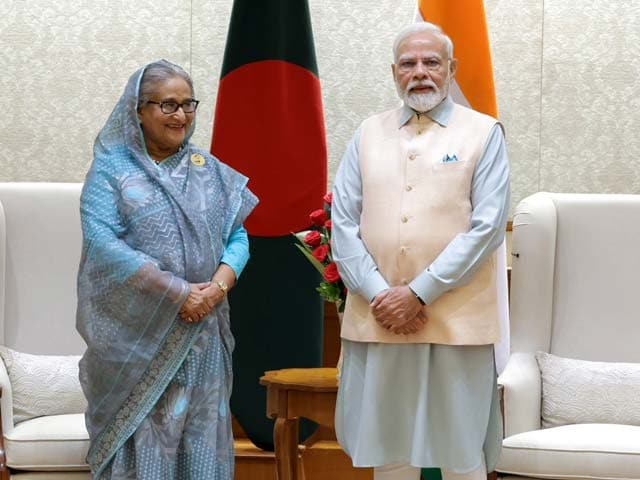
The civil war in Myanmar has created a dangerous security vacuum along our eastern frontier, fueling arms proliferation and cross-border insurgent movements. Regime change in Bangladesh has induced uncertainties into our bilateral equation which was getting stronger during Sheikh Hasina’s governance. The persistent violence in Manipur reflects deep-seated ethnic divisions exacerbated by regional developments as also the unresolved NSCN-IM issue in Nagaland continues to sustain a gun culture which challenges the state authority.
Beyond these visible fault lines, a more insidious and sophisticated campaign is at play which falls squarely into the domain of Fifth Generation Warfare. External actors leveraging disinformation, proxy networks and cyber-influence operations are actively seeking to destabilize India’s frontier regions. The fingerprints of foreign agencies with vested interests in keeping India’s periphery unstable are evident in the manner narratives are being shaped and conflicts are reignited. As a result, the insurgents have found new life once again.
The Need for a Multi-Dimensional Strategy
Given the evolving nature of the threats, India has to move beyond conventional counterinsurgency in addressing the problems covering multi domains encompassing political, security, intelligence and diplomatic dimensions.
(a) Local Engagement
The Government of India has now taken a direct role in peace-building efforts in Manipur by strengthening the Governor’s office as an impartial arbiter among the state's communities and as the Centre’s key interlocutor. This approach will help prevent political rivalries and governance gaps from exacerbating ethnic or insurgent conflicts. Fostering trust through inclusive governance, economic development and effective grievance redressal mechanisms will also erode the insurgents’ support base, paving the way for lasting stability. Immediate high-level intervention with clear timelines is also necessary to resolve the long pending Naga Accord as the half-measures will only prolong instability.
(b) Strengthening Security and Intelligence Grid
We should have anticipated the spillover from Myanmar’s ongoing turmoil as early as Feb 2021 and taken proactive containment steps. But somehow, it seems that we missed out looking into this aspect. Enhanced border security and surveillance along Myanmar and Bangladesh borders are critical to prevent cross-border insurgent movement. Thus, a stronger synergy between the Army, CAPFs, state police and local intelligence networks is very much needed for not only ensuring effective counterinsurgency operations but also essentially to curb arms smuggling, drug trafficking and insurgent funding.
Social media platforms are rapidly growing in Northeast and young generation appears to be increasingly getting glued to it. These needs to be closely monitored to prevent misinformation campaigns aimed at widening ethnic and communal fault lines. A Northeast Information Warfare Task Force, therefore, should be established to counter propaganda, fake narratives and external influence campaigns in real-time.
Financial monitoring of insurgent networks and NGOs with external linkages must also be intensified through digital financial forensics.
(c) Diplomatic Leverage and Strategic Alliances
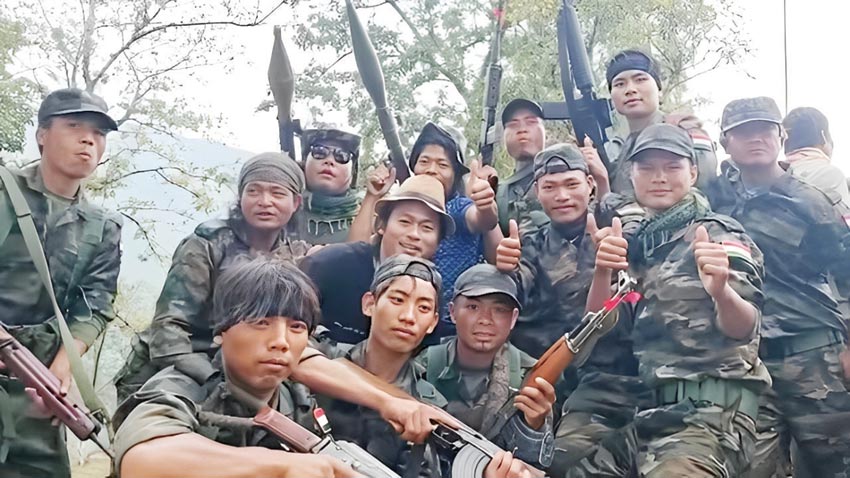
India must actively engage with the new government in Bangladesh and Myanmar’s military junta, as well as with the so-called rebel groups like the Chin National Army (CNA), focussed on to prevent their territories from being used as launchpads for insurgents.
We need to actively engage with the rebel forces in Myanmar, particularly the Chin National Army and the Arakan Army, for providing non-lethal aid to the civilians caught in the conflict. Additionally, deploying our armed forces as a peacekeeping in Chin and Rakhine states could help restore stability, allowing schools and businesses to reopen, thereby, ensuring citizens regain their civil liberties. Such an initiative would also facilitate the eventual resettlement of refugees currently in India, enabling them to return to their homeland.
Strengthening QUAD partnerships is also crucial to counter Chinese influence, which has long played a role in destabilizing the Northeast through proxies.
Dissecting the Narrative Warfare of Manipur crisis
The ongoing Manipur crisis is a textbook case of how false narratives, carefully engineered by foreign intelligence agencies, can inflame ethnic tensions and distort ground realities to serve geopolitical interests. The portrayal of the conflict as a religious clash between Hindus and Christians by sections of the international media is very misleading resulting in poisoning the minds of innocent common masses.
(a) The Reality: An Ethnic and Political Crisis, not a Religious One
The core of the Manipur crisis, actually, lies in issues connected with ethnic identity, land rights, demographic anxieties and governance framework but certainly not religious differences. We have seen how historical grievances between Meitei and Kuki communities over land, political representation and state policies have periodically flared up into violence. But, today framing this as a Hindu-Christian binary is a deliberate attempt to internationalize the issue and open opportunity doors for demanding external intervention.
(b) External Manipulations- 5th Generation Warfare
What has been happening in Manipur can be taken as a good example of how weaponisation of information is done to create divisions within the Indian society. We have also noticed selective outrages by the Western human rights groups and media as well, while ignoring the violence against Meiteis and other communities as also trying to give a push for international intervention, akin to tactics used in other global conflicts. We have also noticed support being extended for anti-India elements in the diaspora increasing, who use false narratives to lobby against India.
(c) Ground Realities of the Conflict and Need for a Strong National Response
However, the ground realities of the conflict are very different. Armed insurgent groups, many with external links, have exploited the crisis, especially from across the Myanmar border to push drug cartels and arms smuggling networks operating in the Golden Triangle. They have actively contributed to the violence ensuring push back to India’s counter-narcotics efforts. The presence of sophisticated weapons among insurgents, undoubtedly, suggests the involvement of foreign intelligence agencies aiming to destabilize the region.
India has to aggressively counter false narratives through both diplomatic and media engagement to prevent external interference and a strict action against foreign-funded groups propagating misinformation has to be a priority. Cyber intelligence operations also must track and neutralize influence campaigns before they gain traction.
The Act East Policy: Progress and Challenges
The transition from the Look East Policy (LEP) to the Act East Policy (AEP) in 2014 was a strategic shift aimed at transforming the Northeast from a frontier region into a key economic and strategic hub linking South Asia and Southeast Asia. Few notable key achievements since then are: -
(a) The India-Myanmar-Thailand Trilateral Highway and Kaladan Multi-Modal Transit Transport Project aimed at enhancing regional connectivity.
(b) All eight Northeastern states are now connected by rail as also with new airports improving air accessibility.
(c) Border trade with Myanmar and Bangladesh had increased with transit agreements benefiting Assam, Tripura and Meghalaya.
(d) Counterinsurgency operations against NSCN factions and ULFA(I) and peace accords with Bodo, Karbi, and Bru-Reang groups reduced insurgency-related incidents by over 70% since 2014.
However, the persistent current challenges which we urgently need to look into and handle deftly with a clear roadmap are: -
(a) China’s continued attempts to exert control over rebel groups and the trade routes in Myanmar, thereby, creating a refugee crisis due to Myanmar’s civil warfare resulting in spillover with direct impact on Manipur and Mizoram.
(b) The Golden Triangle’s narcotics trade remains a key driver of instability in Manipur and Nagaland.
(c) One must also not ignore that the unresolved Naga Peace talks is still a potential flashpoint for long-term instability because it has all the potential to be exploited by the hidden agents of the active inimical forces in our country.
The Time for Decisive Action is Now
If left unchecked, the Manipur crisis could become a long-term security flashpoint with regional spillover effects. The window for preventing further escalation is closing fast. A decisive security operation with a clear mandate is needed to neutralize armed groups and prevent unchecked violence. The government must ensure that insurgents do not get safe havens across the border. Diplomatic engagement with Bangladesh and Myanmar, including joint military operations will help dismantle insurgent networks.
We have to engage with both Meitei and Kuki-Zo leaders directly in Manipur and push for a negotiated settlement which I am sure will now happen consequent to the imposition of the President rule in the state. The recent appointment of most suitable Hon’ble Governors of Manipur and Mizoram is a very good decision taken by the Government of India. With the Manipur state now placed under President’s Rule it will now definitely make the Kuki, Hmar, Paite, Zo and other groups, see and feel the prevailing central authority over the state of Manipur as impartial.
Security forces have to maintain a neutral stance to regain public trust and intelligence agencies must counter foreign backed narratives fuelling the conflict. The common people of the Northeast, irrespective of their ethnic or tribal identity, ultimately seek peace and stability. If we have to secure our eastern frontier, then winning their hearts and minds through governance, development and trust-building must be central to our strategy. The time for half measures is over now. A whole of government approach is essential for securing the Northeast and ensuring its role as India’s gateway to the East.
Beyond Manipur- Roadmap for Stability in Northeast India
The crisis in Manipur must not be viewed in isolation as merely an intra-state conflict but rather as part of a broader effort to ignite ethnic unrest across the Northeast. Several vulnerabilities stand on the brink of escalation, needing only the right spark to set them ablaze.
First, the demand for Scheduled Tribe status by six ethnic tea estate communities, currently pending before the Guwahati High Court, remains a potential flashpoint. Second, unresolved ethnic tensions over land rights and electoral representation between the minority Hmar and Kuki communities and their respective majority groups in Karbi Anglong and Dima Hasao continue to simmer. Third, the presence of a large number of illegal Bangladeshi immigrants in the Barak Valley fuels aspirations of carving out a Bengali speaking state from southern Assam. Lastly, an ongoing movement to forge a unified ‘Zohnahthlak’ identity among the Chin, Kuki, Mizo, and Zomi communities is fostering anti-India secessionist sentiments and strengthening the call for an imagined Zalen gam, Zo land or Zoram.
If these underlying tensions are not addressed with foresight and decisive action sooner than later, the region risks descending into a cycle of instability that could have far reaching consequences for national security and territorial integrity.
In each of these cases, the grievances of the affected communities are deeply rooted in decades of misgovernance and neglect by successive Central Governments. Their frustrations are justified and the only way to prevent these issues from escalating into violence is through proactive engagement, empathy and timely intervention.
The demand for Scheduled Tribe status, for instance, stems from the long-standing marginalization of tea estate labourers, who have historically been deprived of social and economic mobility. However, in my view, the Ahom community should not be part of this list, as they have historically held a privileged position in the Northeast, even ruling much of the region for over centuries.
In Karbi Anglong and Dima Hasao, the Modi government at the Centre has taken significant steps by granting these regions autonomous status. Yet, more effort is needed to ensure that the benefits of this autonomy are equitably distributed. Resources must not be concentrated solely within the Karbi and Dimasa majority communities but also extended to minority groups to prevent further alienation.
Similarly, Chief Minister Himanta Biswa Sarma has made commendable efforts to address the concerns of Bengali-speaking Assamese in the Barak Valley. Initiatives such as operating the Chief Minister’s secretariat from Silchar for a few months each year, conducting government activities in both Assamese and Bengali for the convenience of the region’s citizens and increasing budgetary allocations for the valley’s development reflects a sincere attempt at inclusivity.
As for the issue of Zo nationalism, India has demonstrated remarkable generosity by sheltering over 55,000 Chin refugees who had fled Myanmar’s brutal civil war. The people of this region have endured the deep injustice of colonial-era divisions, which arbitrarily placed them split under the administrations of Bangladesh, India and Myanmar without regard for their shared cultural and familial bonds. I, therefore, earnestly hope for a future where these communities, long separated by artificial borders, if, could reunite under the Indian Union as part of a Greater Mizoram.
Finally, any solution proposed by the Centre for Manipur must uphold the state's territorial integrity. While the creation of a separate Autonomous District Council (ADC) could be considered, it however, risks setting a dangerous precedent in an already deeply divided state. With the complete breakdown of movement between the valley and the southern hills, an ADC could further entrench divisions and strengthen demands for a separate state in the future.
Alternative measures, therefore, should be explored, such as upgrading the Department of Tribal Affairs and Hills into a more autonomous ministry with greater powers, financial backing and a dedicated budget allocation for the hill areas. Additionally, special provisions could be introduced under Article 371C of the Constitution to allow for a targeted delimitation exercise in Manipur’s hill regions. This would ensure an increase in assembly seats for hill communities, providing them with stronger representation in the state legislature, helping balance their political influence with the valley and fostering a more equitable legislative process.
India must also embrace its role as an elder brother to the emerging Chin nation, which stands on the brink of liberation from Myanmar’s military junta. Beyond humanitarian assistance in the form of medical and financial aid, New Delhi must take decisive steps to ensure stability in the region, allowing the Chin people to reclaim their civil liberties and exercise the democratic rights for which they have fought a long and gruelling war. Supporting their struggle is not just a moral imperative, it is also a strategic necessity in shaping a secure and stable eastern frontier for India.

Gen. ABHAY KRISHNA
( Lt Gen Abhay Krishna (retd), PVSM, UYSM, AVSM, SM(G), VSM, – is a former Army Commander of South Western, Eastern and Central Army Commands )
(The content of this article reflects the views of writers and contributors, not necessarily those of the publisher and editor. All disputes are subject to the exclusive jurisdiction of competent courts and forums in Delhi/New Delhi only)



















Leave Your Comment