



Manas Satpathy
The lives lost must not become another statistic. They must teach us how to save lives in the Himalayas. The Himalayas have always been amazing. They are the source of some of Asia's greatest rivers, sustain millions of livelihoods and provide water to a vast population across several countries. But the mountains are changing and increasingly, they are also sending us warnings.
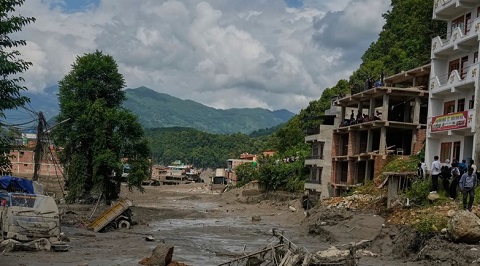
The devastating floods in Nepal in late August 2026 are one such warning. A massive collapse of ice and rock in the high Himalayas unleashed a destructive flow of water and debris through mountain valleys, causing extensive destruction and loss of life. Many people have died and others remain missing. Scientists are still examining the precise sequence of events: whether it involved a glacial lake outburst, an ice-rock avalanche, the temporary blocking of a river or a combination of these processes. But for ordinary people, one fact matters above all: people have died because a mountain hazard met vulnerable communities and infrastructure.
We must first remember those who lost their lives. Every casualty was a human being: a mother, father, son, daughter, worker, farmer, shopkeeper or traveller. Every number in a disaster report represents a family whose life has been permanently altered. Their deaths deserve our condolences. But condolences alone are not enough. Their deaths must teach us how to save others.
The Himalayas are not static mountains. They are a dynamic landscape of glaciers, snow, ice, rock, rivers and steep slopes. Climate change is altering this delicate system. As temperatures rise, glaciers retreat, snow patterns change and permafrost and frozen ground can become unstable. Glacial lakes can expand. Slopes that remained stable for centuries can become vulnerable to sudden collapse. This does not mean that every flood, landslide or avalanche can be directly attributed to climate change. Mountain disasters are complex. Rainfall, geology, earthquakes, slope conditions, river morphology and human intervention all play a role. But climate change is changing the background conditions in which these hazards occur. That is what should concern us, because India shares the same Himalayan system.
Uttarakhand, Himachal Pradesh, Sikkim, Arunachal Pradesh and parts of Jammu and Kashmir and Ladakh are exposed to a range of rapidly changing mountain hazards. Thousands of glaciers and glacial lakes lie upstream of settlements, roads, hydropower projects, agricultural areas and pilgrimage routes. India has already experienced catastrophic examples. In February 2021, a sudden rock and ice avalanche in Chamoli, Uttarakhand, triggered a devastating flood in the Rishi Ganga and Dhauliganga valleys, killing more than 200 people and destroying infrastructure. In October 2023, the South Lhonak glacial lake outburst in Sikkim caused massive flooding in the Teesta basin and severely damaged the Teesta III hydropower project. These should not be viewed as isolated accidents. They are lessons from a changing mountain environment.
Mountain hazards cannot be prevented entirely. Landslides will occur. Glaciers will move. Rivers will flood. The real question is: Why does a natural hazard sometimes become a catastrophe? The answer often lies in the gap between hazard and preparedness. A landslide in an uninhabited valley may be a geological event. The same landslide hitting a settlement, road, bridge or dam can become a disaster. This distinction is crucial.
For decades, much infrastructure development in the Himalayas has been based on historical experience. Roads, bridges, hydropower projects and settlements have often been designed around what floods and rainfall have been like in the past. But the past may no longer be a reliable guide to the future. When the climate and mountain system are changing, designing only for yesterday's extremes is not enough. We need to see the Himalayas differently. The first priority must be better monitoring and early warning.
Many high-altitude glaciers, lakes and slopes are located in extremely remote areas. It is neither practical nor affordable to put conventional monitoring infrastructure everywhere. But modern technology gives us new possibilities. Satellite imagery can track changes in glaciers and glacial lakes. Remote sensing can identify expanding lakes and unstable slopes. Seismic and other sensors can detect unusual movements. Weather and hydrological information can help anticipate downstream risks. But technology alone will not save lives. A warning must reach the person who needs to act. That means connecting scientific monitoring with community-level preparedness. People living downstream must know what an alert means, where to go, which routes to take and who is responsible for communicating the warning. An early warning that reaches a control room but not a village is not an effective early-warning system.
The second priority is to reconsider how we locate and design infrastructure. The Himalayas are ecologically fragile and geologically young. Their rivers carry enormous amounts of sediment, slopes are unstable and extreme events can have cascading impacts. Development cannot simply be stopped. Mountain communities need roads, electricity, communication, schools, hospitals and livelihood opportunities. But development must become more sensitive to mountain ecology and future climate risks. Before approving a major road, hydropower project or settlement in a vulnerable valley, we should ask: What hazards exist upstream? What happens if a glacial lake bursts? What if a landslide blocks the river? What happens if a bridge is washed away? Can people evacuate quickly? And, perhaps most importantly, what happens under climate conditions that are different from those of the past?
These questions should become part of routine planning, not questions asked after a disaster.
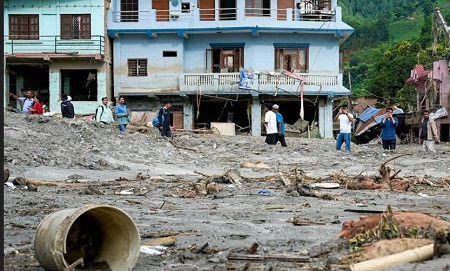
The third priority is regional cooperation. The great Himalayan rivers flow across national boundaries. A glacier or landslide does not know whether it is in Nepal, India, Bhutan or China. Information about unusual glacial activity, extreme rainfall, seismic events and river levels can therefore be immensely valuable to downstream countries. India should strengthen mechanisms for sharing relevant scientific and early-warning information with neighbouring countries. A few additional hours of warning can sometimes mean the difference between life and death.
Finally, India must invest more consistently in disaster preparedness and climate adaptation. We already possess considerable scientific expertise through national research institutions, universities, geological organisations, hydrological agencies and state disaster-management authorities.
The challenge is often not the absence of knowledge. It is the distance between knowledge and action. Warnings must influence investment decisions. Risk maps must influence land-use planning. Scientific assessments must influence infrastructure design. Communities must be trained before; not after; a disaster. We have a tendency to spend generously after disasters and much less before them. That needs to change. Every rupee spent on preparedness may appear invisible when nothing happens. But that is precisely its success.
The people who died in Nepal cannot be brought back. But we can decide what their deaths will mean. We can allow this tragedy to disappear from public memory once the news cycle moves on. Or we can treat it as a collective lesson for all Himalayan countries. Having spent much of my professional life working on water resources and climate resilience across rural India, I have learned that the difference between a hazard and a tragedy is often preparedness. The Himalayas are warning us that the old assumptions may no longer hold. We cannot prevent every mountain disaster. But we can monitor better, plan better, build more responsibly, warn people earlier and prepare communities to respond.
Let us therefore remember the victims of the Nepal floods not only with sorrow, but with determination. May their deaths teach us to protect those who live downstream of the Himalayas. May their loss push us to prepare before the next warning becomes another tragedy. And may we have the wisdom to understand that in a warming Himalaya, preparedness is not an option. It is a moral responsibility.




















Comments (1)
P
A very timely and important reminder that disasters become tragedies when hazards meet unprepared communities. The Himalayas are changing, and our approach to infrastructure, early-warning systems and disaster preparedness must change with them. Development is necessary, but it must be resilient and informed by science. The real lesson from Nepal is simple: we cannot prevent every disaster, but we can certainly be better prepared for the next one.