
Dr Amar patnaik
Under the leadership of Prime Minister Narendra Modi since 2014, the Government of India has executed a fundamental shift in execution scale, structural economic reforms, and foreign policy. He succeeded where previous Prime Ministers failed. The current administration under his leadership has broken long-standing political standstills. Evaluating this tenure involves looking at historic legislative breakthroughs, massive digital public infrastructure, a redefined national security doctrine, and a highly assertive cultural resurgence that positions India as a confident Civilization State that every Indian is proud of.
1. Political Breakthroughs and Resolving Core Ideological Issues
For decades, several complex, emotionally charged socio-political disputes in India remained frozen due to a lack of consensus or fear of civil unrest. The current leadership addressed these issues conclusively, leveraging its decisive legislative majority and clarity in ideology – Nation First.
- Abrogation of Article 370: In August 2019, the government revoked the special status of Jammu and Kashmir dividing it into the Union Territories of Jammu & Kashmir and Ladakh. This integrated the region fully with the Indian Union, brought uniform application of central laws, democratic rights, and economic policies.
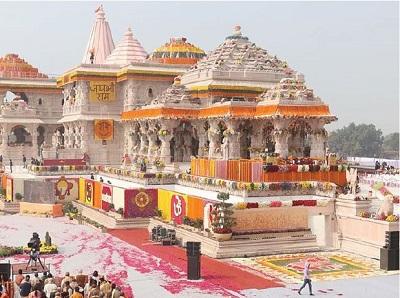
- Resolution of the Ram Mandir Dispute: The long-standing Ayodhya dispute was resolved peacefully via a unanimous Supreme Court verdict in 2019. The construction and subsequent consecration of the temple fulfilled a decades-old cultural movement with minimal law-and-order disruption.
- Citizenship Amendment Act (CAA): The government legislated a framework to grant citizenship to persecuted religious minorities from neighbouring countries, illustrating a firm legislative push that previous coalitions avoided.
2. The Digital India Revolution: Economic Impact of JAM & UPI
While previous administrations introduced Aadhaar, the current government combined it with mobile connectivity and zero-balance banking to create the Jan Dhan-Aadhaar-Mobile (JAM) Trinity, which serves as the backbone of India’s Digital Public Infrastructure (DPI) and the India Stack.
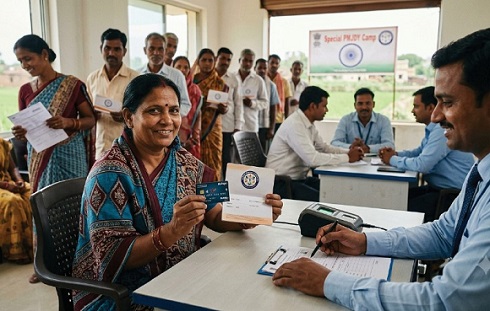
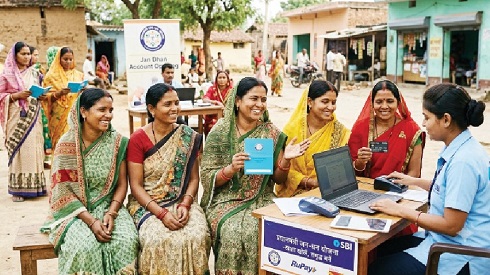
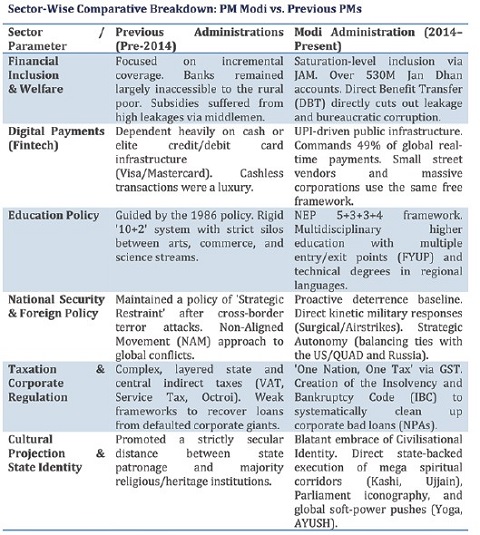
- The Financial Inclusion Boom : Over 530 million zero-balance bank accounts have been opened under the Pradhan Mantri Jan Dhan Yojana (PMJDY). This single move brought hundreds of millions of unbanked citizens, especially rural women, into the formal financial sector.
- The Scale of UPI : Fueled by the National Payments Corporation of India (NPCI), the Unified Payments Interface (UPI) completely rewired India’s transaction habits. UPI accounts for nearly 49% of all global real-time payment transactions. It handles upwards of 24 billion monthly transactions (August, 2026) valued at over ₹29 lakh crore (~$3 trillion annually) (August, 2026) effectively contributing roughly 3.5% to India’s GDP.
- Plugging Governance Leakages via DBT: By routing welfare funds directly to beneficiaries via Direct Benefit Transfer (DBT), the administration bypassed traditional middlemen and bureaucratic choke/leak points. This systemic cleanup has saved billions of rupees for the national exchequer, significantly lowering fiscal deficits while ensuring full financial benefits to flow to beneficiaries.
- Credit Democratisation for the Informal Sector: Digital footprints left by street vendors, small shopkeepers, and Micro, Small, and Medium Enterprises (MSMEs) using UPI QR codes now act as 'information collateral'. This allows them to secure formal bank credit without relying on predatory local loan sharks.
3. Execution of Scale in Social Welfare – the Saturation model
India’s welfare programs shifted from a philosophy of entitlements to target-driven, saturation-level asset creation, improving living standards for the most vulnerable.
Welfare Program Key Highlight / Milestone
Swachh Bharat Abhiyan Over 11 crore household toilets built
PM Awas Yojana Over 3 crore affordable homes sanctioned
PM Ujjwala Yojana 10 crore + free LPG cylinders for rural women
Ayushman Bharat Free healthcare cover up to ₹5 lakh for 60 crore + citizens
4. Cultural Renaissance and Making Indian Identity Powerful
A core differentiator of the Modi administration is the integration of national development with a massive cultural resurgence and the global projection of soft power. By placing civilisational pride at the centre of governance, the administration has systematically worked to shed a colonial mindset.
- Monumental Heritage Revival: Beyond Ayodhya, mega-infrastructure transformations around the Kashi Vishwanath Corridor in Varanasi and the Mahakal Corridor in Ujjain turned congested historic sites into world-class spiritual hubs, blending ancient heritage with modern civic planning.
- Symbolic Decolonisation: The government overhauled New Delhi’s central vista, replacing the British-era name Rajpath (King's Way) with Kartavya Path (Path of Duty). The new Parliament building was built with deep Indian iconographies, historical murals, and the installation of the sacred Sengol (sceptre) of the Chola tradition.
- Repatriation of Antiquities: Through aggressive diplomatic lobbying, his government has successfully brought back over 300 stolen Indian artifacts and ancient idols from international museums and private collectors—dwarfing the recoveries made in the previous six decades combined.
- Amplifying Global Soft Power: In 2014, PM Modi successfully institutionalised the International Day of Yoga at the United Nations. Furthermore, the creation of a dedicated Ministry of AYUSH and the establishment of the WHO Global Centre for Traditional Medicine in India have positioned the country as the epicentre of global holistic wellness. At the instance of India, the UN declared 2023 as the International Year of millets, a traditional staple food of tribal and indigenous communities, thus placing emphasis on nutrition, sustainability, climate resilience and food security while transferring more money to the hands of these tribal and indigenous communities.
5. Educational Overhaul: The National Education Policy (NEP)
Replacing the outdated 1986 education policy, the National Education Policy (NEP) serves as the blueprint to transition India from a rote-learning hub into a 21st-century knowledge economy.
- Pedagogical Restructuring: The rigid, legacy '10+2' school structure was entirely dismantled and replaced with the 5+3+3+4 framework. This structure actively integrates early childhood care and education into the formal schooling arc for the first time.
- Flexibility and High-Education Access: In higher education, the introduction of the Four-Year Undergraduate Programme (FYUP) offers multiple entry and exit points. Students can exit after one year with a certificate, two years with a diploma, or complete four years for an honours degree with research, mitigating the issue of high student dropout rates at the higher education level.
- Language and Multilingualism: The policy promotes education in regional mother tongues up to Grade 5 and conducts elite national entrance examinations (like JEE and NEET) in 13 Indian languages. This breaks the historical Macaulay time English-medium barrier that historically placed rural talent at a disadvantage.
- Economic & Industry Integration: The policy targets expanding the Higher Education Gross Enrolment Ratio (GER) to 50% by 2035. It mandates vocational training and internships into mainstream coursework to improve the employability of India's engineering and graduate workforce.
6. Economic Modernisation and Foundational Reforms
- Goods and Services Tax (GST): Replacing a chaotic patchwork of central and state levies, the introduction of GST in 2017 realised the dream of 'One Nation, One Tax', formalising the economy and widening the tax base.
- Insolvency and Bankruptcy Code (IBC): Enacted in 2016, the IBC gave teeth to banks trying to recover bad loans from defaulting corporates, cleaning up the banking sector's non-performing assets (NPAs).
- Aatmanirbhar Bharat & PLI Schemes: By introducing Product-Linked Incentives (PLI), India positioned itself as an alternative global manufacturing hub, resulting in the rapid expansion of local electronics assembly and semiconductor manufacturing plants. It has driven over Rs.2.40 lakh crore in investments and generated more than 14.15 lakh direct and indirect jobs across 14 key sectors since its launch in 2020.
7. Paradigm Shift in National Security and Foreign Policy
- Active Security and Border Management: Following terror provocations in Uri (2016) and Pulwama (2019), India executed military airstrikes inside Pakistan-controlled territory. Simultaneously, infrastructure along the Line of Actual Control (LAC) with China was rapidly upgraded, allowing the military to counter territorial incursions effectively.
- Leadership of the Global South : During its G20 Presidency, India successfully positioned itself as the bridge between the Western bloc and developing nations, successfully inducting the African Union as a permanent G20 member.
- De-hyphenation : The government maintained strong ties with the United States via the QUAD alliance, while concurrently securing its energy needs through independent trade relations with Russia, irrespective of Western pressure.
- India's Leadership in BRICS and the Quad : India under the leadership of Prime Minister Narendra Modi Ji balances a unique diplomatic strategy by actively leading in both BRICS and the Quadrilateral Security Dialogue (Quad). In BRICS, India champions the interests of the Global South, promoting multi-polarity, economic cooperation, and reformed global governance without letting the bloc become overtly anti-Western. Conversely, in the Quad, India plays a vital anchor for a free, open, and inclusive Indo-Pacific, driving initiatives in maritime security, technology, and disaster relief. Through this dual commitment, Prime Minister Modi effectively advances India’s strategic autonomy, bridging gaps between contrasting global coalitions to maximize national interest in the spirit of Nation First.
Summary
The primary differentiator of PM Modi’s tenure is the will to implement structural, politically risky reforms and a refusal to separate statecraft from civilisational identity, Vikas bhi, Virasat bhi. By combining welfare delivery on a continental scale with an assertive global stance, this governance model has accelerated India's transition into a self-assured, modern global actor.
(The content of this article reflects the views of writer and contributor, not necessarily those of the publisher and editor. All disputes are subject to the exclusive jurisdiction of competent courts and forums in Delhi/New Delhi only)




















Leave Your Comment