


The Indian Railways have always been dubbed as the basic backbone of low-cost long-distance swift public transportation in India. But with an enigmatic government effort towards revolutionising this cheap mass transport system as an ecofriendly mode of highspeed travel, a historic milestone is on the verge of being achieved which no other nation in the world has been able to achieve. After the Narendra Modi-led BJP government took over power in 2014, the new administration started a visionary drive towards 100 percent electrification of railways. And now after just 11 years of Prime Minister Narendra Modi at the helm of affairs, the Indian Railways is almost 99 percent electrified. The historic milestone of 100 percent electrification is just about to be achieved, which will make India the second country in the world (after Switzerland) with a fully electrified railway network. The key to electrification’s success has been assured funding, speedy permitting, fast-tracked engineering, procurement, and construction, and the decentralisation of spending powers and decision-making.
The early DC days: A colonial-Congress baggage
Railway electrification in India had begun with the first electric train (with 1500V DC traction), between Mumbai’s Victoria Terminus and Kurla on the Great Indian Peninsula Railway's (GIPR) Harbour Line, on February 3, 1925. Steep grades on the Western Ghats had necessitated the introduction of electric traction on the GIPR to Igatpuri on the North East Line and to Pune on the South East Line. 1500 V DC traction was introduced on the suburban section of the Bombay, Baroda and Central India Railway between Colaba and Borivili on January 5, 1928, and between Madras Beach and Tambaram of the Madras and Southern Mahratta Railway on May 11 1931, to meet growing traffic needs.
The electrification of the Howrah-Burdwan section of the Eastern Railway zone at 3000 V DC was also completed in 1958. The first 3000 V DC EMU service began on the Howrah-Sheoraphuli section on December 14, 1957. The last section of 3000 V DC in India, from Howrah to Burdwan, was upgraded to 25 kV AC in 1968.
The last sections of 1500 V DC in India, from Chhatrapati Shivaji Terminus, Mumbai to Panvel and Thane to Vashi, were upgraded to 25 kV AC in April 2016 under the incumbent BJP-led central government.
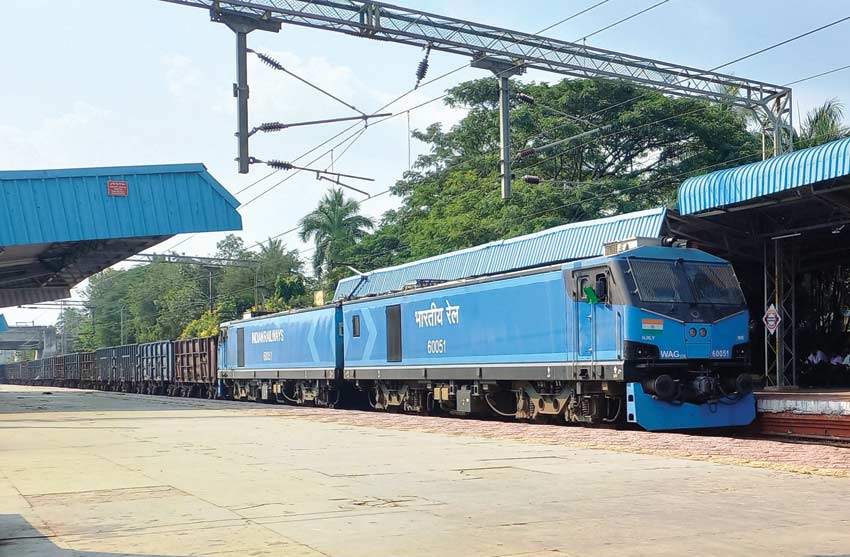
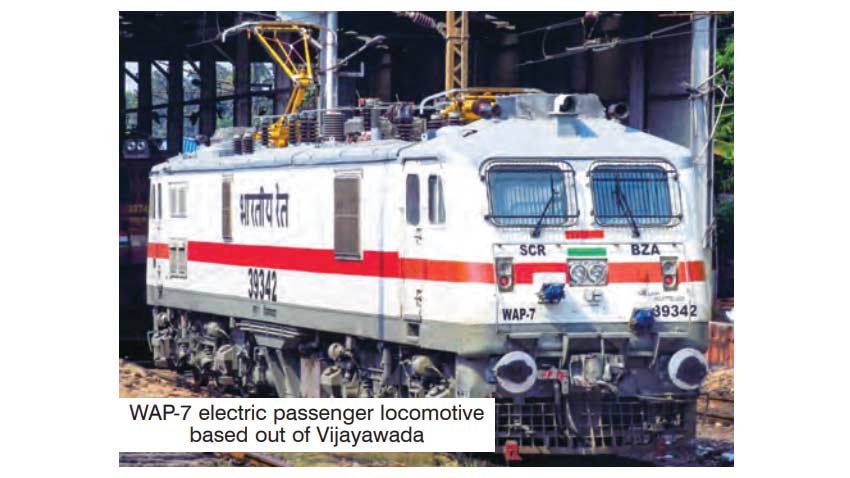
25 KV AC railway electrification emerged as an economical form of electrification as a result of research and trials in Europe, particularly on French Railways (SNCF). Indian Railways decided to adopt the 25 kV AC system of electrification as a standard in 1957 during the Nehruvian era, with SNCF as their consultant in the early stages, later taken over by the 50 c/s Group. This joint venture was founded in 1954 by several European railway manufacturers and was dedicated to the development and construction of locomotives powered by 50 Hz alternating current. It arranged the supply contracts for the WAM-1, WAG-1 and WAG-3 locomotives and their spare parts. The first section electrified with the 25 kV AC system was Burdwan–Mughalsarai in 1957, followed by Tatanagar–Rourkela. Both of these sections were used for tests. The first section electrified with 25KV AC traction for operational use was Rajkharsawan–Dangoaposi, on the South Eastern Railway zone, selected due to heavy freight traffic. The first electric train ran over this section on December 15, 1959. The first 25 kV AC EMUs, for Kolkata suburban service in Sealdah division, were introduced in 1963-64.
Until the 1980s, the railway network had been largely steam-powered. Modernisation efforts introduced the diesel locomotives, but this brought with it new problems related to energy security. With the fourth-largest coal reserves in the world, India was able to power its own trains when they were run on steam.
But, what the erstwhile Congress-led successive governments failed to do is to spread the electrification works across the length and breadth of the vast pan-India network of railways. This took a very heavy toll on India’s foreign exchange reserves as diesel fuel had to be imported from gulf nations by spending billions of dollars of taxpayers’ money. This laggardness of the erstwhile non-BJP governments also led to slow progress of the planned development of highspeed and semi-highspeed rail corridors for freight and passenger traffic in the country and kept the Indian Railways trapped in the past with a colonial baggage with little room for modernisation.
The journey from 2014
In January 2015, everything changed. The nation’s Railway Board established an Environment Directorate to coordinate environmental initiatives across the Indian Railways network. At this point, locomotives were a mixture of diesel and electric, with hardly around 45 percent of the rail network electrified.
In the 2004-2009 time period, average route kilometre (RKM) of rail electrification was just 1.2km per day (2150 RKM annually) which witnessed a marginal increase up to 1.7km per day (3038 RKM annually) in the 2009-2014 period. But in the Modi era, this increased to 7.5km per day (13,687 RKM annually) in the 2014-2019 period and a whopping 16.7 km per day (30,512 RKM annually) in the 2019-2024 time period.
As per the latest data released by the Indian Railways, the erstwhile union governments before 2014 (primarily led by Congress), managed to electrify just a meagre 21,413 RKM of railway tracks in their 67 years of rule in the country, which clearly shows a lack of vision and intent to work towards the nation’s technological and economic progress.
But the BJP-led union government has electrified a record total of 46,900 RKM of railway tracks between 2014 and 2024, out of a total cumulative RKM of 68,701. 98.83 percent of the total broad-gauge railway network in the country is now fully electrified. 14 railway zones (South East Central Railway, Northern Railway, North Eastern Railway, Western Central Railway, North Central Railway, East Coast Railway, Central Railway, Eastern Railway, Konkan Railway Corporation Limited, Kolkata Metro, South Eastern Railway, East Central Railway, South Central Railway, and Western Railway) in the country are fully electrified. South Western Railway is 95 percent electrified, whereas North Western Railway, Southern Railway and Northeast Frontier Railway zones are electrified 98 percent, 97 percent and 91 percent respectively.
In correspondence with the official data released, rail network in 25 states and union territories in the country (namely- Andhra Pradesh, Arunachal Pradesh, Bihar, Chandigarh, Chhattisgarh, Delhi, Haryana, Himachal Pradesh, Jammu and Kashmir, Jharkhand, Kerala, Madhya Pradesh, Maharashtra, Meghalaya, Nagaland, Odisha, Puducherry, Punjab, Telangana, Tripura, Uttar Pradesh, Uttarakhand, Gujarat, Mizoram, and West Bengal) have been totally electrified by the Modi government. Railway networks in Rajasthan, Karnataka, Tamil Nadu, Goa, and Assam are 98.57 percent, 95.95 percent, 95.66 percent, 91.44 percent, and 85.18 percent electrified respectively. Interestingly, the entire stretch of railway tracks in the Jammu-Baramulla section in Kashmir on which a brand-new Vande Bharat train service will be inaugurated by Prime Minister Narendra Modi on April 19, 2025, is electrified. This stretch passes through stunning engineering structures like the Chenab Rail Bridge and the Anji Khad Bridge along with many tunnels.
Remaining works, and a deadline
Railway tracks in the northeastern parts of the country often pass through hilly, forested and uneven areas which bear a massive challenge for electrification works. Setting up power substations, poles and cables in these places are quite of an arduous task to perform. Work is now ongoing at a breakneck speed to electrify the remaining 13 RKM of new tracks being laid in Manipur. Work in also ongoing on the 44 km-long Sivok-Rangpo rail link which will pass through treacherous terrain and will connect the state of Sikkim with the rest of India.
Electrification works through laying of poles and cables is also almost complete between Maibang and Chandranathpur railway stations located at the picturesque Lumding-Badarpur hill section in Assam which attracts international tourists. Procedural inspections by PCEE (Principal Chief Electrical Engineer) and CRS (Commissioner of Railway Safety) will be carried out soon on these stretches before these routes are opened up for passenger and freight traffic propelled by high-power electric locomotives. The recently inaugurated landmark- the New Pamban Bridge in Tamil Nadu is also in the process of being charged with work commencing between Ramanathapuram and Mandapam railway stations. Union Railway Minister Ashwini Vaishnaw has stated that all remaining works of power charging of cables will be completed by the end of the current fiscal year- 2025-26 for achieving the cent percent mark, for which a budget outlay of Rs. 6150 crores has already been made.
Boosting sustainability and speed
Indian Railways achieved a major milestone in environmental sustainability by saving over 640 crore litres of diesel in the last decade, leading to a reduction of more than 400 crore kg of Carbon Dioxide emissions. This reduction is equivalent to planting 16 crore saplings across the nation. Additionally, Indian Railways has implemented eco-friendly initiatives such as the installation of Rain Water Harvesting (RWH) systems. By March 2024, 7,692 RWH systems had been installed, and Indian Railways plans to progressively procure renewable energy from various power sources to further reduce carbon emissions.
Railway Minister Ashwini Vaishnaw has set a mission to transform the entire rail network into a net-zero emission transport system by 2030. As part of this initiative, Indian Railways has commissioned approximately 494 megawatts (MW) of solar power from both rooftop and land-based plants, along with around 103 MW of wind power, as of January 2025.
Furthermore, the government has introduced several energy-saving measures, including the conversion of End-on-Generation (EOG) trains into Head-on-Generation (HOG) trains, which reduce noise and air pollution at stations and onboard the trains, while significantly lowering diesel consumption in power cars. Measures like electrification of rail tracks has led to savings of more than Rs 4700 crore under diesel traction in the financial year- 2023-24.
Electrification is crucial for high-speed rail travel in India, enabling faster speeds, increased acceleration, and improved reliability. Almost all high-speed trains globally, including the upcoming Mumbai-Ahmedabad High Speed Rail (MAHSR) bullet train project, utilise electric locomotives due to their higher power output and efficiency.
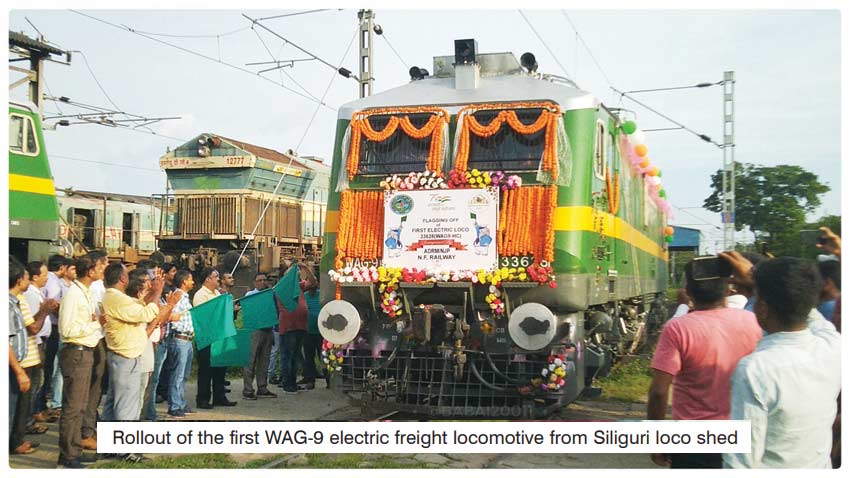
The 2X25 KV AC electric traction system installed at the EDFC (Eastern Dedicated Freight Corridor) and WDFC (Western Dedicated Freight Corridor) has enabled the operation of superheavy long-haul goods trains at speeds of up to 100 km per hour pulled by three-phase electric locomotives like WAG-9H / WAG-9Hi. This has also made it easy to operate SheshNaag freight trains spanning across a length of 2.8 kms. The 12,000 horsepower WAG-12 class electric locomotives are also operational across these freight corridor sections, which is propelling India’s economy with faster movement of exportable items and heavy industrial goods from the nation’s hinterlands towards the seaports located on the west and east coasts of the nation.
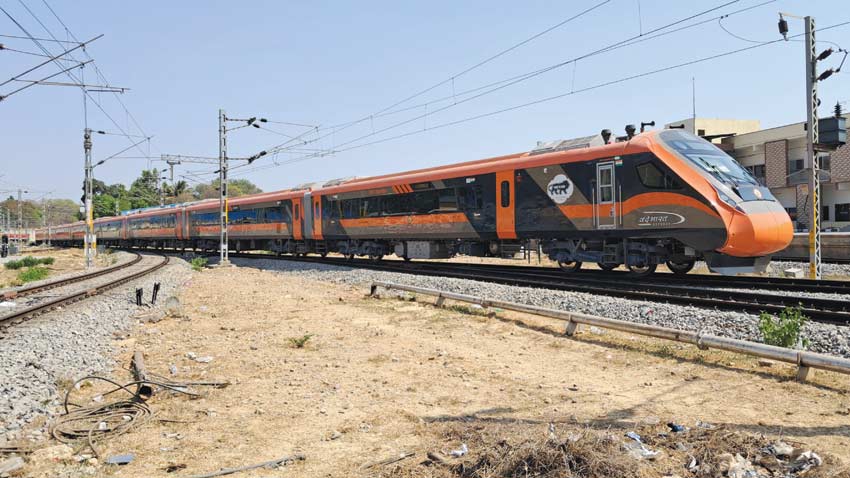
Robust, intensive and rapid electrification of the railway tracks has also enabled the operation of 66 Vande Bharat trains across various medium-haul routes, each of them inaugurated by Prime Minister Narendra Modi. The Delhi-Mumbai and Delhi-Howrah rail routes are now being upgraded from 130 km per hour to speed handling capacities of up to 160 km per hour to enable the operation of Vande Bharat sleeper trains which will surpass the speeds of Rajdhani Express trains. Plans have also been formulated to upgrade speeds of trains from the present 130 km an hour, through 180 km per hour, up to 200 km an hour in a step-by-step manner.
Credit goes to Yugpurush Narendra Modi
Comfortable, safe and fast rail travel in 21st century India has become possible only due to the provision of adequate budgetary allocations to the ambitious infrastructure projects under the visionary leadership of Prime Minister Narendra Modi and Railway Minister Ashwini Vaishnaw. What Congress couldn’t do in its 70 years of rule has now been done by the incumbent BJP-led NDA government in just a matter of 11 years. The Indian government has achieved which even established players and developed nations couldn’t achieve, with China and Japan having barely 75 percent of their rail networks electrified, and USA having 1 percent of its rail routes electrified. India is already far ahead of the United Kingdom and European Union in rail electrification. Switzerland’s railway network, which is 100 percent electrified uses the 15 KV AC traction which is much less powerful than the 25KV AC / 50 Hertz traction used by the Indian Railways.
Hence, this mammoth exercise which is being executed in India can be compared with no other nation in the world. By transforming dreams into reality, Prime Minister Narendra Modi has risen above his stature as a statesman and has emerged like a phoenix by proving himself as the true Yugpurush deeply adored by the masses, a true saint who is walking on Swami Vivekananda’s philosophy and realising late Dr. APJ Abdul Kalam’s dream towards making India a developed, happy and prosperous nation. Viksit Bharat is in the works, a legacy which will be forever embedded in the golden pages of history and will be remembered by many generations to come.

By AMARTYA SINHA
(The content of this article reflects the views of writers and contributors, not necessarily those of the publisher and editor. All disputes are subject to the exclusive jurisdiction of competent courts and forums in Delhi/New Delhi only)



















Comments (4)
P
Great job ????????
A
Great information
S
Very good knowledge, Thanks for update
S
This article offers a comprehensive and well-researched insight into one of India’s most significant infrastructure achievements.