


How Climate Change is Rewriting the Crisis of Human Strokes
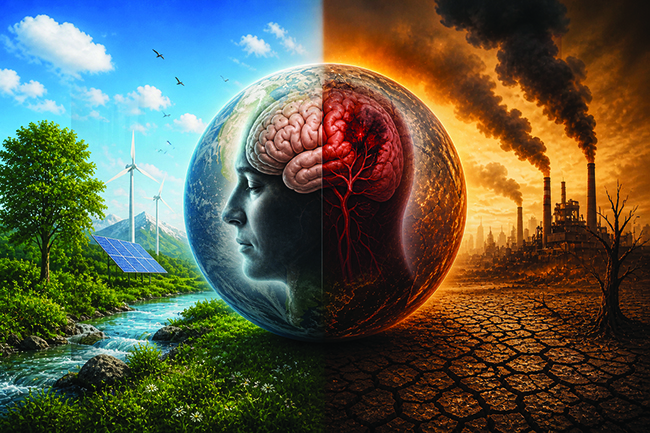
The relationship between our planet's atmospheric health and the delicate architecture of the hu-man brain has long been a subject of emerging concern. However, a recent and alarming scientific statement released by the World Stroke Organization (WSO) has moved this concern from the pe-riphery of medical research to the forefront of global health emergencies. As the Earth's climate enters an era of unprecedented volatility, the very air we breathe and the temperatures we en-dure are becoming potent triggers for strokes..a condition that was once viewed primarily through the lens of genetics, lifestyle, and age. This feature explores the harrowing intersection of envi-ronmental degradation and neurological vulnerability, revealing how a warming world is making strokes not only more frequent but significantly more fatal.
For decades, the medical community focused on internal risk factors like hypertension, diabetes, and cholesterol when addressing stroke prevention. But according to the WSO's statement pub-lished in the International Journal of Stroke, the environment is now an aggressive external cata-lyst. Professor Anna Ranta from the University of Otago, a leading voice in this research, emphasiz-es that an unstable climate creates a physiological ripple effect within the human body. When we speak of climate change, we often visualize melting glaciers or rising tides, but the internal "tide" of the human circulatory system is equally at risk. Extreme heat, rapid humidity shifts, and sudden variations in barometric pressure are no longer just meteorological data points; they are direct stressors that compromise brain health.
The mechanics of this climate induced stroke risk are both fascinating and terrifying. During intense heatwaves which are becoming longer and more frequent, the human body struggles to maintain homeostasis. Excessive heat leads to rapid dehydration, which in turn causes the blood to "thick-en" or become more viscous. This hyper-coagulable state makes it significantly easier for blood clots to form, which can then travel to the brain and cause an ischemic stroke. Conversely, fluctua-tions in humidity and air pressure have been shown to spike blood pressure levels instantaneously. Since hypertension remains the leading cause of stroke globally, these weather induced surges act as the final push for a body already under cardiovascular strain.
Furthermore, the WSO highlights the "additive effect" of compound weather events. In the past, a heatwave was often an isolated event. Today, we see heatwaves combined with prolonged droughts or extreme humidity coupled with shifting winds. These combinations do not just double the risk; they multiply it exponentially. The study notes that while cold exposure has historically been a strong trigger for strokes due to blood vessel constriction, the impact of heat-related strokes is rising at a much faster rate. This shift is particularly dangerous because urban infrastruc-tures in many parts of the world are ill-equipped to handle the cooling needs of a vulnerable popu-lation during "thermal extremes."
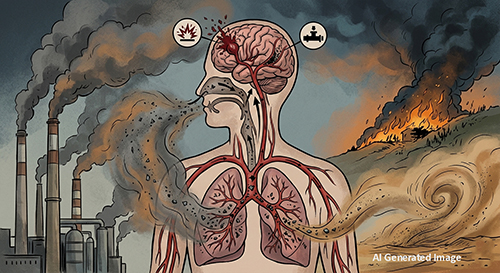
The invisible killer in this climate narrative is air pollution, which the WSO links directly to nearly 20% of all strokes worldwide. While industrial emissions are a driver of climate change, the effects of climate change such as the increasing frequency of massive wildfires and intensifying dust storms create a feedback loop of toxic air. Fine particulate matter (PM2.5) from these environmental dis-asters enters the bloodstream through the lungs, causing systemic inflammation and damaging the walls of blood vessels. These microscopic invaders can lead to both the rupture of brain arteries (hemorrhagic stroke) and the blockage of blood flow (ischemic stroke). In regions prone to sand-storms or forest fires, the "stroke season" is now aligning perfectly with the environmental crisis season.
The sociology of this medical crisis reveals a profound inequity. The report explicitly mentions that while climate change is a global phenomenon, its neurological toll is disproportionately felt by spe-cific groups. Older adults, whose bodies have less thermal resilience, and outdoor laborers, who cannot escape the elements, are on the front lines. Perhaps most disturbingly, low and middle-income countries face a dual burden: they are often more geographically exposed to extreme weather and simultaneously lack the advanced neurological emergency care required to treat strokes quickly. In these regions, a stroke isn't just a medical event; it is often a death sentence or a precursor to lifelong disability, exacerbated by the lack of climate-resilient healthcare infrastruc-ture.
In light of these findings, the World Stroke Organization is calling for a paradigm shift in how we approach stroke prevention. The traditional advice of "eat well and exercise" must now be joined by "monitor the weather and advocate for clean energy." The WSO suggests that hospital electron-ic health records should begin integrating climate-related alerts. Imagine a future where a doctor’s prescription includes a warning about an upcoming heatwave or a period of high particulate mat-ter, advising a high-risk patient to stay indoors and increase hydration. This level of personalized, climate-aware medicine is becoming a necessity.
The path forward requires a multi-sectoral alliance. Meteorological agencies must work hand-in-hand with urban planners to create "cool zones" in cities, while environmental scientists must col-laborate with neurologists to map out "stroke hotspots" linked to pollution and heat. Public health messaging needs to evolve, educating the masses on the "FAST" (Face, Arms, Speech, Time) signs of a stroke specifically during extreme weather alerts. Ultimately, the WSO's report serves as a stark reminder that the health of our brains is inextricably linked to the health of our planet. We can no longer treat the climate crisis as a distant environmental issue; it is a current, internal medi-cal emergency. Reducing carbon emissions is no longer just about saving the polar bears, it is about saving the very arteries that sustain human thought and life.

Viral Desai
(The author is a known Environmentalist and the pioneer of Satyagraha Against Pollution move-ment, viraludayindia@gmail.com )
(The content of this article reflects the views of writer and contributor, not necessarily those of the publisher and editor. All disputes are subject to the exclusive jurisdiction of competent courts and forums in Delhi/New Delhi only)






















Leave Your Comment