



Rakesh Kumar
Few decades ago, I witnessed a legal discussion about a divorce at an advocate’s office. The advocate was explaining the woman and her father about the various forms of mistreatment being included in the legal complaint being filed for dowry case.
The woman suddenly started crying. The advocate paused and asked her, “Have I missed something? Is there something else that can be added?”
She replied, through her tears: “No. I am crying because I never knew that I was going through so much.”
The way we talk about generations made me think of that advocate—especially in case of Gen Z. Social media platforms along with electronic media coined statements like “Gen Z is impatient,” “Gen Z doesn't want to work hard,” “Gen Z has no loyalty,” or “Gen Z wants everything instantly” But on ground I do not find such things. The young people are striving hard winning medals in sports, creating unicorn in startups, joining army as Agni Veer. Despite paper leak it patiently appeared in NEET reexam, joined counselling. Who are the people showing above weaknesses? Had the percentage increased too much? Who has done the research? what was the sample size? Was it done in US and extrapolated for India?
My limited research indicates that the people who sold or purchased the leaked paper were more impatient, disloyal and evaded hard work and definitely these were not Zen Z.
Can we really define an entire generation with a handful of characteristics?
A generation is a birth cohort, not a personality type. People born within the same decade may share some historical experiences, technologies and cultural influences, but they can be remarkably different in their values, ambitions, motivation, circumstances and choices.
Who Decided That people must belong to a specific Generation Tag?
The idea of studying people according to their generation is not new. German sociologist Karl Mannheim, in his influential 1928 essay The Problem of Generations, argued that people who grow up during the same historical period can develop a shared consciousness because they experience major social events at formative stages of their lives. His contribution was essentially a sociological framework, not a system of catchy labels.
The Lost Generation
The expression Lost Generation emerged in the 1920s. Gertrude Stein used the phrase to describe the young people shaped by the trauma and disillusionment of World War I. Ernest Hemingway subsequently helped popularise it through his writings.
It was not a scientific description of every young person in the world who lived through World War I. It was a cultural description emerging from a particular Western experience. In 1951, Time magazine famously described America's younger generation as the “Silent Generation,” arguing that young Americans appeared unusually quiet, cautious and conformist compared with their parents. Even ‘Time’ itself posed the question of whether the supposed silence reflected the young people—or simply their elders' inability to hear them.
The term Baby Boomers is different. It originated primarily as a demographic description of the dramatic rise in births following World War II, particularly in countries such as the United States.
The modern “Gen” formula largely took shape in the 1990s, when Generation X was popularised by Douglas Coupland’s 1991 novel. Around the same time, William Strauss and Neil Howe, in Generations (1991), developed an influential framework for dividing American history into generational cycles and later popularised the term “Millennials.” The success of Gen X also encouraged a simple alphabetical progression—Gen Y and then Gen Z—helping turn generational labels into powerful media and marketing shorthand.
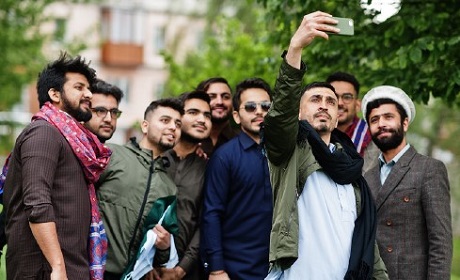
One Label, Millions of Lives: The Problem with Chronological Stereotyping.
A label that began by describing when people were born gradually began to suggest what those people were like. This was essentially an observation about American society at a particular historical moment, not a universal psychological diagnosis.
But What About the Rest of the World? Why it has to live by American standards?
Much of the generational vocabulary we use today emerged from 20th-century American social history—but the history of the rest of the world was certainly not the history of America. Take India: for someone born in the 1930s or 1940s, the formative experiences were likely to include British colonial rule, the freedom struggle, the trauma of Partition, Independence in 1947, nation-building, poverty and food shortages, the creation of democratic institutions, wars with neighbouring countries, the Green Revolution, and the transformation from a colonial economy into an independent nation. How can such a vastly different lived experience be neatly fitted into labels created around the American experience?
Can we reasonably expect that person's psychological and social outlook to be identical to an American born in the same year?
Of course not. And India was not an isolated case When the United Nations was established in 1945, around 750 million people—nearly one-third of the world's population—lived in territories that were dependent on colonial powers. Since then, more than 80 former colonies have gained independence.
Think about the enormous difference in lived experience.
For an American teenager in the 1950s, the dominant narrative could be post-war prosperity, consumerism and the rise of television.
For a young Indian, African or Asian person, the same decade could represent something entirely different: freedom, nation-building, political upheaval, poverty, hope and the responsibility of creating a new country.
The Mismatch of the "Gen Z" Label in India's High-Stakes Reality
Unlike the disillusionment often seen among Gen Z in the United States, Indian youth are navigating an era defined by hope and high-stakes achievement. Driven by an expanding ease-of-doing-business index and modernized infrastructure, this generation is actively anchoring India's tech ecosystem by building multi-billion-dollar unicorns. Even sports leagues are creating new millionaire from this Generation. The stories of Shubman Gill, Yashaswi Jaiswal and Neeraj Chopra are inspiring millions.
This resilience stands in stark contrast to recent regional dynamics. While youth-led agitations triggered political upheavals across South Asia, Indian students steered clear of the streets. Despite the deep institutional betrayal of the NEET paper leak, the overwhelming majority of medical aspirants chose the gruelling path of rebuilding their futures, showing up for the nationwide re-examination and proceeding to counselling.
The Problem Is Not Generations. It Is Generational Stereotyping.
There is nothing wrong with studying generations. In fact, Mannheim's original insight remains valuable: people can be influenced by the historical circumstances in which they grow up.
The problem begins when a useful analytical concept becomes a convenient stereotype.
We move from: “People who grew up during similar circumstances may share some experiences.”
to: “People born between these two years are like this.” The second statement is much harder to defend and it becomes even more problematic when we move across countries.
A 25-year-old in Mumbai, a 25-year-old in New York, a 25-year-old in Nairobi and a 25-year-old in Tokyo may share smartphones, Instagram and Netflix but they may have grown up with completely different:
Their birth years may be identical. Their worlds are not.
Why Have We Accepted These Labels So Easily?
Perhaps labels are convenient because they make a complicated world easier to understand. It is far simpler for a manager to say, “Young people today have no loyalty,” than to ask, “Why is this particular employee changing jobs?” We say, “Gen Z doesn’t want to work hard,” instead of asking what hard work means to them or what motivates them. We call Millennials entitled rather than examining the economic, technological and social realities that shaped their adulthood. A label gives us a quick explanation—but often saves us from the harder work of understanding the person.
The Trap of the Cohort Cliché
A label gives us an explanation without requiring us to understand the individual. That is its greatest attraction—and its greatest danger. The danger of such labelling becomes even clearer when an agitation is reduced to a convenient narrative. In the case of CJP, what may have begun as a student-led protest was gradually presented as a larger movement, with questions arising over the involvement of outsiders, the use of abusive language and the participation of people who were not students. When a protest is viewed only through a label—“student agitation,” “youth movement” or “Gen Z protest”—we risk overlooking who is actually participating, who is influencing the narrative and whose interests are being served.
The label can therefore become a smokescreen: instead of understanding the people and events, we begin defending or condemning a stereotype.
This raises a more uncomfortable question: are vested interests learning to exploit the power of generational labelling? Recent political upheavals in Bangladesh and Nepal were widely described as Gen Z-led movements, with young people taking to the streets against issues they felt had been ignored. But winning the streets is not the same as gaining political power. In Bangladesh, students helped topple the government, yet the subsequent electoral outcome showed that Gen Z did not automatically translate its street power into political power. Convicted 84 year old Mohmmad Yunus became the President. Nepal too saw a youth-led movement transform the political landscape.
When young people provide the energy for a movement, who ultimately captures the power it creates?
The very label “Gen Z revolution” makes it easier for organised political interests to appropriate a genuine youth grievance for their own ends? Perhaps we need to stop asking, “Which generation are you?” and start asking, “What shaped you?”
generations can help us identify broad historical patterns, but they should never become substitutes for understanding human beings.
If we are educated enough to question stereotypes in other areas, then we should question the fashionable stereotypes we have adopted about generations. Otherwise, we may pride ourselves on being modern thinkers while simply repeating someone else's labels from someone else's history.
India is not divided into generations; it is divided into a billion of individual human stories.
These stories also need that someone listen to ‘Man ki Bat’ of these Indians. A dean should listen to students, a CEO should listen to employees and a business house must listen to customers.
If Gen X, Y or Z is not fair then what can be fair? Does our culture has something to offer?
From the very beginning the human mind is seeking bliss. Advertising and marketing gurus are selling labels to these seekers. The Vedic saying “Raso Vai Saḥ”—“He is indeed Rasa”—reminds us that the essence of life is not merely knowledge or achievement, but the ability to experience joy, meaning and fulfilment. It suggests that true understanding comes when we learn not only to know life, but also to experience and savour it deeply.
The essence of life is Rasa, the experience of living. Instead of asking which generation a person belongs to, perhaps we should ask what they value, what they experience and what gives their life meaning.
Meditation can quiet the mind; performance can open the heart. Together, they can turn “Rasa” from an ancient phrase into a lived experience—and perhaps help heal some of the divisions created by our obsession with labels.
The government could promote this idea as it promoted Yoga—not by imposing a doctrine, but by giving an ancient Indian insight a contemporary platform. “Raso Vai Saḥ” could become the foundation of a national conversation on shared human experience, encouraging schools and universities to use literature, music, theatre, storytelling, art and festivals to bring generations together. Public broadcasters, cultural institutions and digital platforms could create programmes around “Rasa—Beyond Generations”, while workplaces and educational institutions could encourage intergenerational dialogue and shared community activities. The objective should not be to replace one label with another, but to offer the world an Indian way of looking at people—not by the year they were born, but by the richness of their human experience.
The divisive forces may like to divide but India understands the consequences of ‘divide and rule’. It is our responsibility to guide the world out of this chaos, anarchy and ambiguity of labelling generations.
(The content of this article reflects the views of writer and contributor, not necessarily those of the publisher and editor. All disputes are subject to the exclusive jurisdiction of competent courts and forums in Delhi/New Delhi only)





















Leave Your Comment