


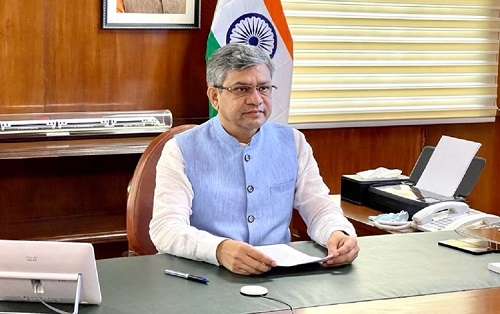
In a defining statement that underscores one of the most critical challenges of the digital age, Information and Broadcasting Minister Ashwini Vaishnaw today declared fake news a direct threat to democracy. Speaking during the Question Hour in the Lok Sabha, the Minister outlined a multi-pronged offensive against the triad of disinformation, unregulated social media, and the burgeoning danger of AI-generated deepfakes.
The minister’s remarks come at a time when the line between fact and synthetic fabrication is blurring rapidly. He confirmed that the government has already taken a concrete step by publishing a new draft rule aimed specifically at identifying and taking stringent action against AI-generated deepfakes. This proactive move seeks to create a legal framework to combat hyper-realistic videos, audios, and images designed to mislead, defame, or manipulate public opinion.
A Multi-Stakeholder Battle
Mr. Vaishnaw emphasized that countering fake narratives is not a battle for the government alone. He framed it as a shared responsibility of the Central and State governments, along with civil society. “Fake news or fake narrative must be actively countered,” he stated, highlighting the end goal: to maintain and strengthen the foundational trust within society.
The minister pointed to existing mechanisms, noting that both the government and the Press Council of India (PCI) are actively scrutinizing complaints against traditional media outlets like TV channels and newspapers. However, the scale and anonymity of the digital realm demand newer, more robust interventions.
Digital Revolution and its Discontents
Acknowledging the transformative power of the digital sphere, Mr. Vaishnaw credited Prime Minister Narendra Modi’s Digital India initiative for bringing a “new revolution” to the country, the positive effects of which are widely visible. Yet, this very revolution has opened doors to novel threats. The government’s approach, therefore, is not to stifle innovation but to create a safe and trustworthy digital ecosystem.
This balanced stance was reflected in his reference to another area of digital regulation—online gaming. He informed the House that the government has enacted a strict law to regulate online real money gaming, a move that he said is protecting “crores of families across the country” from potential financial and social harm.
The Road Ahead: Vigilance and Regulation
The minister’s comprehensive reply signals a clear policy direction. India is moving towards a regime that:
Legislates specifically for new-age threats: The draft rule on deepfakes is a first, crucial step to address technology that can weaponize misinformation.
Seeks collaborative vigilance: By involving civil society and sub-national governments, the strategy aims to build a nationwide network of media literacy and prompt reporting.
Upholds the sanctity of trust: The central theme remains the preservation of democratic discourse from being poisoned by coordinated disinformation campaigns.
As artificial intelligence tools become more accessible, the potential for their misuse grows exponentially. The government’s warning and its regulatory preparations mark the beginning of a critical societal conversation. The challenge will lie in crafting rules that effectively curb malice without hampering creative expression or technological progress, ensuring that the digital public square remains a space for informed debate, not manipulated dissent. The battle to safeguard democracy, it seems, is now being fought on the frontiers of code and algorithms.




















Leave Your Comment